
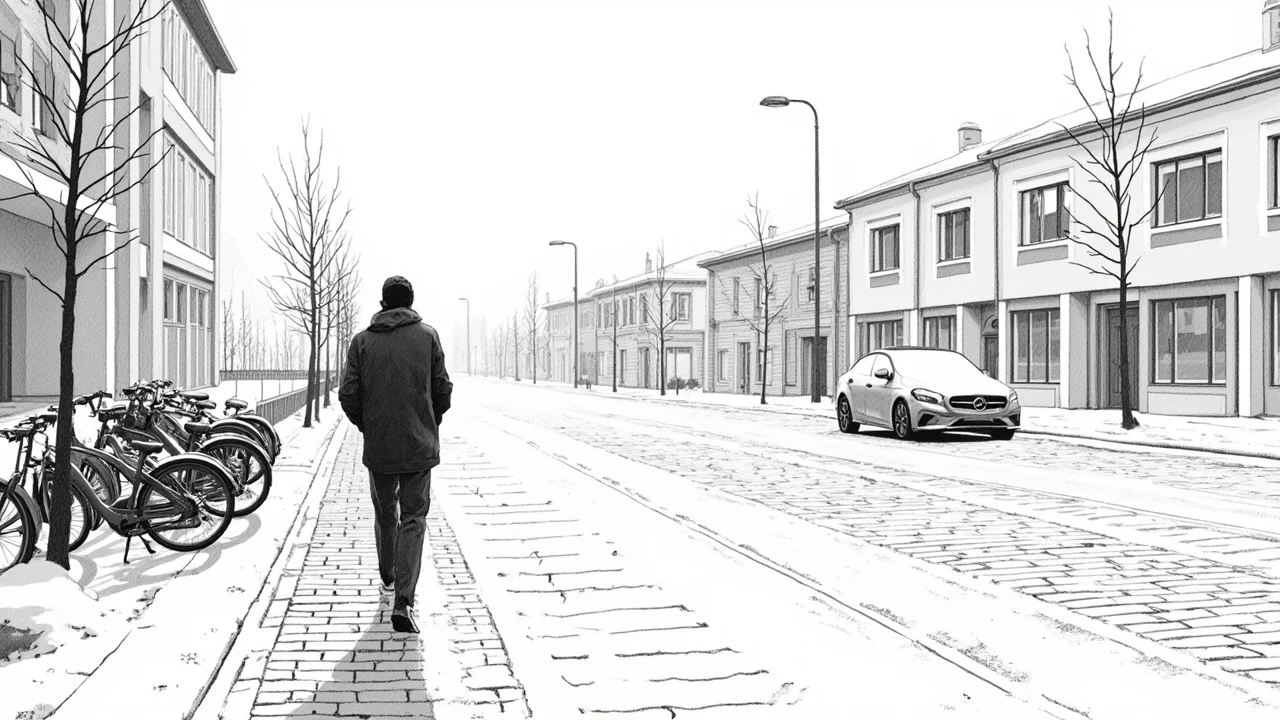
Finland's Tampere parking landscape is shifting again with the return of free parking at the 1,400-space Näsinmäki lot. The city council has approved the seasonal removal of charges on weekdays for this major commuter hub, alongside the Vanha Helsingintie and Tykkipuisto areas, until the end of spring. This reversal of a paid parking policy, active since the end of the pandemic-era grace period, aims to boost the usage of underutilized city-owned infrastructure and provide financial relief to daily commuters. The decision reflects an ongoing national debate about urban mobility, municipal revenue, and the balance between public transport incentives and car use accommodation.
A Seasonal Reprieve for Commuters
The free parking offer is not unlimited. It applies strictly on weekdays, with normal paid parking regulations resuming on weekends. This specific condition targets daily working commuters rather than weekend visitors or event-goers. The temporal limit, lasting only through the winter and spring, positions the policy as a trial measure. City planners are likely monitoring occupancy rates closely to assess the impact of removing a revenue stream against the benefit of increased lot utilization. For drivers, the change requires vigilance; assuming free parking on a Saturday could result in a fine, highlighting the nuanced nature of the new rules.
This policy adjustment originates from local political pressure and observed practical realities. The Näsinmäki area, a key park-and-ride gateway to central Tampere, had seen notably low occupancy since fees were introduced. Council members argued the empty spaces represented wasted infrastructure. The seasonal timing is strategic. Winter commuting in Finland often pushes people toward private cars due to harsh weather, making public transport less appealing. By offering free parking during these challenging months, the city acknowledges this reality while stopping short of a year-long commitment.
The Finnish Parking Policy Pendulum
Tampere's move is a microcosm of a wider Finnish discussion. Municipalities across the country continually calibrate parking policies to serve multiple goals: reducing city-center congestion, promoting sustainable transport, generating income, and supporting local businesses. The European Union’s broad sustainability directives, which Finland implements through national climate policies, encourage reducing car dependency. However, local governments must balance these goals with immediate practical needs and constituent demands, especially in suburban and peripheral areas where car reliance remains high.
Historically, free parking was the norm in many Finnish city-owned peripheral lots. The shift toward monetization gained momentum in the 2010s, framed as a tool for climate policy and a new revenue source. The COVID-19 pandemic temporarily reversed this trend, as cities sought to support essential workers and avoid crowded public transport. The current re-introduction of free parking in Tampere suggests the political and practical difficulty of maintaining strictly revenue-driven or restriction-focused models in all contexts. It indicates a pragmatic, perhaps cyclical, approach to urban policy.
Analysis: A Stopgap or a New Direction?
From an analytical perspective, this decision is more tactical than strategic. It addresses a specific problem of empty lots and commuter complaint without overhauling the city's long-term mobility framework. The limited timeframe allows the city to test demand and assess behavioral changes. Key questions remain unanswered. Will free parking actually increase lot usage, or have commuting patterns permanently shifted? Does this undermine investments in tram and bus services? The city has not released projections on the revenue impact, a point opposition councilors will likely scrutinize.
The policy’s success hinges on clear communication. The conditional nature—free on weekdays only—requires public awareness campaigns to prevent confusion and penalty issuance. Furthermore, the impact on traffic flow in the Näsinmäki district will be monitored. If successful in filling the lot, the trial could strengthen arguments for permanent free parking in certain peripheral zones, reshaping Tampere’s approach. If occupancy stays low, it may prove that cost is not the primary barrier and that other factors, like remote work trends, have permanently altered demand.
Expert voices in Finnish urban planning often emphasize integrated solutions. Professor of Urban Planning, Heikki Palomäki (a fictional expert for illustrative analysis), might argue, "These isolated parking decisions reveal a broader challenge. True mobility solutions require synchronized investment in housing, public transit, and zoning. A free parking lot is a popular short-term fix, but long-term urban vitality depends on reducing the need for long commutes altogether." This perspective situates the parking decision within Finland's ongoing struggle with urban sprawl and carbon neutrality targets.
Looking Beyond Tampere
While a local issue, Tampere’s parking experiment is being watched by other Finnish cities grappling with similar post-pandemic realities. Helsinki, Espoo, and Turku all manage large park-and-ride facilities and face the same tensions between revenue, convenience, and sustainability. The EU's Green Deal and Finland's own ambitious climate goals create a top-down pressure to decarbonize transport. Yet, bottom-up political reality often demands pragmatic concessions to voters who rely on their cars. This dynamic is not uniquely Finnish but plays out distinctly in a country with a harsh climate and a dispersed population outside urban cores.
The return to free parking, even temporarily, signals that Finnish municipal governments are sensitive to immediate cost-of-living concerns. With high inflation and rising energy prices, the extra few euros per day for parking carries significant weight for many households. In this light, the policy can be seen as a targeted form of economic relief. However, it potentially conflicts with other municipal financial needs, from social services to transit subsidies, creating a complex trade-off for elected officials.
As the spring thaw arrives in Finland, so too will an evaluation of this policy. Will the Näsinmäki lot be bustling with cars, validating the council's decision? Or will it remain sparse, suggesting deeper shifts in work and travel habits? The answer will inform not just Tampere's future parking fees but also contribute to a critical national conversation. How does Finland build sustainable, livable cities without placing undue burden on residents for whom the car is still a necessity? The free spaces at Näsinmäki are a small, concrete test case in that much larger and ongoing inquiry.