
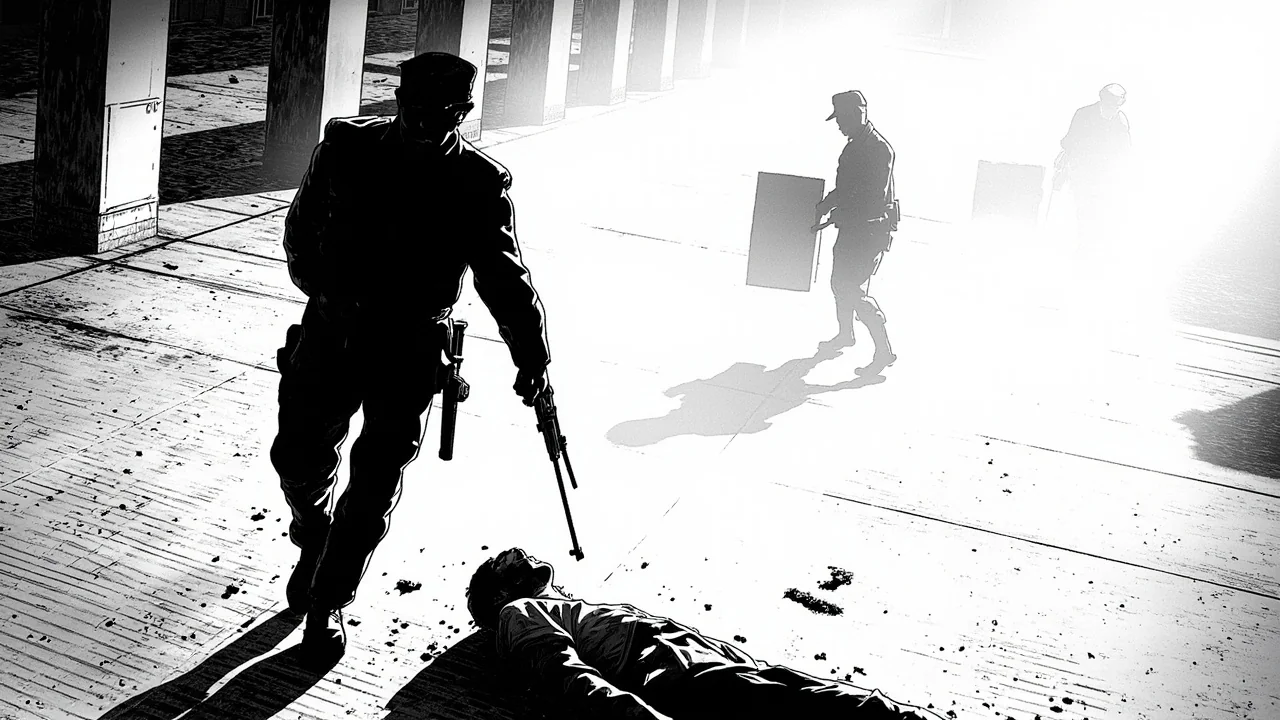
Finland's National Bureau of Investigation is examining a fatal police shooting that left one man dead in Espoo's Niittykumpu district after a routine call escalated into a deadly confrontation. A police patrol entered an apartment building stairwell early on Saturday, September 14th, responding to a report concerning a suicidal individual. The situation turned critical when a man emerged from an elevator brandishing a bladed weapon, according to the preliminary investigation report released by the Office of the Prosecutor General.
The Escalation in the Stairwell
Police officers commanded the man to drop the knife, but he did not comply. Instead of surrendering the weapon, the man charged towards the officers. The authorities were forced to retreat down the enclosed hallway. At least one officer drew a service weapon and issued a warning that they would fire if the attack continued. The warning proved ineffective. The man continued his advance and raised the knife in a threatening manner. An officer then discharged their firearm, firing one shot that struck the individual and a second shot that hit the stairwell's exterior door.
Aftermath and Official Ruling
The attacker died at the scene despite resuscitation attempts by emergency medical personnel. Neither of the two responding police officers sustained physical injuries. Because a police officer used a firearm, the case was automatically referred to Finland's Prosecutor General for review. Special Prosecutor Jonna Ryynänen, leading the investigation, decided not to initiate a pre-trial investigation into the use of the weapon, clearing the officers of criminal suspicion.
Ryynänen stated the situation progressed rapidly and that the patrol had no prior information suggesting the need to prepare for justified use of lethal force. 'The attack was sudden and unlawful,' Ryynänen said in an official statement. 'This created an immediate danger to the police officer who was closest, only a few meters away, and who moved to the end of the hallway to gain distance.' The prosecutor concluded that the circumstances transformed the encounter from an arrest situation into one of self-defense.
Legal Justification Under Finnish Law
Under Finnish law, the use of force by police is governed by the Police Act and the Criminal Code's provisions on self-defense and necessity. The Prosecutor General's assessment focused on whether the officer's actions were proportionate to the imminent threat. 'Taking these circumstances into account, the police officer's actions changed from an arrest situation to a self-defense situation,' Ryynänen's statement clarified. 'The police officer used a firearm to defend themselves and to stop the target person's dangerous behavior. The police officer's actions were in the right proportion to the danger of the situation.'
This legal determination hinges on the immediacy and severity of the threat. The prosecutor found that the officer, facing a close-range assault with a lethal weapon in a confined space, had no effective alternative means of defense or de-escalation available within the crucial seconds of the encounter. The decision not to prosecute aligns with Finnish legal standards when an officer reasonably believes deadly force is necessary to prevent imminent death or serious bodily injury to themselves or others.
Protocol and After-Action Review
Every incident involving police use of a firearm in Finland triggers a mandatory, independent review by the Prosecutor General's office, separate from any internal police investigation. This process is designed to ensure accountability and public trust. The National Bureau of Investigation (NBI) conducts the initial criminal investigation, which is then assessed by a special prosecutor. The NBI's investigation typically includes forensic analysis of the scene, ballistics reports, officer statements, witness interviews, and any available video evidence.
While the officers are not suspected of a crime, the police department will likely conduct its own internal administrative review of the incident. This review examines whether all operational guidelines and protocols were followed before the lethal confrontation occurred. It may assess aspects such as communication from the emergency dispatch, the officers' approach to the building, and their initial attempts at de-escalation. The findings of such internal reviews are seldom made fully public but can lead to changes in training or procedure.
Community Impact and Police Training
The incident occurred in a residential apartment building, inevitably affecting the local community in Niittykumpu. While the source material does not detail community response, such events typically prompt discussions about mental health crisis intervention and police response tactics. Finnish police training includes modules on de-escalation, communication under stress, and managing encounters with individuals experiencing mental health crises. Officers also receive regular training in the use of non-lethal options, such as pepper spray and tactical batons, though the suitability of these tools is assessed on a case-by-case basis depending on the specific threat.
This fatal outcome underscores the volatile nature of calls related to suicidal individuals, which are among the most unpredictable and dangerous situations police officers face. The initial call, received at 2:49 AM, was categorized as relating to a self-harming person, a fact that did not predict the subsequent armed assault on the officers. The case highlights the complex balance police must strike between offering help to vulnerable individuals and ensuring their own safety when that vulnerability manifests as sudden, extreme violence.
A Look at Comparative Statistics
While this single incident is profound, fatal police shootings in Finland remain relatively rare compared to many other nations. Official statistics from the Police Board of Finland show that police discharge their firearms in the line of duty only a handful of times per year, with fatal outcomes occurring even less frequently. Each incident is treated with a high level of scrutiny by both the media and the independent judicial review process. The transparency of the Prosecutor General's statement, detailing the rationale for not pressing charges, is a standard part of maintaining public oversight in the aftermath of such serious events.
The conclusion of the criminal investigation does not mark the absolute end of the matter. The deceased man's family has the right to be informed of the findings and could potentially seek further legal recourse through civil channels, although no such indication is given in the provided material. The finality of the prosecutor's decision brings a measure of judicial closure to the criminal aspect, but the broader questions about crisis intervention and the societal safety net that precede such tragic encounters continue to resonate. The incident in Espoo serves as a stark reminder of the difficult, split-second decisions police officers are sometimes forced to make in the line of duty, under the intense pressure of a direct and immediate physical threat.