
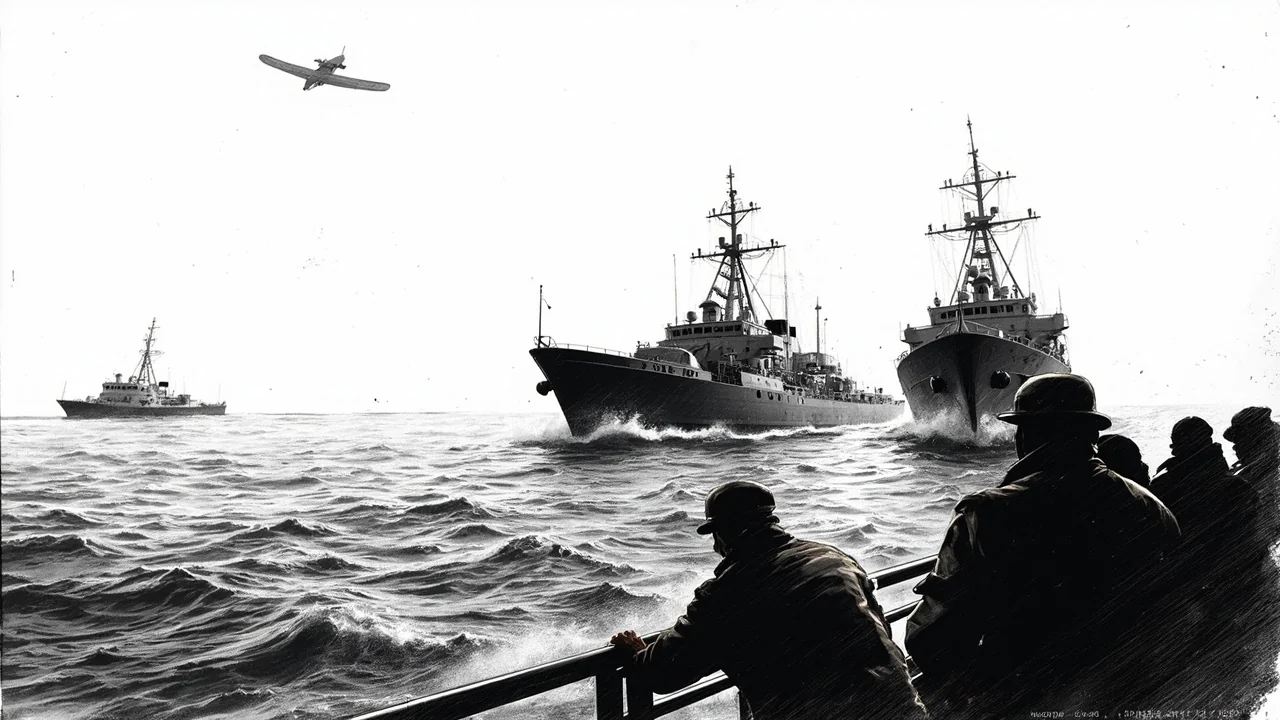
Finland's National Bureau of Investigation has released the MV Fitburg from detention, allowing the vessel suspected of severing a critical undersea data cable to leave Finnish waters. The ship departed Kantvik port in Kirkkonummi around 11 AM Monday, concluding a major police operation. The release follows the completion of preliminary investigation measures by Finnish and Estonian authorities.
"The investigative measures by the Finnish and Estonian police have been completed, which is why the seizure can be lifted," said Detective Superintendent Risto Lohi, the lead investigator from the National Bureau of Investigation (KRP). The Border Guard will now monitor the ship's departure from Finland's territorial waters and economic zone.
One crew member remains in custody after the Helsinki District Court extended his detention on Sunday. Other crew members are subject to travel bans. The case involves suspicions of aggravated damage, attempted aggravated damage, and aggravated disruption of telecommunications.
The MV Fitburg is suspected of damaging the Elisa submarine cable in the Gulf of Finland on New Year's Eve. The break is located within Estonia's economic zone, complicating the jurisdictional landscape. This incident highlights the physical vulnerability of the digital infrastructure underpinning the Nordic region's connected economy.
A Tangled Web of Jurisdiction and Investigation
The investigation's multinational nature required careful coordination. Finnish police led the operation from Kantvik port, where the vessel was detained. Estonian authorities collaborated closely, as the damage site falls under their jurisdiction. This cross-border cooperation is standard for Baltic Sea incidents but adds procedural complexity.
Detective Superintendent Risto Lohi stated the operation's conclusion: "The operation led by the Helsinki Police Department ends when the Fitburg ship has detached from Kantvik port. After that, the authorities will continue their operations normally and report independently on their own areas of responsibility." This handover signifies a shift from an active seizure to ongoing criminal investigation and international legal proceedings.
The travel bans on other crew members prevent them from leaving Finland while the investigation continues. This suggests prosecutors are building a case that may involve more individuals than the single detained suspect. The charges—aggravated damage and disruption of telecommunications—carry severe penalties under Finnish law, reflecting the incident's serious nature.
The Critical Infrastructure at Stake
The damaged cable, owned by Finnish telecommunications operator Elisa, is part of the backbone connecting Finland to global data networks. Submarine cables carry over 95% of international data traffic, making them indispensable for internet, financial transactions, and cloud services. A single anchor drag or trawl can sever these vital lines.
For Finland's technology sector, reliable data connectivity is non-negotiable. Helsinki's status as a hub for gaming giants like Supercell (2,300 employees globally) and Rovio (500 employees) depends on low-latency, high-bandwidth connections. The Finnish tech industry, valued at billions annually, requires seamless data flow for development, distribution, and live operations.
Major data centers operated by companies like Google and Yandex in Finland also rely on this submarine infrastructure. Any disruption risks economic damage far exceeding the physical repair cost. "This isn't just about a cable; it's about trust in Finland's digital resilience," notes a Helsinki-based infrastructure analyst who requested anonymity due to client relationships. "International companies invest here because of stability. Incidents like this test that proposition."
The Broader Context of Baltic Sea Security
This cable damage occurs amid heightened focus on critical infrastructure security across the Nordic region. The Baltic Sea floor is a dense web of energy and data arteries. In October 2023, a subsea gas pipeline and telecom cable between Finland and Estonia were damaged in what is now an investigation of sabotage. NATO has since increased patrols in the area.
The Fitburg incident is officially under investigation for criminal damage, not state-sponsored sabotage. However, it inevitably feeds into wider security discussions. The vessel's release suggests authorities have gathered the physical evidence they needed from the ship itself. The ongoing criminal probe will now focus on intent and responsibility.
Finnish authorities have not disclosed the ship's flag or ultimate destination. Maritime tracking data will become public once the vessel resumes its voyage. The Border Guard's monitoring role ensures a documented exit from Finnish jurisdiction, which may be relevant for future legal actions.
Implications for Finland's Tech and Maritime Policies
The incident presents immediate challenges for Elisa, one of Finland's key telecom operators with over 6,400 employees. Repairing a submarine cable is a slow, weather-dependent process requiring a specialized cable-laying ship. Service for some customers may be rerouted via alternative terrestrial or cable links, potentially affecting latency.
Longer term, this event will fuel debates on infrastructure protection. Finland's Ministry of Transport and Communications may face calls for stricter regulations on anchoring in cable protection zones. The Finnish Maritime Authority could review reporting requirements for vessels transiting near critical infrastructure.
For the Finnish gaming industry and other digital sectors, the incident is a stark reminder of physical dependencies. While cloud infrastructure provides redundancy, backbone damage can still cause regional disruptions. Companies may reassess their data routing strategies and disaster recovery plans in light of this tangible threat.
What Happens Next?
The criminal investigation continues despite the ship's departure. Finnish prosecutors, working with Estonian counterparts, will analyze evidence collected from the vessel and the cable break site. Determining whether the damage was accidental or intentional is a central question. The severity of the charges indicates prosecutors are considering the latter.
The detained crew member will face pre-trial hearings in Finland. His continued detention suggests prosecutors view him as a flight risk or key suspect. The travel bans on other crew members keep them available for questioning. International legal assistance may be sought if the vessel's operator or owner is based abroad.
Elisa and its partners will work to repair the cable. This process involves surveying the damage, retrieving the severed ends, splicing in new cable sections, and reburying the line on the seabed. It is a multimillion-euro operation that can take weeks or months, depending on conditions in the Gulf of Finland.
Finland's response to this incident will be closely watched by neighboring Baltic and Nordic states. It tests protocols for multinational critical infrastructure investigations. The efficient cooperation between Finnish and Estonian police, as cited by the KRP, sets a positive precedent. However, the ultimate test will be a successful prosecution and deterrence of future incidents.
As the Fitburg sails away, the complex work of securing the digital foundations of the Nordic economy continues onshore. This case underscores a modern paradox: our most advanced industries rely on century-old submarine cable technology, vulnerable to simple physical interference. Protecting these lines is no longer just a telecom issue; it is a core component of national and economic security in connected nations like Finland.