
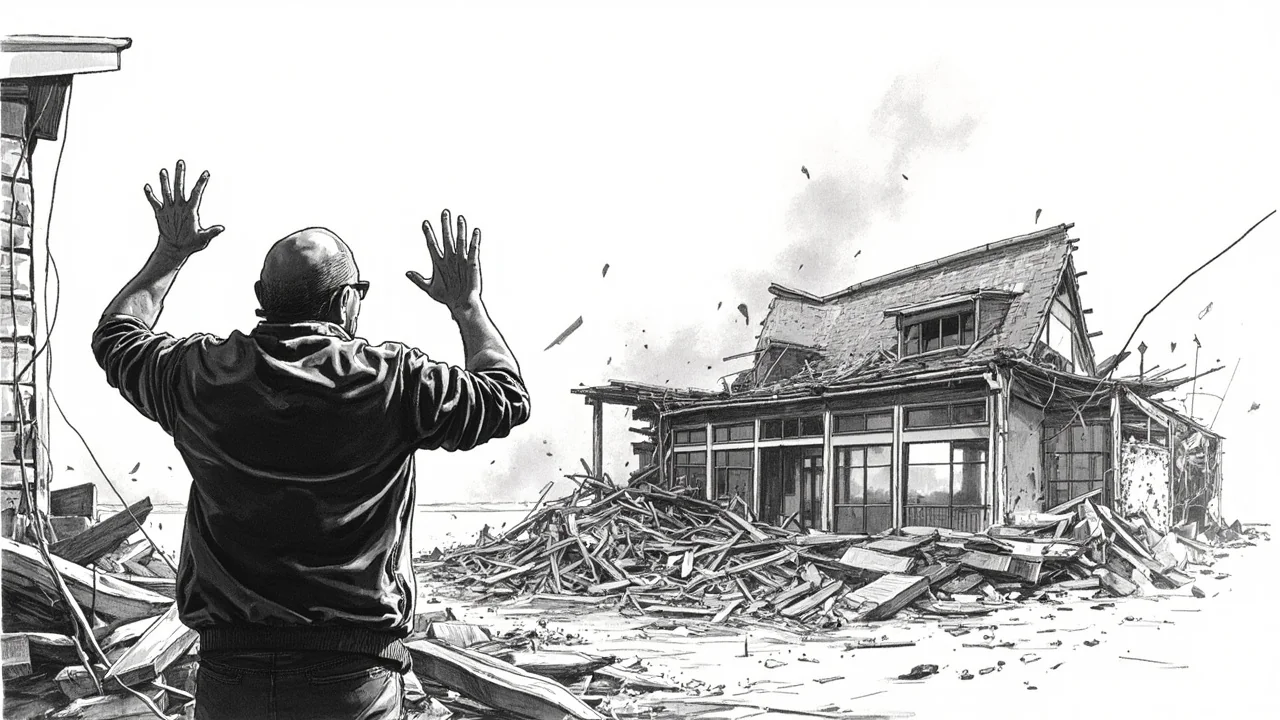
Finland's restaurant industry crisis has claimed another small business, with the owners of Espoo's Cru restaurant pointing directly at government tax and pension policies for its failure. Julia and Matti Auf der Mauer watched as hundreds attended the bankruptcy sale at their Kauklahden Kauppamäelli location this weekend, marking the end of a three-year dream they say was made impossible by rising costs. The District Court of Western Uusimaa declared their company bankrupt last autumn following an application by the pension insurance company Varma, a final administrative step that culminated in a weekend of selling off fixtures, furniture, and art. The couple's story echoes a wider trend, with nearly one hundred Helsinki restaurants closing last year alone, as industry advocates warn of a sector under severe strain. The Auf der Mauers argue that a perfect storm of increased value-added tax and soaring pension insurance contributions pushed their otherwise viable business into the red, creating a financial equation where revenues could no longer cover all outgoings. Their case presents a tangible, human-scale consequence of broader fiscal decisions made in Helsinki's government district, testing the coalition's economic policies against the reality of small business survival. The restaurant's final service was not food but a liquidation of its physical assets, a stark contrast to the vibrant dining experience the couple had envisioned and nurtured for their community. This closure in Espoo adds to a growing list of similar failures, raising urgent questions about the sustainability of the hospitality sector under current fiscal pressures and regulatory burdens. The conversation has now shifted from abstract policy discussions to concrete outcomes, as entrepreneurs like the Auf der Mauers become the public face of statistical trends. Their experience suggests that the cumulative effect of multiple cost increases can be devastating, even for businesses with strong local support and dedicated ownership. The political implications are significant, as each bankruptcy represents not just a business failure but also lost jobs, vacant premises, and diminished local vitality. The government's approach to taxation and social security financing is now under direct scrutiny from the very entrepreneurs it aims to support, creating a potential rift between policy intent and practical outcome. Industry representatives have long cautioned that the sector operates on thin margins and is highly sensitive to legislative changes, a warning that appears validated by the recent wave of closures. The challenge for policymakers is to balance necessary revenue collection with the health of an industry that employs thousands and forms a core part of Finnish social and cultural life. As the cleanup at Cru concludes, the broader debate over Finland's business climate and the specific pressures on its service sector is only intensifying, with more entrepreneurs likely to share their stories. The final reckoning for these policies may well be measured not in budget figures but in the number of darkened windows along neighborhood streets formerly bright with restaurant lights. The human cost of this economic adjustment is now vividly clear in communities across the country, demanding a response from both legislators and the public. The future of Finland's dining culture may depend on finding a new equilibrium between fiscal demands and entrepreneurial viability, a complex task that requires careful listening to those on the front lines. The story of Cru is a single data point, but it carries the weight of a much larger narrative about the direction of the Finnish economy and the values it seeks to prioritize through its tax and social security systems. Ultimately, the true test of these policies will be whether they create an environment where small businesses can thrive, not merely survive until the next cost increase tips them into insolvency. The conversation started by the Auf der Mauers is one that resonates far beyond Espoo, touching on fundamental questions about community, prosperity, and the role of the state in everyday economic life. ## The Final Service at Cru The scene at Cru restaurant in Espoo's Kauklahden district this weekend was one of dissolution, not dining. Long tables normally set for guests were instead covered with stacks of plates, kitchen equipment, and artwork for sale. Hundreds of people attended the bankruptcy sale, drawn by the finality of a local business's demise. Owners Julia and Matti Auf der Mauer presided over the event, a somber closure to their three-year entrepreneurial venture. The kitchen, once a hub of activity, stood empty and silent on Saturday, a physical manifestation of their financial collapse. This liquidation followed the formal bankruptcy declaration by the Länsi-Uudenmaan käräjäoikeus last autumn, initiated by pension insurer Varma's application. The couple described the last year on the village street as particularly painful, as mounting costs steadily eroded their operational viability. Their dream, they stated, was ultimately destroyed by forces they could not control from their kitchen, pointing to national policy decisions. ## A Policy Squeeze on Profits The Auf der Mauers identify two primary policy-driven factors that strangled their business: increased value-added tax and rising pension insurance contributions. Prime Minister Petteri Orpo's coalition government raised the general VAT rate, including the tax on restaurant service, from 24 percent to 25.5 percent at the start of 2024. While the tax on restaurant food remained at 14 percent, a rate among Europe's highest, the overall fiscal burden increased. Simultaneously, Työeläkevakuutusmaksut, or pension insurance payments, rose significantly. Julia Auf der Mauer stated that when these taxes and other side costs for entrepreneurs grew, their income no longer covered everything. She called the rise in pension insurance contributions 'absolutely shocking,' arguing that funds raised them so much it made no sense, and described the industry as challenging with restaurants 'falling like hay in a field.' The Finnish Hospitality Association Mara had previously warned that the tax tightening would worsen the restaurant sector's distress. ## An Industry in Distress The closure of Cru is not an isolated incident but part of a severe downturn for Finland's restaurant sector. Mara's earlier prediction has materialized, with restaurant bankruptcies swinging sharply upward. Last year alone, nearly one hundred restaurants closed their doors in Helsinki. This trend indicates a systemic problem affecting businesses across the capital region and likely beyond, suggesting the issues cited by the Auf der Mauers are widespread. The sector's high sensitivity to operating cost increases is now translating into a wave of insolvencies, reshaping neighborhoods and reducing consumer choice. The concentration of failures in Helsinki may reflect both higher operational costs and greater competitive pressures, but the underlying causes appear rooted in national fiscal policy. Each bankruptcy represents lost livelihoods, vacant commercial spaces, and a reduction in the social infrastructure that restaurants provide. ## The Human Cost of Bankruptcy For Julia and Matti Auf der Mauer, the bankruptcy is the collapse of a personal and professional dream nurtured over three years. They described a different reality a couple of years ago, when everything seemed possible. The transition from a busy kitchen where they exchanged a kiss during lunch service in the summer of 2024 to an empty one by the weekend marks a profound personal and financial reversal. Their accusation that the state and pension companies are responsible frames their loss not as a business misstep but as a policy-induced failure. This personal narrative puts a face to the bankruptcy statistics, highlighting the emotional and economic toll on individual entrepreneurs who invest their time, capital, and passion into a venture. Their story underscores that behind every corporate insolvency filing are people whose lives are upended, a reality sometimes lost in broader economic discussions. ## The Political Reckoning The plight of Cru and similar restaurants presents a direct political challenge to the governing coalition. Policies designed to strengthen public finances and the pension system are being blamed for destroying small businesses and livelihoods. This creates a tension between macroeconomic objectives and microeconomic survival, a classic policy dilemma now playing out in real time. The government must weigh these reported consequences against its broader fiscal goals, potentially recalibrating its approach if the collateral damage is deemed too high. The situation invites scrutiny of whether the cumulative burden of various taxes and mandatory contributions has reached a breaking point for certain vulnerable sectors. Parliamentary debates may now need to consider not just aggregate economic indicators but also sector-specific impacts, particularly for labor-intensive industries like hospitality. The coming months will reveal whether Cru's story becomes a catalyst for policy review or merely another statistic in a continuing trend.
🇫🇮 Finland
25 January 2026 at 10:32
2255 views
SocietyFinland Restaurant Collapses: Owners Blame State Policy
In brief
Espoo's Cru restaurant held its final event—a bankruptcy sale—as owners blame state VAT hikes and pension cost rises for its collapse. Their story reflects a wider crisis, with nearly 100 Helsinki restaurants failing last year. Can Finland's dining culture survive the current policy squeeze?
- - Location: Finland
- - Category: Society
- - Published: 25 January 2026 at 10:32
Illustration
Advertisement