
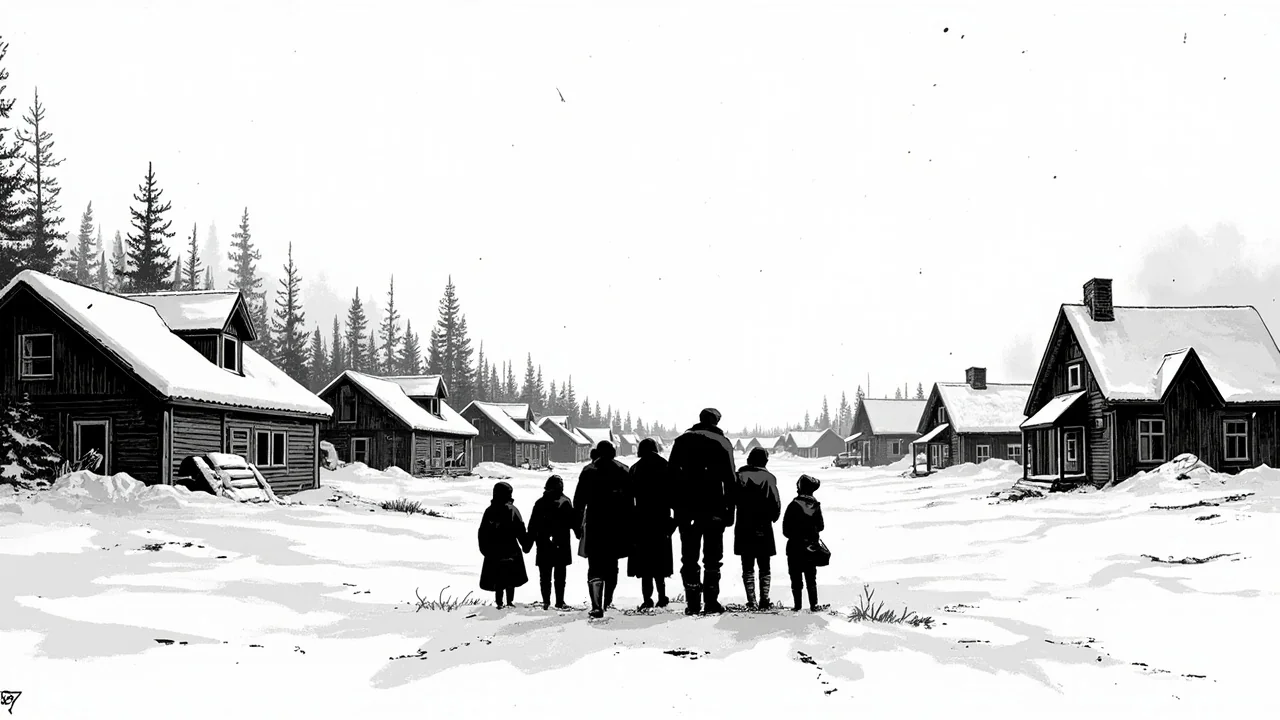
Finland’s capital witnessed one of its most jarring housing incidents on a January day in 1976 when 24 residents of an apartment building in the Viikinmäentie 5 address returned from work to find their entire lives discarded into snowdrifts. Their furniture and personal belongings had been thrown from their apartments while they were away, a brutal execution of an eviction order they knew nothing about. The tenants, who were subletters, had received no warning that their primary landlord had been served an eviction notice by the Helsinki Rent Tribunal back on December 11, 1975, an order that legally encompassed them as well. The shock was complete, turning a routine Tuesday into a scene of personal devastation against the harsh Helsinki winter.
A Home Found in the Snow
The residents described returning to a scene of chaos. Their belongings were piled in the snow outside the building, a physical manifestation of a bureaucratic process that had completely bypassed them. Maritta Laukkanen, one of the affected subtenants, expressed their collective bewilderment and sense of injustice. She highlighted the informal but functional living arrangement they had enjoyed, stating that despite high rents, they had lived freely compared to a normal sublet. 'If a window got broken at some party, we just got a new one put in, and nobody complained about anything,' Laukkanen said. This incident pulled back the curtain on a shadow rental market where vulnerable tenants existed in a legal gray area, fully dependent on a primary tenant who had failed to inform them of the impending loss of their homes.
The Landlord's Rationale and a Flawed System
The building's owner defended the drastic action, claiming the eviction was part of a plan to stop renting out 'hovels' and convert them into proper apartments. The owner's criticism was directed at the system itself, which they argued primarily benefited the primary tenant. This tenant was alleged to have earned several thousand marks from the sublet arrangements, profiting from the very overcrowded and under-maintained conditions the owner now claimed to want to rectify. This perspective framed the eviction not as mere cruelty but as a harsh correction within a broken framework, where both the absentee primary tenant and the opaque regulations had created the crisis. The subtenants were the collateral damage in a conflict between the property owner and the leaseholder, left without rights or recourse.
The Ruoholahti Villas and a Vanishing Helsinki
The eviction at Viikinmäentie 5 was a microcosm of a much larger urban transformation. The building was part of a unique historical cluster known as the Ruoholahti villas, remnants of late 19th-century working-class housing cooperatives. These buildings, of which only 13 remained owned by private housing companies, were directly in the path of Helsinki's modernizing vision. The city's 1976-80 housing production program, then on the desk of the City Board and headed to the council in February, explicitly recommended demolishing the Ruoholahti villas and rezoning the area for new construction. The program officially classified the area's 63 apartments as 'extremely poorly equipped,' and noted the buildings had been allowed to deteriorate externally due to the unclear planning situation. Yet, it also acknowledged the district's historical value, calling it a 'unique surviving area complex from a turn-of-the-century working-class housing cooperative.' The residents of Viikinmäentie 5 were not just losing their homes, they were being swept aside by a wave of urban renewal that sought to erase a chapter of the city's architectural and social history.
Legal Shadows and Tenant Vulnerability
The plight of the 24 subtenants exposed significant gaps in tenant protection law, particularly regarding notification. The legal framework at the time was ambiguous on the responsibilities of a primary tenant to their subletters, allowing a situation where people could be made homeless without any direct warning from authorities or the property owner. Their legal status was precarious, their tenancy entirely contingent on a contract to which they were not party. This incident served as a stark, public example of the human cost of such legal interpretations. It raised urgent questions about the duty of care owed to all residents, regardless of their position in the rental chain, and highlighted the need for clearer regulations to prevent landlords or primary tenants from exploiting informational asymmetries.
A City at a Crossroads
The snow eviction of 1976 sits at a crossroads between old Helsinki and the new. It was a clash between informal, community-oriented living and formal, modern urban planning, between the rights of capital and property owners and the basic need for shelter. The residents of Viikinmäentie 5 valued their community and the relative freedom it offered, flaws and all. The city administration saw a dilapidated, inefficient housing stock blocking progress. The property owner saw a financial liability and a chance to upgrade. Caught in the middle were two dozen people picking their possessions out of the snow, their immediate crisis a direct result of these colliding forces. The incident forced a public conversation about how a growing European capital manages its past while building its future, and what obligations it has to the citizens living through that transition.
Legacy of a Winter's Day
The images of furniture buried in snow outside a Helsinki apartment building became a potent symbol of housing insecurity. While the specific legal loopholes may have been addressed in subsequent years, the core tensions remain relevant. The drive for urban development, the rights of tenants, the preservation of historical communities, and the transparency of legal processes are perpetual challenges for cities. The Ruoholahti villas are gone, replaced by the modern buildings envisioned in that 1976 housing program. The 24 residents of Viikinmäentie 5 found new places to live, their personal story fading into city archives. But the questions raised by that January day persist: Who is informed when a home is lost? Who is protected when neighborhoods change? And how does a society ensure that progress does not come at the cost of leaving its most vulnerable citizens out in the cold?