
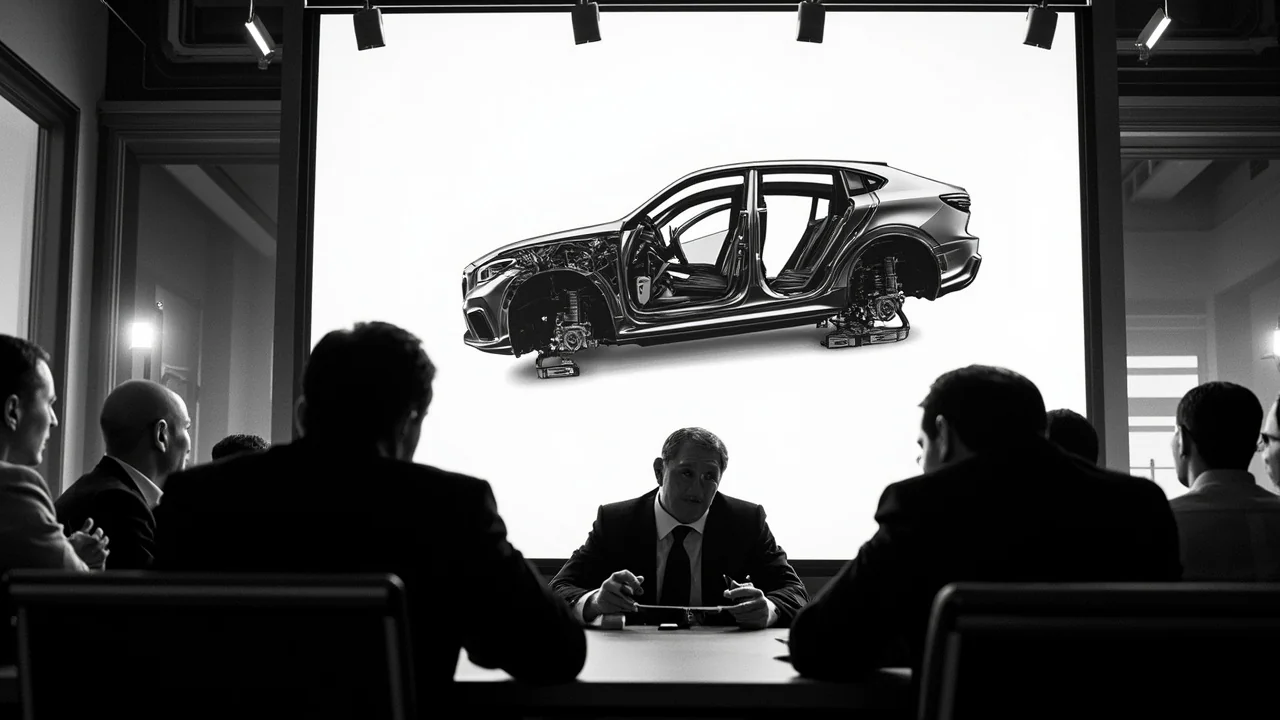
Finnish tech news is often about Nokia's latest news or Helsinki startups in gaming, but a regulatory dispute in Kokkola highlights a new industrial frontier: 3D-printed auto repairs. The clash between Kokkola Autohuolto and the Finnish Transport and Communications Agency (Traficom) over custom 3D-printed parts has forced a pivotal question for the technology sector. If a car modified with such parts is in an accident, who is liable—the repair shop, the part designer, or the driver?
The Regulatory Impasse
Traficom's position is clear. Using self-designed, 3D-printed parts that deviate from the manufacturer's original specifications constitutes a modification of the vehicle's high-voltage system. This interpretation means the vehicle's type approval—its certification for safe road use—could be invalidated. For insurers, this creates a potential legal gray zone. If type approval is void, does that provide grounds to deny a claim following a crash? The case has sparked intense discussion within Finland's auto repair and tech industries, putting a spotlight on how legacy regulations handle cutting-edge manufacturing techniques emerging from the nation's innovation hubs in Espoo and beyond.
The Insurer's Cautious Stance
LähiTapiola, a major Finnish insurance group, is the first to publicly address the dilemma. In an interview, company executive Tapani Alaviiri stated that 3D-printed parts have not yet affected claim decisions. However, he acknowledged the transition brought by electric vehicles and new repair methods. "From an environmental and cost perspective, repair is fundamentally a sensible option," Alaviiri said. "The prerequisite, however, is that the work is done according to good repair practice, with high-quality materials and following the manufacturer's instructions."
The company adopts a cautiously positive view but transfers technical responsibility. It will not pre-judge specific repair parts or the use of 3D-printed components. Instead, it places the onus on industry professionals. "The choice of repair methods and guidance belong to the actors in the automotive and repair shop industry, car manufacturers and importers, as well as the authorities," Alaviiri stated. This hands-off approach from insurers, for now, provides some breathing room for repair shops experimenting with additive manufacturing.
A Niche Issue with Broad Implications
Despite the headlines, Alaviiri notes the phenomenon remains marginal in the daily claims work of insurers. "In the case of 3D-printed repair parts, we have not yet encountered a case where such a part has had an impact on the cause of the damage, its extent, or the level of compensation," he explained. The insurer's core principle is clear: to pay the customer the compensation they are owed. They deviate only when traffic insurance law, policy terms, or established compensation practices clearly mandate it.
Yet, the situation is not without problems. The precedent set by Traficom's strict interpretation could stifle innovation. Finnish engineering talent, renowned in the gaming industry at companies like Supercell (over 400 employees, billions in revenue) and in telecoms with Nokia (over 87,000 employees globally), is also deeply embedded in advanced manufacturing. Startups in Helsinki's tech hubs are exploring similar additive manufacturing applications across sectors.
The Path Forward Requires Dialogue
The onus is now on a broader conversation. As Alaviiri indicated, insurers are waiting for the auto industry, repair professionals, and authorities to establish the rules. Traficom, for its part, must balance its safety mandate with the reality of technological progress. A collaborative effort is needed to develop standards for quality, material integrity, and certification processes for 3D-printed replacement parts.
Finland has a history of pragmatic problem-solving in its technology sector. This case will reveal whether that same pragmatism can be applied to bridge the gap between a garage in Kokkola using a 3D printer and the national legal framework. The outcome will signal to the entire Finnish tech industry how adaptable the nation's systems are to the next wave of industrial innovation. Will Finland codify a new standard, or will it force innovators to look for more forgiving markets?