
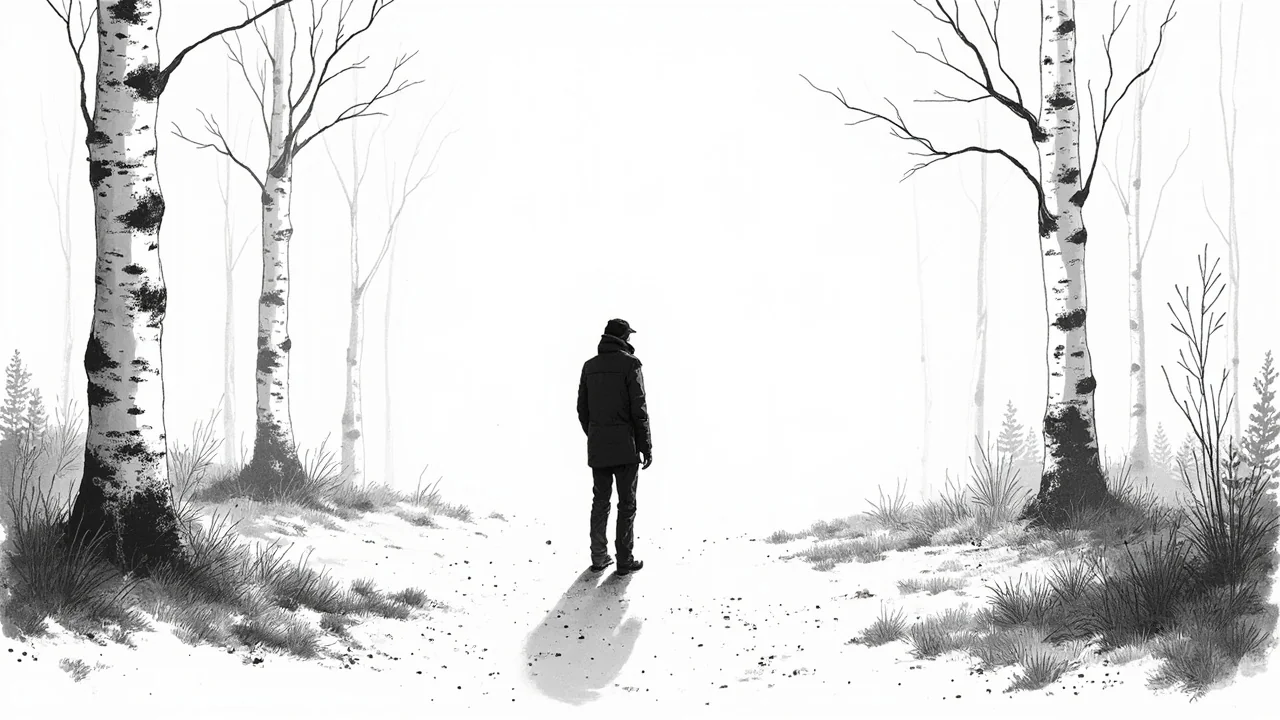
Finland's traditional 'everyman's right' to roam has inspired a new form of community generosity in the quiet woods of Joutseno. Marko Pöntinen has personally constructed a parking area, winter trails, a scenic rest spot, and a public grill, transforming a local forest patch called Pätilä into a shared outdoor living room for all.
Pöntinen created the space as a living memorial to his late father, Kai Pöntinen. His vision is deliberately inclusive, aiming to connect cross-country skiers, sledders, and walkers on common ground. He maintains the compacted snow trails with particular care, ensuring they are firm enough for rollator walkers to use when conditions allow.
A Personal Project with a Public Heart
The initiative began as a personal tribute. Pöntinen selected a spot along the road to Kotieläinmetsä, building convenient access for vehicles. From this parking area, visitors can easily reach the network of winter trails he has tamped down using nearby materials. The amenities are simple but thoughtful: a designated grilling area for cooking sausages, a 'maisemalippa' or scenic resting place to pause and enjoy the view, and those carefully maintained paths.
"I started doing this 'Kaitsu's stretch' in memory of my deceased father, Kai Pöntinen," he explained. "I hope it becomes something of a common living room." This phrase, 'yleinen olohuone,' captures the essence of the Finnish ideal of shared public space—a place for casual meeting and communal enjoyment, freely accessible to all.
More Than Just Trails: Building Social Cohesion
Analysts see projects like Pöntinen's as micro-examples of a deeply ingrained Nordic social value. They represent a voluntary, bottom-up enhancement of the 'jokamiehenoikeus' or everyman's right. While the law guarantees access to nature, citizens like Pöntinen actively improve that access, investing private time and resources for the public good.
"This is civil society in its purest form," says Dr. Elina Saarelma, a sociologist at the University of Helsinki who studies community building in rural Finland. "It's not a government program or a corporate sponsorship. It is an individual recognizing a communal need and acting on it, strengthening the social fabric in a tangible way. In an era of digital isolation, such physical, shared spaces are vital for informal community connection, especially in smaller towns and rural areas."
Dr. Saarelma notes these contributions are particularly significant for maintaining social infrastructure in regions facing demographic challenges. They encourage outdoor activity across generations and abilities, directly impacting public health and community well-being.
The Practicalities of a Public Gift
Maintaining such a space requires ongoing, quiet dedication. Pöntinen's commitment to keeping the trails rollator-friendly highlights a focus on accessibility often overlooked in informal recreation. It demands regular effort after snowfalls, packing down the surface to create a firm, safe path for those with limited mobility. This transforms a simple winter walkway into an inclusive facility.
The provision of a grill also taps into a quintessential Finnish outdoor tradition: grilling sausages over an open fire. By creating a safe, designated spot for this, the area becomes a destination for short excursions and social gatherings, not just transit. The 'maisemalippa' offers a deliberate invitation to stop, rest, and appreciate the surroundings, changing the pace from exercise to contemplation.
A Model with Deep Roots and Broad Implications
Finland's legal framework of everyman's right provides the foundation, but the culture of voluntary stewardship builds upon it. Pöntinen's project is a modern iteration of a long tradition where locals might quietly clear a spring, build a simple footbridge over a stream, or erect a lean-to shelter. These acts were seldom official; they were simply part of belonging to a place and a community.
Urban planning experts point to the psychological importance of such citizen-led spaces. "When people create something for their community, it fosters a powerful sense of ownership and pride," explains urbanist Mika Kovanen. "It tells others that someone cares for this place. This often inspires further care and deters vandalism. It’s a positive feedback loop that municipal projects can struggle to replicate."
For municipal governments, these initiatives present an opportunity. While formal support might complicate their organic nature, recognition and perhaps subtle facilitation—like providing surplus gravel or a waste bin—can help sustain them. The key is to support without bureaucratizing, to enable without taking over.
The Legacy of a Father's Memory
The most powerful element of the Pätilä area is its origin. By naming it "Kaitsun taival" (Kaitsu's stretch), Marko Pöntinen has rooted a public good in a personal story. His father's memory now lives on in the sounds of children sledding, the sight of seniors walking safely on a winter's day, and the smell of coffee brewing on the public grill. The memorial is active and participatory, not static.
This creates a profound, emotional incentive for its creator to maintain it. The care for the space becomes an ongoing act of remembrance, and its public use becomes a continuous honoring of Kai Pöntinen. Visitors may not know the story, but they benefit from the love that inspired it.
In a world often marked by privatization and exclusive spaces, the small park in Joutseno stands as a quiet testament to an alternative. It proves that the most enduring community infrastructure can sometimes be built not with concrete and official budgets, but with simple tools, personal dedication, and a vision of shared welcome. Marko Pöntinen didn't just build trails; he built a meeting place, proving that the simplest acts of generosity can create the strongest communal bonds.
As Finland continues to balance its profound relationship with nature with modern societal needs, the example set in Pätilä offers a compelling blueprint. It suggests that the future of vibrant, healthy communities may lie in empowering and celebrating these small, personal investments in the public realm, where a memorial for one becomes a gift for all.