
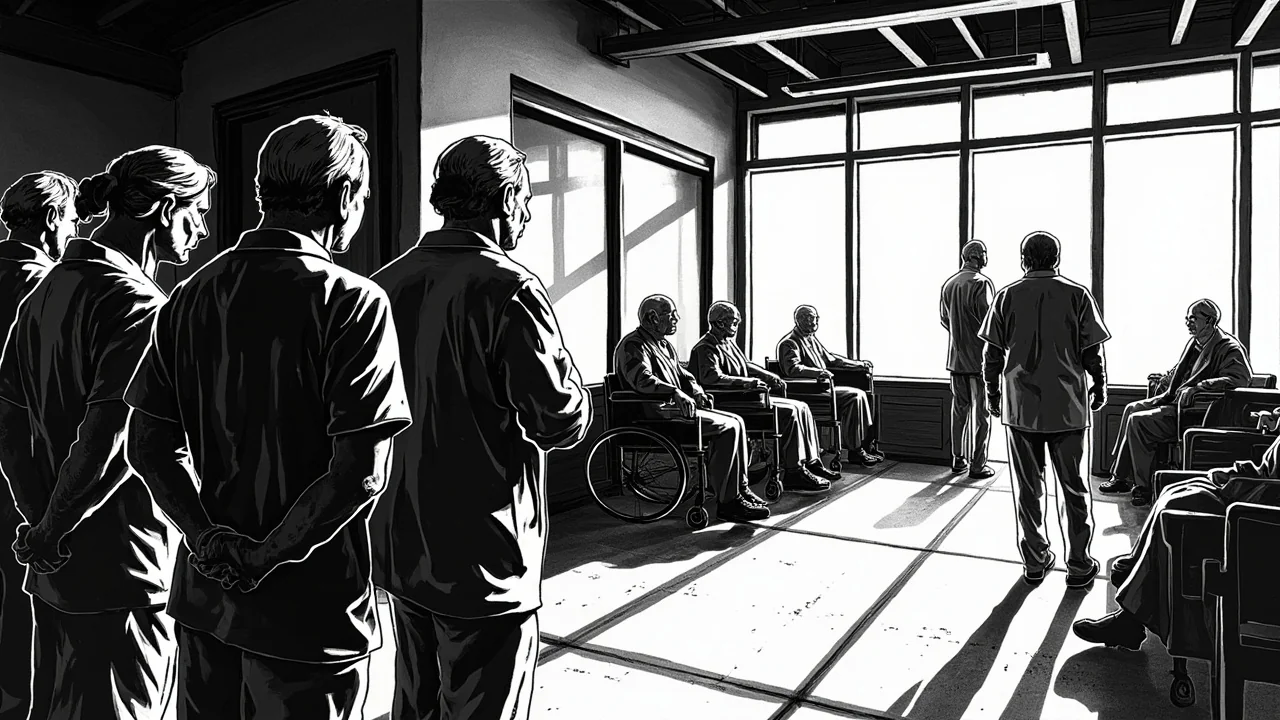
Finland's Parliamentary Ombudsman for the Elderly is demanding urgent new legislation to regulate the use of restraints in elderly care homes, warning that the current legal vacuum exposes vulnerable residents to serious danger and excessive restrictions. The call follows a tragic incident in December at an Esperi Care facility in Turku, where an elderly man with Alzheimer's disease died after being tied to a chair.
"Unlike services for people with disabilities or mental health services, there is no equivalent legislation concerning elderly care services to promote self-determination and regulate the use of restrictive measures," the Ombudsman's office stated bluntly. This absence of a specific law means that both public and private care homes across Finland are left to create their own ad-hoc policies for managing challenging situations and restricting residents' movements, leading to inconsistent and potentially dangerous practices.
A Systemic Failure Years in the Making
The issue is not new. The drafting of legislation on self-determination and the use of restraints in elderly care has been included in several successive government programmes, yet it has consistently been postponed and left unimplemented. This pattern of delay represents a significant policy failure spanning multiple administrations. "Even Prime Minister Petteri Orpo's government has decided to postpone the drafting of the law to the next government's term," the Ombudsman's release noted, highlighting a continued political reluctance to tackle the complex ethical and practical challenges head-on.
This legislative gap exists within a broader Nordic context where Finland, despite its reputation for a strong welfare state, lags behind some of its neighbours in specific protections for the elderly in institutional care. While Finland has general laws on patient and client rights, they lack the precise, sector-specific teeth needed for the unique environment of 24-hour elderly care, where issues of dementia, consent, and safety intersect daily.
The Human Cost of Legal Ambiguity
The Turku tragedy serves as a grim case study of what can go wrong. According to reports, the resident, who required care for Alzheimer's disease, was fatally asphyxiated by the restraint. Such incidents force a painful national conversation about the balance between care and control, safety and autonomy. Without a clear legal framework, care staff are placed in an impossible position. They must make split-second decisions to prevent falls or manage aggressive outbursts linked to dementia, but they do so without uniform, nationally-mandated training, protocols, or oversight for when and how physical restraints can be applied.
This ambiguity risks both under-protection and over-restriction. In the worst cases, it can lead to fatalities. More commonly, it may lead to the excessive use of chemical restraints (sedating medications) or physical restrictions that diminish quality of life and dignity. The Ombudsman's intervention underscores that the right to self-determination does not vanish with age or diagnosis; it must be actively protected, especially when individuals are at their most vulnerable and unable to advocate for themselves.
Political Paralysis and the Path Forward
The repeated postponement of this law raises questions about political priorities and the visibility of elderly care issues within the halls of power in Helsinki. Elderly care, often operating behind closed doors in private homes or facilities, lacks the political immediacy of economic debates or foreign policy. Yet, with an aging population, it is a sector that will touch an increasing number of Finnish families directly.
The Ombudsman's demand places the ball squarely in the court of the current right-wing coalition government led by Prime Minister Orpo. The government's programme, focused on economic adjustment and austerity, now faces a critical test of its commitment to social welfare and human rights. Drafting this law would require navigating difficult ethical terrain, consulting with care unions, medical ethicists, patient rights advocates, and the families of care home residents. It would also necessitate allocating resources for training and monitoring compliance—a cost that may explain some of the historical reluctance.
A potential law would likely need to define permissible types of restraints, set strict conditions for their use (such as immediate danger that cannot be mitigated otherwise), mandate that restraint is always a last resort, require detailed documentation and reporting of every incident, and ensure regular review by a supervising physician or independent party. It would also need to promote and fund alternative, non-restrictive methods of care for people with dementia.
A Question of National Values
Ultimately, this is more than a technical regulatory issue; it is a reflection of how Finnish society values its oldest citizens. The Nordic model is built on principles of equality, dignity, and comprehensive social protection. The current situation in elderly care, where fundamental rights can be curtailed by a patchwork of institutional policies, stands in stark contrast to those ideals.
The Ombudsman's forceful statement is a wake-up call. It challenges lawmakers to move beyond vague programme promises and enact concrete protections. As Finland's demographic structure continues to shift, ensuring safe, dignified, and rights-based care for the elderly is not a niche concern—it is a foundational element of the future social contract. The government's response, or lack thereof, will be a telling indicator of whether political promises to protect the vulnerable can withstand the pressures of budget cycles and competing priorities. The time for delay has run out; the legal vacuum must be filled before another family suffers an irreversible loss.