
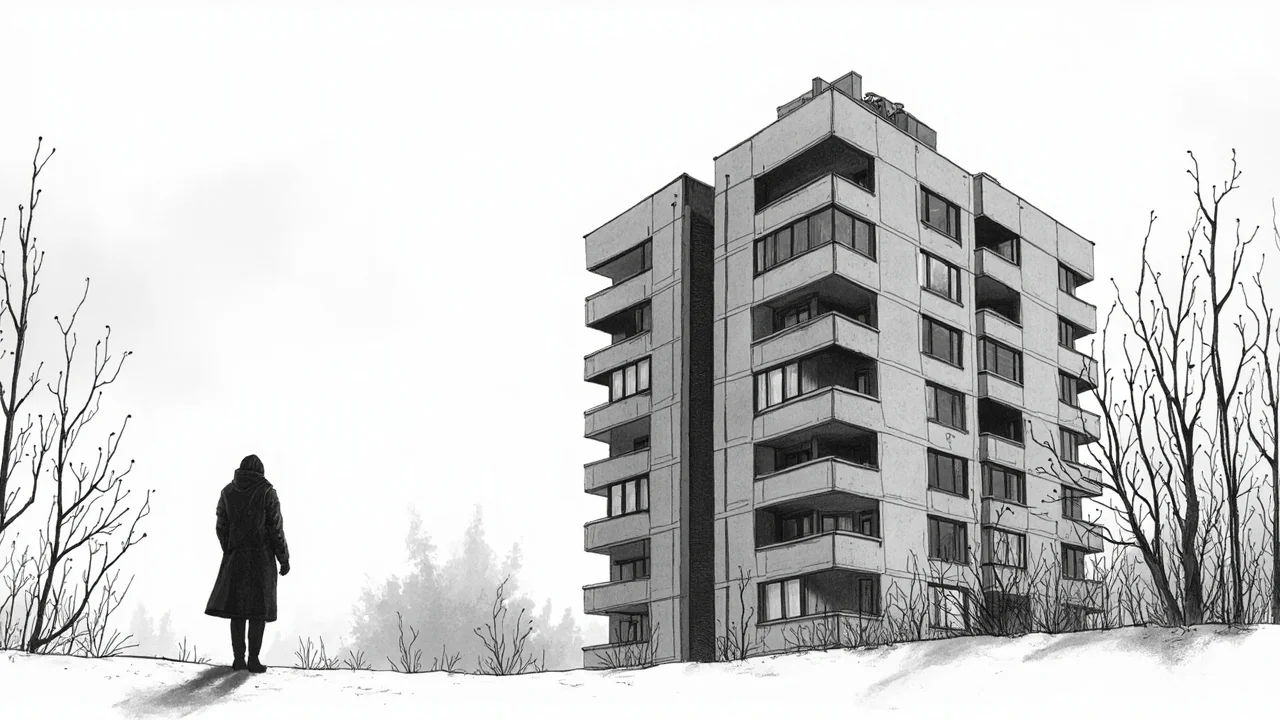
Finland's housing market is showing a stark divide, with 37 brand new apartments sitting empty and unsold on a single street in Helsinki's emerging Postipuisto district. The scene on Metsäläntie illustrates a nationwide trend where a glut of new construction has outpaced buyer demand, despite a recent rebound in the broader property market. This growing inventory of vacant new builds points to a significant price gap and ongoing consumer hesitation that continues to challenge developers and policymakers.
A Developer's Slow Sales Reality
Rakennusliike Evälahti Oy, the firm that built and is now selling most of the units on Metsäläntie, confirms the slow pace. 'Sometimes there can be a month where we don't make a single sale, and sometimes we make several. But business has unfortunately been slow,' said Laura Evälahti, the company's acting CEO. She cites consumer uncertainty and the substantial price difference between new builds and existing homes as key factors damping interest. Her observation is backed by transaction data showing that while overall residential sales rose by 10.7 percent last year compared to the two prior years, new construction sales have remained stagnant.
The 25% Price Gap Conundrum
The core issue, according to industry experts, is a pricing disconnect. Tuomas Viljamaa, CEO of the Finnish Real Estate Federation (KVKL), states the price gap between new and used apartments has widened to as much as 25 percent. In a normal market, that difference is typically 10 to 15 percent. 'People and families are smart. They will certainly buy a used apartment if they get one more room for the same money compared to a new build,' Viljamaa explained. This value calculation is freezing first-time buyers and families out of the new-build market, leading them to prioritize space and location over modern fittings in a high-interest-rate environment.
From Construction Boom to Sales Glut
The current oversupply is a sharp reversal from recent years. Nationwide, only 1,685 new-build apartments were sold in 2023. Just a few years earlier, annual sales for new builds approached 11,000 units. This dramatic drop reflects a market adjusting to what Viljamaa calls a 'new world' of higher interest rates and altered buyer economics. 'We have now spent 2-3 years clearly adapting to the new interest rate level and the so-called new world, and now it is leveling out,' he noted. The adjustment period has left developers with finished inventory in areas like Postipuisto, even as the City of Helsinki has worked to improve the neighborhood's amenities to attract residents.
A Buyer's Market with a Catch
For potential purchasers, the current conditions present both opportunity and complexity. Viljamaa suggests now is a suitable time to buy due to plentiful supply. However, the choice between a new but potentially smaller apartment at a premium price and a more spacious existing home remains difficult. The market's recovery appears to be two-track. 'The trade in used apartments has become more active faster,' Evälahti confirmed, highlighting where the real momentum currently lies. For the price gap to narrow, Viljamaa argues that supply must decrease, potentially through a slowdown in new construction starts, allowing demand to catch up.
The Path to Market Rebalance
The road to a balanced market hinges on several factors. Viljamaa predicts that selling times for existing homes will shorten in the spring, which could push up prices in that segment and gradually make new builds more competitively priced by comparison. Furthermore, sustained consumer confidence and stability in financing costs are prerequisites for a broader recovery. Developers like Evälahti report growing consumer interest in districts like Postipuisto, but converting that interest into signed contracts requires the financial equation to work for household budgets. The city's role in ensuring infrastructure and community services keep pace with development is also critical to long-term attractiveness.
What Comes Next for New Builds?
The coming months will be decisive. The traditional spring selling season will test whether Viljamaa's prediction of faster sales and rising prices in the existing home market materializes. This, in turn, would be the first step toward closing the problematic price gap. Developers may need to consider more flexible pricing models or unit configurations to attract buyers. The Finnish housing market is in a corrective phase, working through the excesses of the previous low-rate era. The empty apartments on Metsäläntie are a physical manifestation of this correction, a sign that the market's recovery is incomplete and that the definition of a desirable home in Finland is being rewritten by economic reality.