
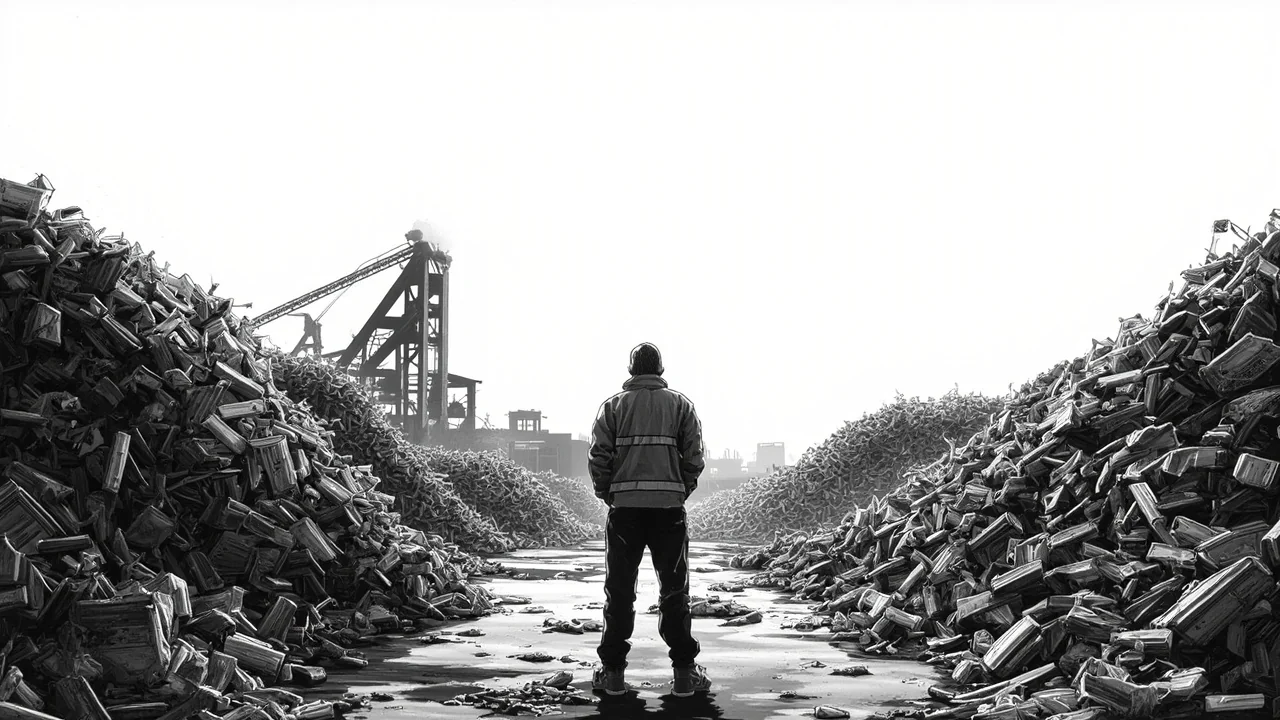
Finland's green transition faces a stark reckoning as a state-backed plastic recycling venture leaves behind 2,700 tonnes of unsorted waste. The bankruptcy of the Wimao group, whose subsidiaries received millions in public support to turn recycled plastic into new products, culminated in a surreal online auction for its primary remaining asset: mountains of contaminated material. The case exposes the raw challenges at the intersection of public investment, environmental goals, and commercial reality in the circular economy.
A Bankruptcy Sale of Unusual Stock
The tangible outcome of the company's collapse was listed on the auction site huutokaupat.com this January. The lot, located in Lappeenranta, was described as 2,700 tonnes of untreated mixed plastic waste. The sales listing noted that bidding continued despite a lack of immediate takers, a process typical for a bankruptcy estate liquidating remaining assets. The material, originally intended for processing into new recycled products, instead became a liability for the konkurssipesä, or bankruptcy estate, to sell for whatever value it could recover. This commercial endpoint stands in direct contrast to the venture's beginnings, which were fueled by significant public investment and high environmental ambitions.
Public Funds and Private Failure
The Wimao group, through its network of subsidiaries, was a beneficiary of substantial public funding aimed at advancing Finland's circular economy. While the precise total of grants and subsidies received remains detailed in corporate and public records, the scale was significant, reaching into the millions of euros. These funds were allocated with the goal of creating a domestic capacity to sort, clean, and reprocess plastic waste into high-quality raw material for manufacturing. The investment reflected a broader national and EU policy push to reduce reliance on virgin plastics and create closed-loop systems. The company's operational model was predicated on sourcing this waste, often referred to as feedstock, and transforming it through technological processes. Its failure, therefore, represents not just a private business collapse but a setback for a specific strand of publicly supported green industrial policy.
The Core Challenge of Contaminated Feedstock
Industry experts familiar with the recycling sector point to a fundamental, unglamorous problem that likely contributed to the situation: feedstock quality. The profitability and technical feasibility of plastic recycling are acutely sensitive to the composition and purity of the incoming waste stream. Mixed plastic waste, especially post-consumer material, can contain a wide variety of polymer types, colors, and contaminants like food residue, labels, and other non-plastic materials. The term 'all kinds of rubbish' used in the original report succinctly captures this hurdle. Effective sorting requires sophisticated and expensive machinery, and even then, a significant portion of the input may be unrecyclable and must be sent for energy recovery or landfill. If the incoming material is of poorer quality or more mixed than anticipated, the economics of the entire operation can collapse rapidly, as processing costs soar and the yield of valuable output plummets. This appears to be a central issue that Wimao's operations could not overcome.
A Sector Under Pressure
The difficulties encountered by Wimao are not isolated but symptomatic of broader pressures on the European recycling industry. The market for recycled plastics is volatile, often struggling to compete on price with cheap virgin plastic derived from fossil fuels. EU regulations and directives, such as the Single-Use Plastics Directive and packaging waste rules, are creating both demand and stricter requirements for recycled content. However, building the infrastructure to meet these demands is capital-intensive and technologically challenging. Several other projects across the Nordic region have also faced financial difficulties or delays, citing similar issues with supply chain logistics, sorting technology, and market prices. The sector is caught between policy ambition and hard commercial and technical realities, where the pathway from collected waste bottle to a reliable pellet of recycled plastic is fraught with potential for failure.
The Aftermath and Lingering Questions
The immediate practical question is the fate of the 2,700-tonne stockpile in Lappeenranta. Its sale by the bankruptcy estate transfers the problem to a new owner, who would presumably seek to process it for value or, alternatively, dispose of it. Environmentally, the worst-case scenario would be its export to a country with lower environmental standards, simply shifting the problem elsewhere. Domestically, its disposal would likely mean incineration for energy recovery, a less desirable outcome than material recycling in the circular hierarchy. The case also prompts difficult questions for public funding bodies. It highlights the risk inherent in subsidising nascent technological fields and the need for robust due diligence and ongoing oversight of how grant conditions are met. The challenge for policymakers is to learn from such failures to design support mechanisms that are both ambitious and resilient, ensuring public money truly catalyzes sustainable, viable industries rather than fleeting experiments.
A Cautionary Tale for the Green Transition
The story of Wimao serves as a critical case study for Finland's and the EU's green industrial ambitions. It underscores that the circular economy is not merely a conceptual goal but a complex industrial undertaking with real-world supply chains, engineering challenges, and financial risks. The vision of turning waste into value is compelling, but the process is messy, capital-intensive, and technologically demanding. This bankruptcy, symbolized by the auction of its unsorted waste, is a stark reminder that without solving the foundational issues of material quality, sorting efficiency, and market stability, even the most well-intentioned ventures, backed by significant public funds, can falter. The path forward requires not just investment but a clear-eyed understanding of these systemic hurdles, ensuring that the next bet on Finland's circular future is built on more solid ground.