
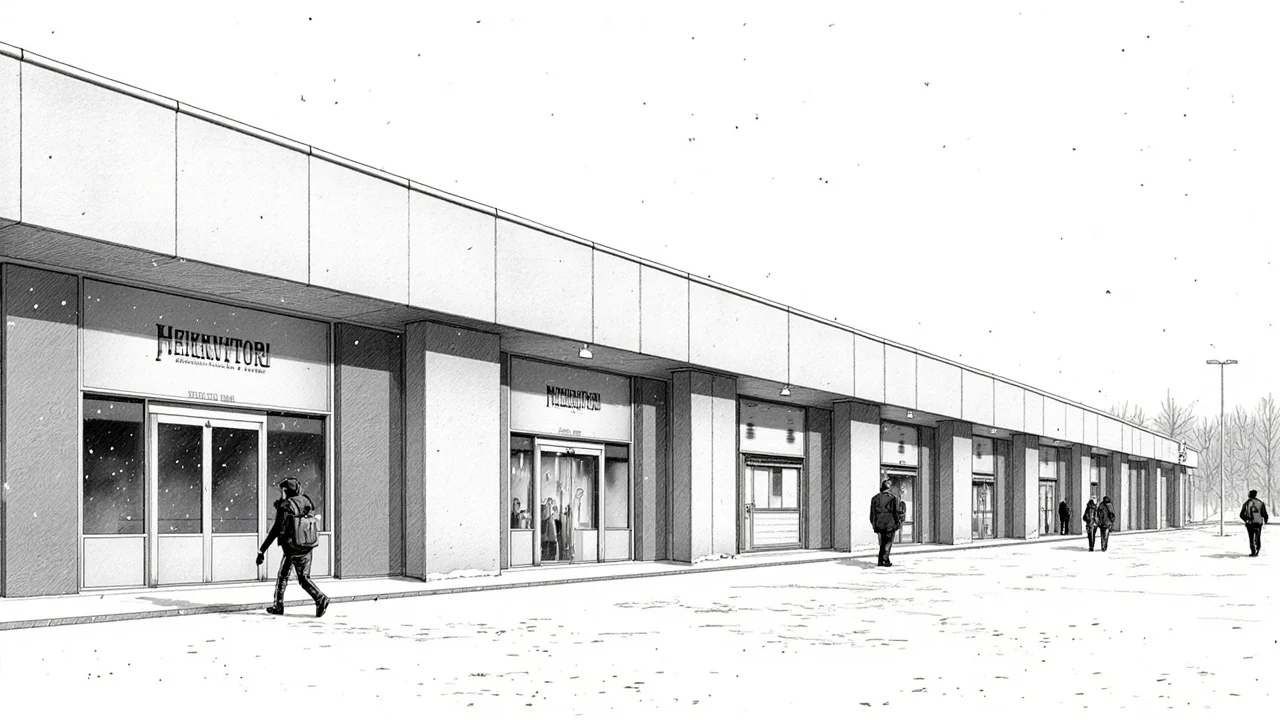
Finland's Heikintori shopping center in Espoo is terminating the leases of its last remaining tenants, leaving the local grill owner desperate and marking the end of an era for the Tapiola district. The Espoo city government is now planning a complete transformation of the site, with social and healthcare services and an apartment building slated to replace the decaying retail hub that once served the community.
The Last Grill Stands Alone
Grilli Ribiksen owner Petri Saarinen is among the final entrepreneurs being forced out. His grill has operated in Heikintori for over a decade, serving lunch to local office workers and residents. Now, with his lease terminated, he faces an uncertain future and the potential loss of his livelihood. "You feel pretty desperate," Saarinen said, describing the emotional and financial toll of the closure. The mall, which once buzzed with activity, now houses only a handful of businesses, creating a ghost-town atmosphere that has driven away customer traffic long before the final eviction notices arrived.
An Uncertain Future for Local Commerce
The closure highlights a broader challenge for suburban commercial spaces across Finnish cities. Heikintori's decline was not sudden but a gradual process tied to changing retail habits, competition from larger centers, and the physical deterioration of the building itself. Espoo City Architect Aino Kuusimäki described the center's condition candidly, stating the premises are in, "let's say, fairly rough shape." This assessment underpins the city's decision not to revive the retail concept but to completely reinvent the space's purpose. For small business owners like Saarinen, the lack of alternative, affordable commercial spaces within the immediate area compounds the crisis, raising questions about the survival of independent local services in evolving urban landscapes.
From Retail to Welfare Services
Espoo's city planning office is currently preparing a detailed zoning plan that will dictate Heikintori's future. According to the draft plans, the old shopping center and its adjacent parking facility will be demolished. In their place, the city envisions a new construction project focused on social and healthcare services, meeting the growing demand for public welfare infrastructure in the growing city. A residential building is also planned for the site of the current parking structure, aligning with Finland's national and municipal goals of increasing housing density near public transport hubs and existing urban cores. This shift from private commerce to public service provision represents a significant change in the neighborhood's character and utility.
The Human Cost of Urban Progress
The transformation of Heikintori is a practical example of Finnish municipal planning in action, where cities like Espoo actively reshape districts to meet contemporary demographic and service needs. However, the human impact of this planned progress is acutely felt by the displaced entrepreneurs. Saarinen's story is not just about a business closing, it's about the dissolution of a community anchor. His grill was a daily meeting point, a constant in the neighborhood routine. The city's plans, while rational from a spatial and service-design perspective, do not include a ready-made solution for the small businesses they displace. This situation forces a conversation about how urban development can balance forward-looking planning with the protection of existing, viable small-scale commercial ecosystems.
A National Trend in Miniature
Heikintori's fate mirrors similar transitions in other Finnish municipalities, where underperforming 20th-century commercial blocks are repurposed for housing, offices, or public services. These decisions are often driven by city architects and planning committees responding to shifts in retail, the housing market, and public service gaps. While the process is logical, the execution often overlooks the soft infrastructure of local businesses. The case also intersects with broader EU cohesion policy objectives, which Finland interprets through a lens of sustainable urban development and efficient land use, potentially making such brownfield redevelopments eligible for structural funding that prioritizes welfare and green transition over traditional commercial support.
What Comes Next for the Site?
The next steps involve finalizing the zoning plan, a process that includes a period of public review where residents and stakeholders can voice opinions. For the current tenants, the timeline is much shorter. They must clear their premises, leaving behind a vacant building awaiting demolition. For Petri Saarinen, the search for a new location is fraught with the high costs and competitive rental markets of the Helsinki metropolitan area. The closure of Heikintori mall, therefore, is more than a simple change of scenery in Tapiola. It is a microcosm of modern urban transition, where the needs of the city as a collective sometimes overshadow the dreams of individual entrepreneurs, leaving them to wonder if the promise of stability for small business still exists in Finland's evolving city centers.
The Final Countdown in Tapiola
As the last lights go out at Heikintori, the district will temporarily lose a piece of its daily commerce. The promised social and health services may eventually bring a different kind of vitality to the corner. But for now, the story is one of ending. The empty storefronts and the quiet hallways stand as a testament to a model of suburban retail that has run its course. The planners see a rough building ready for renewal. The former shop owners see the end of their hard work. Finland's cities continue to evolve, but the Heikintori case asks whether that evolution can make room for both the new services citizens need and the old businesses they have come to rely on. "You build something for over ten years, and then it's just gone," Saarinen said, capturing the definitive finality of the city's decision.