
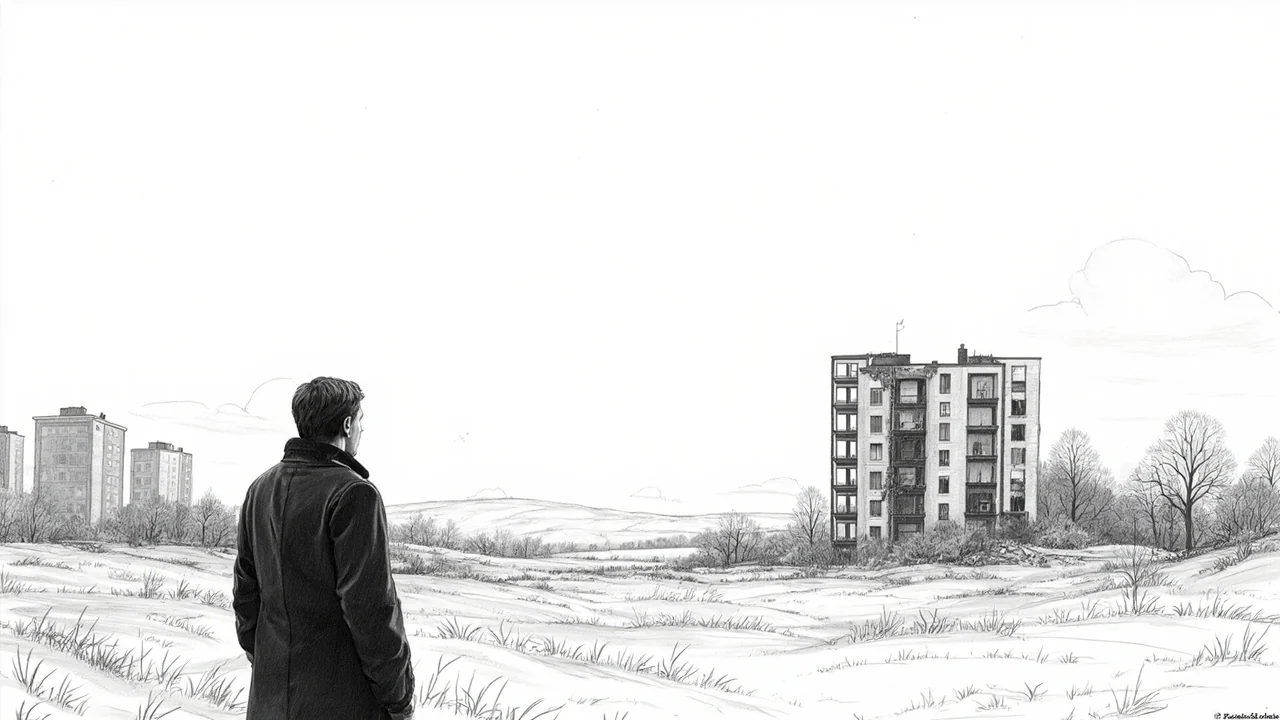
Finland's municipal housing companies face a critical nationwide decision as aging apartment blocks reach the end of their technical lifespans. In Lappeenranta, the city-owned Asuntopalvelu company plans to demolish a 1963 apartment building at Yrjönkatu 1 and construct a new one, declaring renovation economically unviable. This case highlights a growing policy challenge across Finnish cities, forcing a reckoning with mid-20th century construction standards, modern energy efficiency demands, and the social responsibility of public housing providers.
Asuntopalvelu's board concluded the existing five-story building is technically obsolete. A previous renovation in 1995 cannot bring the structure up to current building regulations at a reasonable cost, according to company assessments. The proposed replacement would enable modern, energy-efficient solutions and more functional apartment layouts. The project remains in early planning stages and requires a zoning change before proceeding, indicating a process that will involve public consultation and municipal oversight.
A Microcosm of a National Challenge
The situation in Lappeenranta is not isolated. Thousands of similar concrete apartment buildings, constructed during Finland's rapid urbanization in the 1960s and 1970s, are now approaching 60 years of age. These structures, often built with techniques and materials that differ from modern standards, present municipal housing companies with a complex equation. The calculation balances renovation costs against demolition and new construction, while also weighing resident displacement, environmental impact, and long-term housing stock sustainability.
"The fundamental question is one of lifecycle economics and social value," explains Dr. Eero Pekkala, a professor of housing economics at Aalto University. "A deep renovation can extend a building's life by 30-40 years, but it must also meet contemporary needs for space, accessibility, and energy performance. When the cost of achieving that approaches 70-80% of new construction, the argument for a fresh start becomes stronger, though more disruptive."
The Renovation Impasse at Yrjönkatu
The specific building at Yrjönkatu 1 exemplifies the technical impasse. Built in 1963, its technical systems, insulation, and layout are products of a different era. Finnish building regulations have evolved significantly, particularly regarding energy efficiency (through regulations like the National Building Code of Finland, Part D3) and accessibility. Retrofitting the existing concrete frame to meet these standards would be prohibitively expensive and technically challenging, Asuntopalvelu argues.
This creates a policy tension. The Finnish government and the EU promote a "renovation wave" and circular economy principles, favoring refurbishment over demolition to reduce embodied carbon. However, pragmatic housing providers must contend with the physical and financial reality of each building. The 1995 renovation attempted to modernize the Yrjönkatu building, but the pace of regulatory change has rendered those improvements insufficient for the long term.
The Promise and Cost of New Construction
The proposed new building offers clear advantages on paper. It would be designed from the ground up to meet the latest 2025 energy efficiency requirements, potentially achieving near-zero energy building (nZEB) status. Apartment layouts could be optimized for modern living, with better sound insulation, larger windows, and improved accessibility features for an aging population. New construction also allows for the integration of smart building technologies and sustainable materials from the outset.
However, the process is fraught with hurdles. The required zoning change is a political and administrative procedure that can take years. Construction costs in Finland remain high, and the final rents in the new building would inevitably be higher than in the old one, raising questions about affordability for existing tenants. The demolition itself carries an environmental cost, though new buildings offer lower operational emissions.
The Human Impact and Tenant Rights
Behind the technical assessments and cost calculations are residents. Demolition and reconstruction mean the temporary or permanent relocation of households, disrupting community ties and daily routines. Finnish rental law provides protections, and municipal housing companies like Asuntopalvelu typically offer tenants the right to return to the new building. Yet, the interim period and potential for higher rents upon return create uncertainty and anxiety.
"Municipal housing companies have a dual mandate," says Sanna Kärkkäinen, a legal advisor for the Finnish Tenants' Union. "They must manage their assets responsibly, but they also have a social function to provide stable, affordable housing. Decisions like these must be made with full transparency and tenant involvement from the very beginning. The cheapest financial option cannot be the sole criterion."
The Broader Finnish and EU Context
This local decision intersects with broader Finnish housing policy debates. The government's housing policy emphasizes increasing supply and improving quality, but funding for large-scale renovation of the existing public stock is limited. EU directives on building energy performance push for deeper renovations, yet grant exemptions for cases where renovations are not technically or economically feasible—a clause that may apply in Lappeenranta.
Furthermore, Finland's climate goals require a drastic reduction in building sector emissions. While new buildings are more efficient, the carbon debt from producing new concrete and steel is significant. Lifecycle analysis is becoming crucial in these decisions. The Ministry of the Environment is currently updating guidelines for assessing the sustainability of building renovations versus replacements, a sign of the policy's evolving complexity.
A Look Ahead for Lappeenranta and Beyond
The Yrjönkatu project will serve as a test case. Its progression through the zoning process, its final design, and its handling of tenant relations will be watched closely by other municipal housing companies in cities like Helsinki, Tampere, and Oulu facing identical dilemmas. The decision embodies a shift from perpetual maintenance to planned obsolescence and renewal in Finland's housing infrastructure.
Ultimately, the question posed in Lappeenranta echoes across the country: When does a building's story end? The answer balances cold engineering facts with warm social considerations, fiscal responsibility with environmental duty, and the legacy of past construction booms with the needs of future generations. The path Finland chooses—demolition or deep renovation—will reshape its cityscapes and define its approach to sustainable urban living for decades to come.