
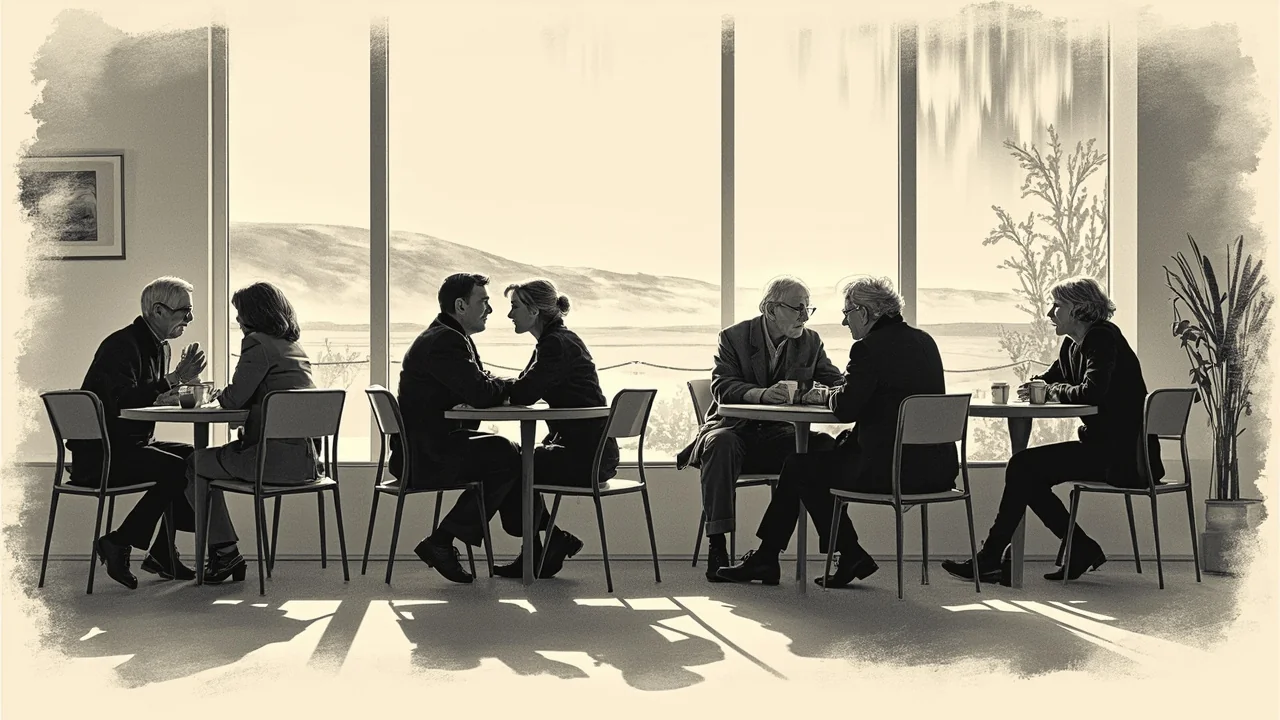
Finland's growing loneliness challenge has found a simple, grassroots response in Helsinki, where a single social media post sparked a nationwide conversation about connection. Last year, 24-year-old Oona Malmström moved to the capital and found herself without many friends. She made a video on TikTok asking for coffee companionship, and the publication, as she puts it, 'exploded in my hands.' The response was immediate and overwhelming, with hundreds of comments from people wanting to meet. 'I started thinking, I can't possibly go for coffee one-on-one with two hundred people,' Malmström says with a laugh. That is when a commenter suggested starting a coffee club, and the idea for 'Kaffekaveri' was born. The first meeting saw five people gather, a year later, laughter echoes in different cafes weekly as the club regularly convenes, welcoming anyone with open arms.
From TikTok Post to Weekly Gathering
The club operates on a strikingly simple principle: show up. Tables are combined and extra chairs are fetched to ensure everyone can participate. For 35-year-old Nalle Fyrqvist, who has been attending for six months, Kaffekaveri is a brilliant concept that directly addresses a social ill he reads about daily. 'You read in the papers every day about how lonely people are. This is one way to reduce loneliness and get more community spirit. This country needs considerably more community and fun things to do with a group,' Fyrqvist states. His motivation for joining was straightforward: he wanted new human contacts and people to talk to. He notes that after the first time, coming for coffee did not intimidate him much, as the atmosphere felt warm and cosy from the start.
Breaking the 'Juro' Finnish Stereotype
The initiative challenges the stereotype of the reserved, or 'juro', Finn, creating a structured yet relaxed setting for socialization that bypasses the usual hurdles of Finnish friendship. Fyrqvist actively encourages others to join, even if they feel nervous. 'If as an adult you try to arrange a meeting with a friend, it gets scheduled for three months from now. I want coffee this week,' he says, highlighting the club's immediacy. He describes it as an easily approachable community with nice people who are easy to talk to, emphatically adding, 'There are no unpleasant people here at all.' This sentiment is echoed by 30-year-old Eero Jokinen, who found his way to the coffee table in late summer 2025 and has since made friends from among the attendees, meeting some of them outside the club as well.
A Low-Threshold Community
Jokinen champions the same low-threshold approach. 'Just come here with a low threshold for chatting, exchanging thoughts, catching up, or whatever you can think of. You don't need to be nervous,' he says. He enjoys the chance to socialize and exchange ideas with others in a relaxed atmosphere. In Jokinen's view, the concept helps alleviate the loneliness experienced by many Finns, and he hopes to see similar concepts increase across Finland. The founder, Oona Malmström, confirms she sometimes receives messages before gatherings from people who feel uncertain about attending, underscoring the need for such inviting spaces.
A Digital Seed Grows in Real Life
The story of Kaffekaveri is fundamentally about translating digital interaction into genuine, real-world community. It did not begin with a formal policy or government program but with an individual's personal need and a platform that amplified it into a collective solution. The club's sustained success over a year demonstrates a clear public appetite for informal, recurring social events that require no long-term commitment from participants, just their presence for a coffee. This model presents an organic alternative to more structured social programs, relying on peer facilitation and the shared understanding of a common need for connection.