
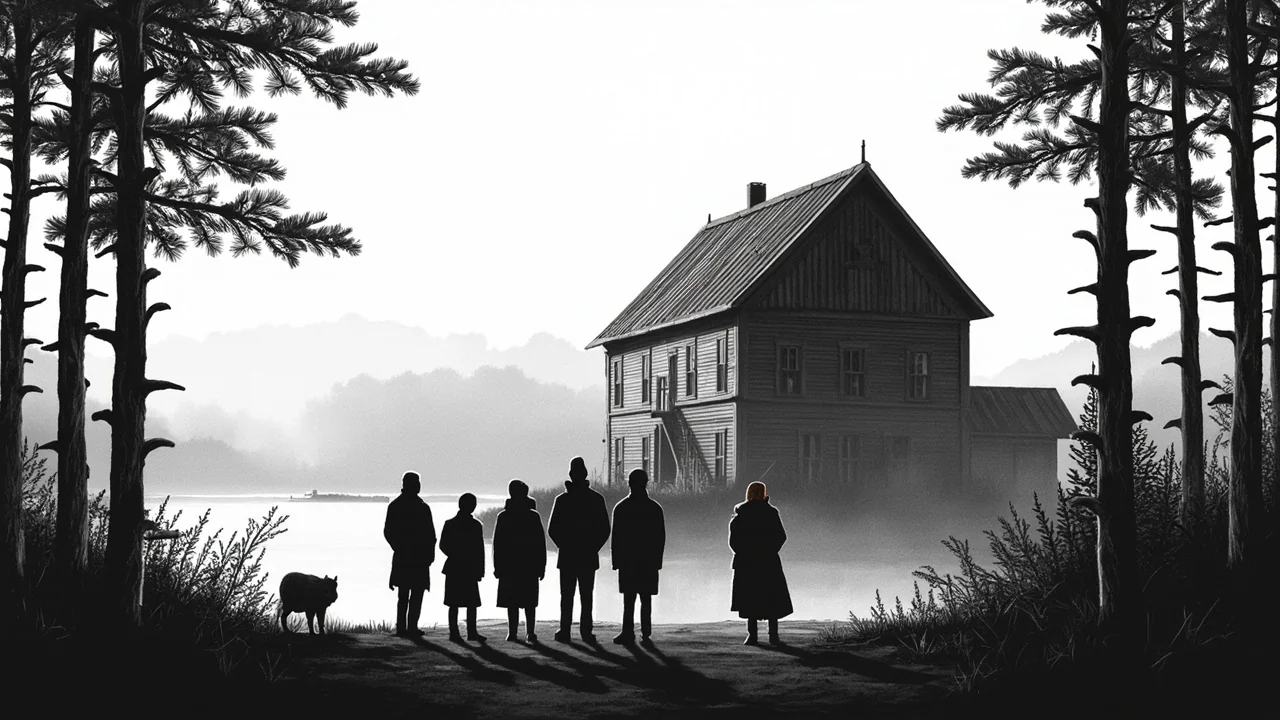
Finland's historic Jämsänkoski mill property has secured new private owners after a sale finalized last Friday. The transaction, conducted by UPM Properties, transfers the legendary riverside industrial site to two couples who describe the purchase as the fulfillment of a long-held dream. While the purchase price remains confidential, the deal marks a significant transition for a landmark deeply woven into the region's cultural and economic fabric.
For Pekko Ruusu and Saija Kotiaho-Ruus, alongside Veli-Matti and Minna Nikander, acquiring the mill complex represents more than a real estate investment. "This is an old dream of ours that has now come true," Kotiaho-Ruus said, capturing the personal significance behind the commercial transaction. The sale concludes UPM Properties' ownership of a site that once pulsed with the industrial energy of Finland's forestry sector, opening a new chapter focused on preservation and potential revitalization.
UPM Properties Director Tapani Sirkkanen confirmed the sale was completed last Friday. The company, a subsidiary of the forest industry giant UPM, has been streamlining its property portfolio, divesting non-core assets like the historic mill. The new owners now face the task of stewarding a piece of Finnish industrial heritage, a responsibility that carries both opportunity and considerable challenge.
A Legacy Forged by Water and Wood
The Jämsänkoski mill's history is inextricably linked to the powerful currents of the Jämsänjoki river and the vast Finnish forests. For generations, such sites formed the backbone of local communities, providing employment and shaping the social landscape. The mill at Jämsänkoski stands as a silent witness to Finland's transformation from a rural society to an industrial powerhouse, its architecture telling a story of functional design and economic ambition.
Properties of this scale and historical weight present unique dilemmas. Maintenance costs are substantial, and adapting vast industrial spaces for modern use requires vision and significant investment. The sale by UPM Properties reflects a broader trend where large corporations transfer heritage sites to private custodians or municipalities, often to focus resources on their core industrial operations. The successful future of the mill now depends on the new owners' plans, which could range from cultural and residential conversion to commercial reuse.
The Challenge of Industrial Heritage
Across Finland, the fate of old mill and factory buildings sparks continuous debate. These structures are monuments to a defining era, yet their sheer size and specialized construction make repurposing difficult. Successful projects, like the former Verla groundwood and board mill—a UNESCO World Heritage Site—showcase how industrial landmarks can become museums and cultural centers. Other sites find new life as apartments, hotels, or office complexes, injecting modern vitality into historic frames.
The Jämsänkoski mill's new owners inherit this complex equation. Their passion, as expressed in Kotiaho-Ruus's statement, is a crucial first ingredient. However, passion must be paired with pragmatic planning, community engagement, and often, partnership with local authorities and heritage boards. The Finnish Heritage Agency (Museovirasto) can provide guidance on conservation, but the financial and operational burden rests with the private owners.
A New Chapter on the Riverbank
The transaction's confidential price suggests a negotiated agreement based on more than mere market value, possibly acknowledging the property's condition and the costs ahead. For the two couples, the project will likely be a labor of love. Their approach could set a precedent for how smaller, private actors can manage large-scale heritage, contrasting with projects driven by major developers or public funds.
The local community in Jämsä will watch developments closely. Such landmarks are sources of local pride and identity. A sensitive renovation that honors the building's past while creating new value for the town would be considered a major success. Conversely, a project that stalls or compromises the site's character would be a profound disappointment. The owners' first steps—whether they seek public funding grants, launch archaeological surveys, or propose initial zoning changes—will be highly scrutinized.
The Future of Finland's Working Past
The story of the Jämsänkoski mill is a microcosm of a national conversation. As Finland's economic structure evolves, the physical remnants of its 20th-century industries require conscious stewardship. There is no single solution. Each site demands a tailored response that balances historical respect, economic viability, and contemporary utility.
The commitment of private individuals to take on this challenge is noteworthy. It moves the responsibility from corporate balance sheets to personal ambition. This can allow for more creative, niche adaptations that large companies might not pursue. However, it also exposes the project to the risks of limited capital and the long-term dedication of a small group.
As the new owners stand on the banks of the Jämsänjoki, they hold the keys to a piece of Finnish history. The silent machinery and empty halls await their vision. The realization of their personal dream now begins the practical work of ensuring this legendary mill has a vibrant future, continuing its story from an era of industry into an age of preservation. The success of their endeavor will be measured not just in renovated square meters, but in the continued resonance of the site within the community and the nation's memory.