
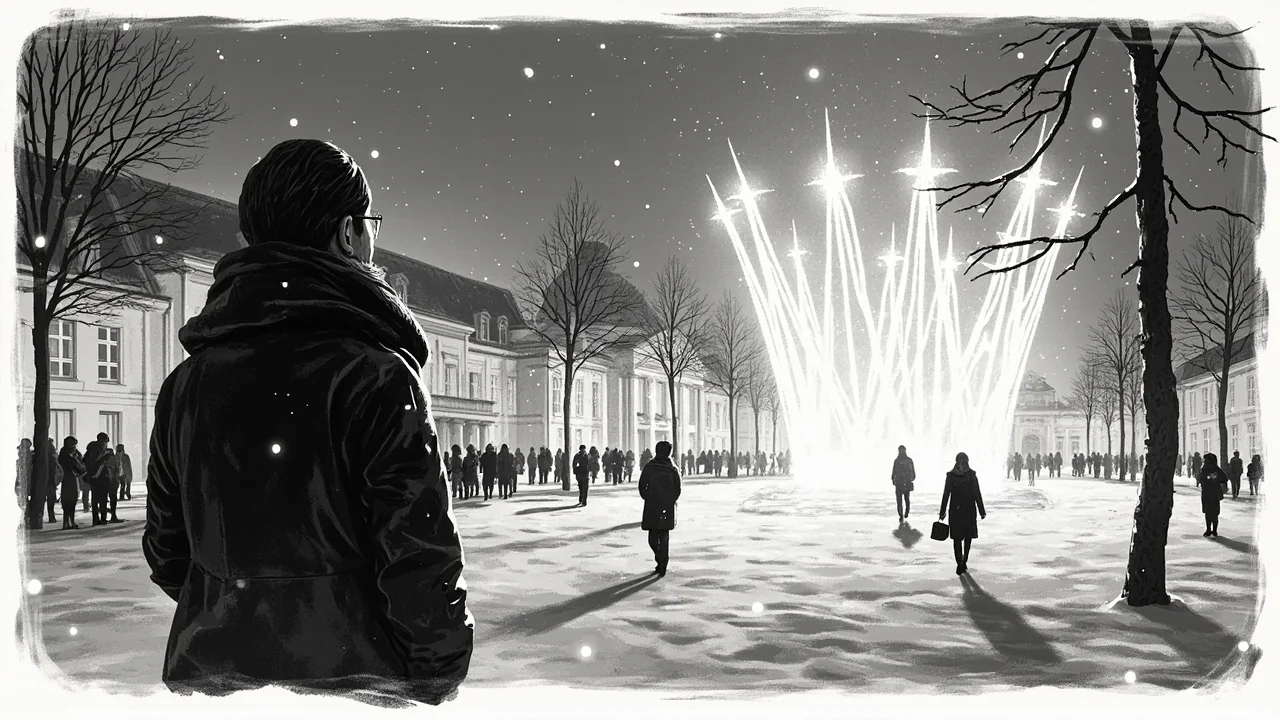
Finland's premier Lux Helsinki light art festival will expand significantly in 2027, growing from a six-day event to an eight-day spectacle and embedding permanent installations into the city's urban fabric. This major evolution responds to overwhelming public demand and record attendance, signaling a strategic shift for Helsinki's flagship winter cultural event. Festival organizers announced the changes following the successful 2026 edition, which drew approximately 450,000 visitors over six days in early January.
'It was a joy to see how we succeeded in attracting so many people to the streets who enjoy light art,' said Lux Helsinki's executive producer Annika Pråhl in the official statement. 'The event brought joy and light to both residents and tourists.' The decision to extend the festival's duration next year formalizes an experiment started in 2026, when the event was already lengthened by one day due to audience requests. The move towards permanence, however, represents a more fundamental change in how the city interacts with this artistic format.
From Ephemeral Event to Lasting Legacy
The most significant development is the plan to install select light artworks as permanent features within Helsinki's cityscape. This transition from a purely temporary, annual festival to creating a lasting artistic legacy requires careful artistic and practical consideration. The Finnish climate, with its extreme seasonal variations in daylight, presents a unique challenge for permanent light-based installations.
In the statement, Lux Helsinki's artistic director Juha Rouhikoski addressed this central concern. 'The selection of permanent works had to consider, for example, that some seasons in Finland are exceptionally light,' Rouhikoski explained. 'The works must therefore be thought-provoking and able to withstand the gaze even on summer days.' This requirement pushes artists to create pieces that remain engaging around the clock and throughout the year, not just during the dark winter nights for which the festival was originally conceived.
The Inaugural Permanent Collection
Three works from the 2026 festival have been selected as the first wave of permanent installations, all scheduled for installation during the spring of 2027. This selection offers a glimpse into the future character of Helsinki's illuminated urban environment.
Finnish artist Jere Suontausta's piece 'Peilipöllö (Bubo Speculus) II' – or 'Mirror Owl' – is among the chosen works. The piece, reportedly a new version of a previous installation, utilizes reflective surfaces to play with light and perception. From the United Kingdom, the Kappa collective's work 'Un-Reel Access' will also become a permanent fixture. French artist Sébastien Lefèvre's contribution 'Soleil nuit Albireo' rounds out the initial trio. These selections represent a deliberate international mix, maintaining the festival's global appeal while embedding it locally.
Analyzing a Cultural Policy Shift
This expansion and permanence plan is not merely an operational change for a single event. It reflects a broader cultural policy trend in Helsinki and across the Nordic region, where successful temporary festivals are increasingly leveraged to create enduring cultural capital. The city is effectively using the festival's proven popularity as a testing ground to curate a permanent collection of public art. This approach mitigates the risk associated with commissioning large-scale permanent works by first gauging public and critical reception in a temporary setting.
Furthermore, extending the festival to eight days has clear economic implications. It stretches the tourism and hospitality boost over a longer period, potentially increasing visitor spending. For residents, it offers more flexibility to experience the artworks, reducing congestion on peak nights. The record attendance of 450,000 in 2026 demonstrates a high level of public engagement that justifies civic investment in both the extended event and its permanent legacy.
From an EU perspective, this model aligns with wider European cultural strategies that emphasize 'cultural heritage creation' and using art for urban revitalization. Helsinki's move demonstrates how a member state can utilize cultural events not just for tourism, but for enhancing daily urban life and civic identity. The focus on works that function in the summer midnight sun as well as the winter dark is a distinctly Nordic solution to a pan-European challenge of creating multi-seasonal public attractions.
The Future of Light in Helsinki
The evolution of Lux Helsinki raises questions about the future relationship between event-based culture and permanent city planning. Will the permanent installations dilute the special, once-a-year excitement of the festival, or will they serve as perennial anchors that build anticipation for the annual event? How will the festival's programming evolve when it is no longer the sole presenter of light art in the city, but shares the environment with its own permanent collection?
Artistically, the requirement for permanence and all-season durability may influence the types of works submitted and selected in future festival editions. Artists and collectives may begin proposing projects with a dual phase in mind: a dramatic festival presentation followed by a adapted, resilient permanent version. This could foster new forms of artistic practice specifically tailored for the Nordic urban environment.
For now, the announcement signals confidence and ambition. Helsinki is doubling down on a successful formula that brings light and people into public spaces during the darkest time of the year. By weaving select artworks permanently into the city, it ensures that the festival's glow leaves a lasting trace, transforming Helsinki's winter identity from one of endurance to one of celebrated illumination. The success of this integration will be closely watched by other northern capitals seeking to combat seasonal darkness with culture and art.