
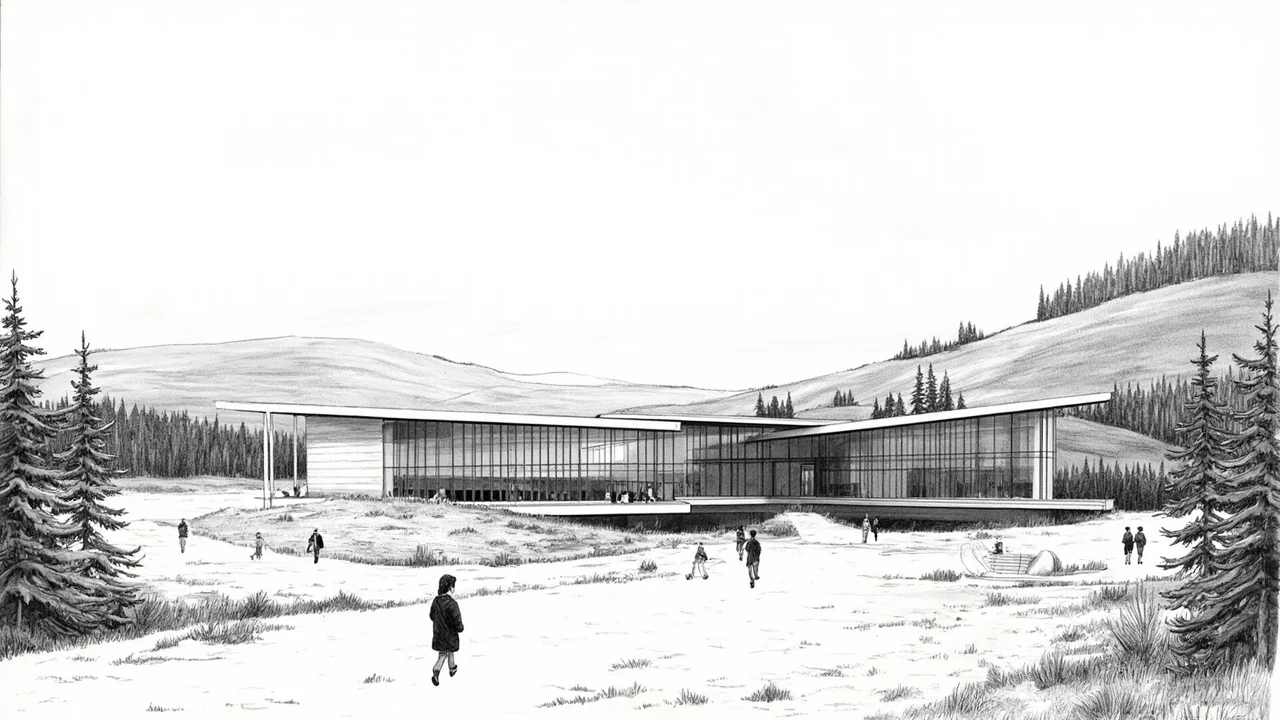
Finland is planning a new industrial hub dedicated entirely to the circular economy in the municipality of Äänekoski, a project that aims to create new business and jobs by transforming waste into resources. Project leader Matti Kallio, who started work on the Koukkuniemi circular economy project after the Christmas holidays, sees significant potential in the area to develop this sustainable model of production.
“I see a lot of potential in the area. Companies like Lassila & Tikanoja, Sammakkokangas, and Earthpac are already operating in the circular economy sector in Koukkuniemi, so the foundation for further development is really good,” Kallio said. His appointment marks a concrete step in advancing plans to concentrate circular economy activities in this specific industrial zone, leveraging existing infrastructure and expertise.
The Vision for Koukkuniemi
The vision for Koukkuniemi is to create a concentrated business park where companies operate on the principles of industrial circular economy. This model refers to a production and consumption system designed to reduce waste amounts and curb the consumption of natural resources. A central tenet is the recycling of materials and the utilization of side streams as raw materials. Such reusable material flows include wood, metal, and plastic. The goal is to create a symbiotic network where one company's waste becomes another's feedstock, minimizing landfill use and virgin material extraction.
Kallio's statement underscores a strategic move to build upon an established cluster rather than starting from scratch. This approach reduces initial barriers and accelerates development by connecting new ventures with existing logistics, knowledge, and material flows. The municipality of Äänekoski, located in Central Finland, has a strong history in industrial processing, notably hosting the world's first large-scale commercial biorefinery for pulp production, which adds relevant context for hosting advanced material flow industries.
Building on an Existing Foundation
The mentioned companies form the core of the existing ecosystem. Lassila & Tikanoja is a major Finnish environmental and facility services company specializing in material recycling and waste management. Sammakkokangas focuses on soil enrichment and recycling soil materials. Earthpac develops packaging solutions. Together, they represent key nodes in a potential circular network—handling waste streams, processing biological materials, and creating new products from recycled content. Their presence provides a critical mass of expertise and operational scale that can attract complementary businesses.
Developing such a hub aligns with broader Finnish and European Union strategic goals. The EU's Circular Economy Action Plan is a cornerstone of the European Green Deal, pushing member states to innovate in sustainable production. Finland's own national waste plan aims to significantly increase the recycling rates of municipal waste. A dedicated zone like Koukkuniemi could serve as a national pilot and demonstration area for best practices in industrial symbiosis, potentially influencing policy and business practices elsewhere in the country.
Regional Economic Implications
For the Central Finland region, the successful development of the Koukkuniemi hub represents a forward-looking economic strategy. It shifts the focus from traditional, linear resource extraction to value creation through sustainability and innovation. The project promises new employment opportunities in engineering, logistics, research, and skilled technical fields, helping to retain and attract talent in the region. It also future-proofs local industry against tightening environmental regulations and global resource scarcity.
The transition to a circular model requires significant collaboration between companies, municipal authorities, and research institutions. The project will likely involve detailed mapping of material inflows and outflows in the area, identifying gaps where new businesses could fit, and developing shared infrastructure for logistics and processing. Funding may come from a mix of private investment, national innovation funds like those from Business Finland, and relevant EU funding streams supporting green transition in regions.
Challenges and the Path Forward
While the potential is clear, realizing the vision involves navigating challenges. These include securing sufficient investment for shared infrastructure, ensuring profitability for participating companies in emerging circular markets, and developing the legal and contractual frameworks for exchanging waste materials as commercial products. The success of industrial symbiosis projects often hinges on long-term trust and alignment between participating firms.
Matti Kallio's role as project leader will be central to facilitating this collaboration. His work will involve acting as a convener, matchmaker between companies, and a liaison with municipal planners and permit authorities. The coming months will likely see more detailed planning, feasibility studies, and active recruitment of new enterprises to join the cluster. The project's progress will be a key indicator of how effectively Finland can translate circular economy principles from policy documents into concrete, job-creating industrial activity.
The Äänekoski initiative reflects a growing recognition that economic competitiveness and environmental sustainability are not opposing goals but can be mutually reinforcing. By concentrating circular economy expertise and operations, Koukkuniemi has the chance to become a notable example of this transition within the Nordic industrial landscape. The project's evolution will test whether a focused geographic approach can accelerate the systemic shift needed to build a more resource-efficient economy.