
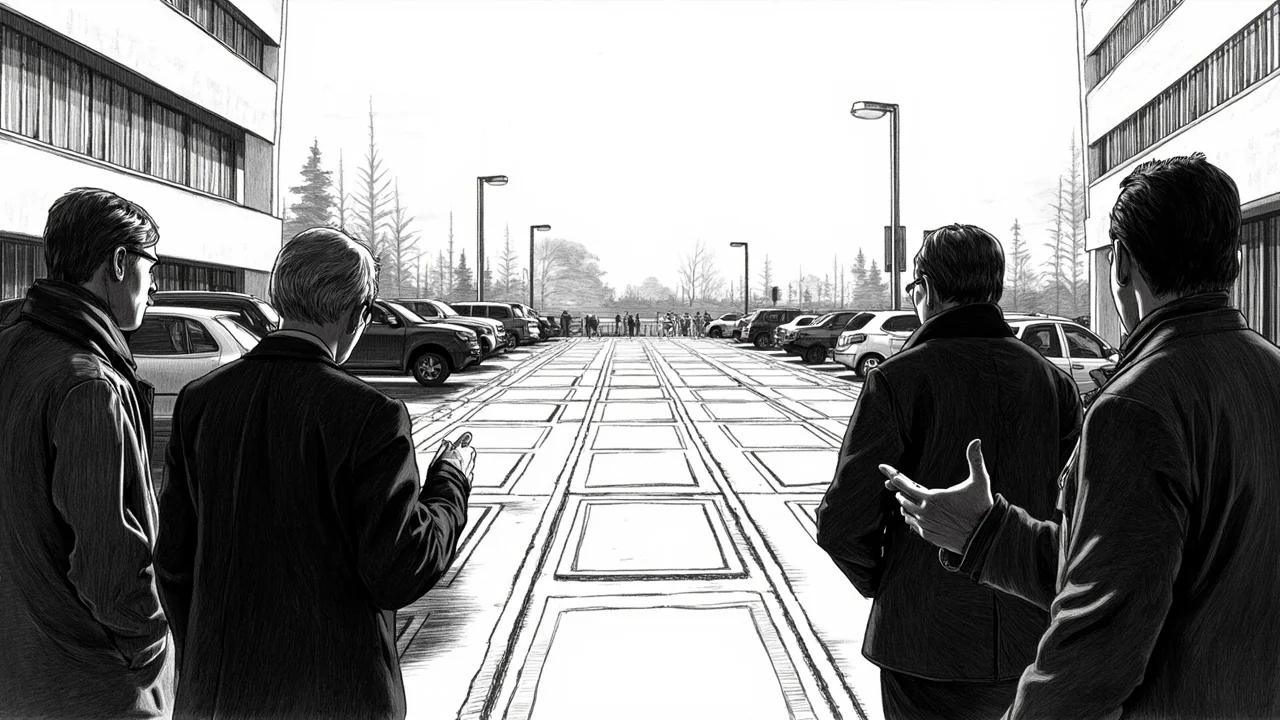
Finland's urban planning faces a legal test as a dispute over 15 new parking spots in Jyväskylä reaches the Hämeenlinna Administrative Court. The case, centered on the Halssila residential district, challenges a city planning board's approval for three new parking areas along Nakertajantie road. A local resident has filed a formal complaint demanding the court overturn the decision, arguing it violates proportionality principles and prioritizes cars over pedestrian safety and neighborhood quality of life. This seemingly minor municipal issue encapsulates a major national debate about sustainable urban development, the balance between private vehicle use and public space, and the legal limits of local government authority.
A Neighborhood Plan Meets Legal Resistance
The Jyväskylä City Planning and Building Board approved the street plan for Halssila last autumn. The approved design proposed constructing three new parking areas along Nakertajantie, distributing 15 consecutive parallel parking spaces across three street-widening sections. The complaint specifically targets one of these areas, which would provide space for just three cars. The appellant argues the city's decision fails the test of proportionality regarding the number and placement of parking spots. Furthermore, the complaint states the parking areas would degrade safety, functionality, and livability by favoring motorists at the expense of pedestrians and cyclists. "The plan fundamentally alters the character of the street," the complaint contends, shifting it from a residential corridor to a de facto parking zone.
The Core Legal Argument: Proportionality and Public Interest
At the heart of this case is the Finnish legal principle of proportionality, a cornerstone of administrative law. The appellant's case hinges on proving that the planning board's decision—the means—is disproportionate to its stated goal of solving a local parking shortage. The complainant must demonstrate that the negative impacts on safety, pedestrian access, and neighborhood aesthetics are excessive compared to the benefit of adding 15 parking spaces. This requires the Hämeenlinna Administrative Court to weigh competing expert testimonies on traffic flow, accident risk, and urban design. The court's assessment will also consider whether the city adequately explored less intrusive alternatives, such as resident parking permits, improved public transport links, or the construction of a centralized parking structure away from the residential street frontage.
A Microcosm of Finland's National Urban Policy Debate
This dispute in central Finland reflects a tension playing out in cities across the country. On one side are residents and planners advocating for the "15-minute city" concept, where daily needs are accessible without a car, promoting walkability and reducing emissions. On the other are practical realities of car ownership in a nation with harsh winters and, in some areas, limited public transport. The Finnish government's own climate and housing policies encourage denser, less car-dependent urban living. Jyväskylä's attempt to add parking directly conflicts with these broader national goals. Experts note that every decision to allocate street space to stationary vehicles is a decision not to use that space for wider sidewalks, bicycle lanes, green infrastructure, or playgrounds—all elements that increase property values and community wellbeing in the long term.
The Role of Administrative Courts in Finnish Governance
The appeal to the Hämeenlinna Administrative Court is a standard, yet crucial, part of Finland's governance model. These courts specialize in reviewing the legality of decisions made by municipal and state authorities. Their role is not to decide if a parking plan is "good" or "bad," but whether the city followed correct procedures, properly considered all relevant factors, and stayed within its legal bounds. A ruling against Jyväskylä could force a costly redesign and set a precedent for other municipalities, making them more cautious about approving street-side parking expansions in residential zones. Conversely, a ruling for the city would reinforce local authority in land-use planning, potentially at the cost of individual resident appeals. The process underscores how finely balanced urban development decisions can be subject to rigorous legal scrutiny in Finland.
Historical Context and the Future of Finnish Streets
Finland's post-war urban expansion was heavily car-oriented, but the past two decades have seen a significant policy shift. Cities like Helsinki have actively reduced downtown parking and invested billions in metro and tram lines. Jyväskylä, a university city, has also promoted cycling and bus transport. The Halssila case represents the friction of this transition at the neighborhood level. Older residential areas, often lacking sufficient off-street parking, face constant pressure to accommodate vehicles. The court's decision will send a signal about how Finland manages this legacy infrastructure while steering toward a greener future. It raises a fundamental question: is public street space primarily for movement and community life, or for the storage of private property?
Analysis: Beyond the 15 Parking Spots
This legal challenge, while focused on a single street, has implications for national policy coherence. If Finnish cities are to meet ambitious carbon neutrality targets, reducing reliance on private vehicles is essential. Every planning decision that incentivizes car use by providing cheap, convenient parking works against those targets. The case also highlights the power of individual citizens in the Finnish system. A single resident can challenge a municipal board's decision, triggering a full administrative court review. This access to justice ensures planning is not just a technical exercise but a democratic one. However, it also risks slowing down urban development and increasing costs. The outcome will be closely watched by city planners, environmental groups, and community associations across the country, as it will help define the legal landscape for the next generation of Finnish urban design.
The Road Ahead: Awaiting a Precedent-Setting Ruling
The Hämeenlinnan hallinto-oikeuden will now review written submissions, potentially call for expert opinions, and schedule a hearing. The process could take several months. Its ruling will be legally binding for Jyväskylä but will also be cited in similar future cases nationwide. Will the court find that 15 parking spots create a disproportionate impact on a neighborhood's character and safety? Or will it defer to the local planning board's expertise and judgment? The answer will provide a critical data point in Finland's ongoing struggle to redefine its relationship with the automobile. Ultimately, the battle over Nakertajantie is not just about parking; it is about what kind of cities Finns want to live in, and who gets to decide when the needs of a car conflict with the needs of a community. The final decision will chart a course for how Finland balances individual convenience with collective environmental and social goals in the decades to come.