
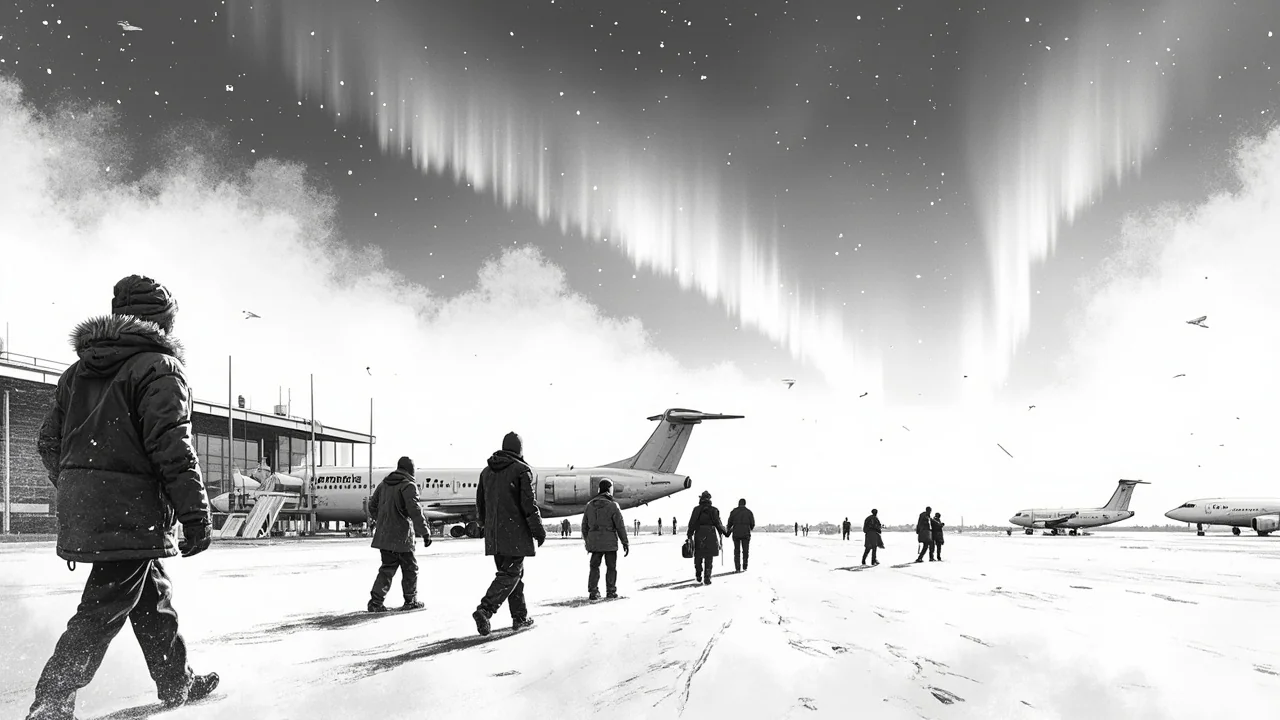
Finland's Rovaniemi airport experienced severe operational delays with multiple flights running hours behind schedule, stranding passengers and disrupting travel plans across Europe. A Ryanair flight to London and a KLM service to Amsterdam were among those grounded for approximately three hours, with extreme cold identified as the primary cause for the significant slowdown in refueling operations.
Passengers aboard the affected flights reported mounting frustration as personal schedules unraveled. One traveler on the delayed Ryanair flight stated their plans were in disarray. "I had one event, but I don't know if I'll make it in time now," the passenger said, also expressing skepticism about receiving any compensation from the airline for the disruption. The situation highlights the vulnerability of air travel infrastructure in Arctic conditions, even at airports accustomed to winter operations.
Airport Operations Stalled by Arctic Conditions
Elina Suominen from Finavia's communications department confirmed the widespread delays, attributing them directly to the severe weather. "The situation is due especially to the cold, but both air traffic and refueling operations are nevertheless ongoing," Suominen stated. While operations continued, the pace of refueling aircraft was described as significantly slower than normal, creating a bottleneck on the tarmac. This technical slowdown, a direct result of machinery and fluids behaving differently in deep frost, had a cascading effect on the departure schedule.
The delays at Rovaniemi, a key gateway to Finnish Lapland and a major tourist hub, underscore the logistical challenges of maintaining aviation punctuality in one of Europe's northernmost airports. Finavia, the state-owned airport operator, is experienced in cold weather protocols, but specific conditions on Tuesday exceeded normal operational parameters, leading to a system-wide slowdown.
Passenger Rights and Airline Responsibility
The incident immediately raises questions about passenger rights under European Union regulations. EU Regulation 261/2004 mandates that airlines provide compensation for passengers facing long delays, depending on the distance of the flight and the cause of the disruption. Compensation can range from 250 to 600 euros if the delay upon arrival exceeds three hours and the cause is within the airline's control.
However, the regulation includes an exemption for "extraordinary circumstances," which courts have interpreted to include extreme weather conditions that could not have been avoided even if all reasonable measures had been taken. Finavia's statement points directly to the cold as the cause, which airlines will likely cite as an extraordinary circumstance, potentially relieving them of the obligation to pay financial compensation. Affected passengers are still entitled to care, including meals, refreshments, and accommodation if necessary, during the wait.
Broader Impact on Connectivity
The disruption at Rovaniemi had a knock-on effect for connecting travel across Europe. The delayed KLM flight to Amsterdam impacts one of the major hub airports on the continent, likely causing missed connections for passengers traveling beyond the Netherlands. Similarly, the Ryanair delay to London affects a key route for both tourism and business. Such isolated incidents in peripheral airports demonstrate how localized weather can ripple through the tightly scheduled European air network.
For Lapland's economy, which is heavily reliant on seasonal tourism, reliable air connections are crucial. Repeated operational issues related to weather, while understandable, can affect the region's reputation as a accessible winter destination. Airports in these regions invest heavily in cold weather equipment and training, but as this event shows, absolute prevention of weather-related delays is an operational and economic impossibility.
Historical Context of Cold Weather Challenges
Finnish aviation has a long history of managing extreme cold, with procedures refined over decades. However, climate variability means each winter presents unique challenges. While airports are equipped with heated fuel farms and specialized ground support equipment, certain temperature thresholds can still impact fluid viscosity and mechanical performance, leading to slower servicing times. The situation in Rovaniemi is a periodic reminder of the engineering and logistical battle fought to maintain connectivity in Arctic environments.
Air traffic control also faces challenges in severe cold, with the need for increased de-icing and anti-icing procedures for aircraft, which adds time to the turnaround process. All these factors compound during peak travel periods, turning a minor slowdown into a major schedule disruption.