
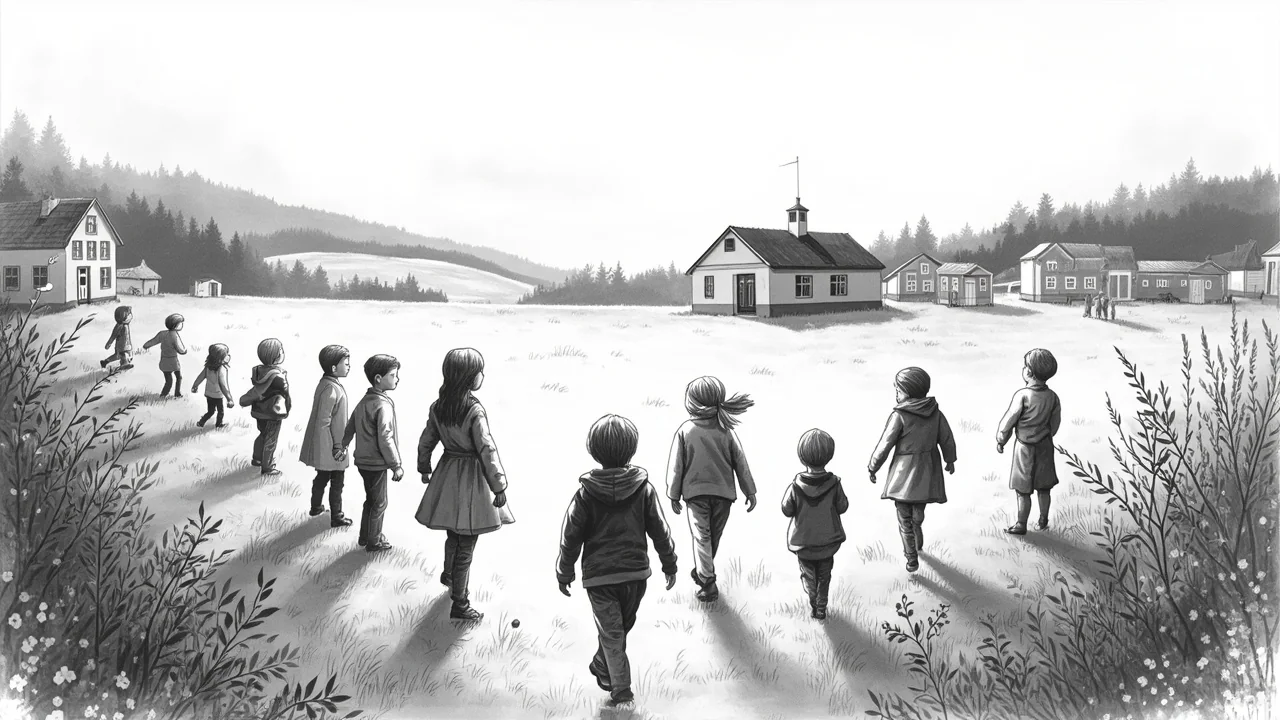
Finland's ongoing consolidation of small rural schools has moved from municipal meeting rooms to the classroom, with pupils from the closed Rouhiala school now navigating life at the larger Päämaja school in Mikkeli. For second-graders Grace Rautiainen and Kerttu Käyhkö, the transition from a 70-pupil school to one with over 400 students has been a significant change marked by both loss and new opportunity.
"I was a little nervous to come here, even though we had visited to get familiar," Rautiainen recalls of the autumn move. The closure of Rouhiala school was confirmed by the Mikkeli City Council, with its final spring celebration held in 2025. All pupils who began their education in Rouhiala were transferred to Päämaja school, which teaches grades 1 through 6, unlike Rouhiala which only had first and second grades.
A New Rhythm of School Life
The girls note that the entire second-grade class moved together, which softened the change. Their teacher, however, did change. "Sarri is really nice too," Käyhkö says cheerfully about their new teacher, Sarri Honkanen. Honkanen confirms the pupils have adjusted well, though there were initial challenges. "At first there were of course their own challenges, when the small pupils were wary of the bigger ones. In Rouhiala there weren't any older pupils," Honkanen explains.
The daily rhythm itself is different. The pupils initially missed the forest and outdoor play opportunities readily available at their old school. "There was forest there and you could build shelters," Rautiainen says. The structured environment of a larger institution presents a contrast. "Here there's more hustle and bustle in the cafeteria," Käyhkö adds. Honkanen observes that getting used to the cafeteria routine was initially somewhat difficult for pupils accustomed to eating in their classrooms. "And probably the small school's meal schedule was more flexible than in a bigger school," she notes.
Support Systems and Mixed Feelings
To ease the integration, the school employs a buddy system. Every pupil in the girls' class has a named school "kummi," or godparent, from the fifth grade. "The school buddies have helped us. Sometimes there are joint lessons and sometimes the buddies come to sit at the same table in the cafeteria," Käyhkö reports. This structured support has been crucial in building connections within the larger student body.
Despite the successful adjustment and the advantage of making more friends, both girls share a unanimous sentiment about their old school. "Rouhiala school was nicer, even though Päämaja school is quite nice too," they agree. This nostalgia highlights the intangible value placed on the environment and culture of a small rural school, a factor often debated in municipal budget meetings. The emotional attachment contrasts with the practical realities of maintaining geographically spread, low-enrollment schools in Finland's sparsely populated regions.
The Teacher's Perspective on Cultural Change
Teachers Riina Sievänen and Eeva Aaltola, who also moved from Rouhiala to Päämaja, point to a broader cultural shift. In a small school, they suggest, the entire operating culture was different, built on close-knit relationships and a shared, familiar environment. The transition to a larger unit requires adapting to more standardized processes, a larger faculty, and the management of much bigger peer groups for the children. This shift from a community-centric model to an institutional one is at the heart of Finland's rural school consolidation policy.
The experience in Mikkeli reflects a national trend where municipalities balance educational quality, social opportunities for children, and economic sustainability. The argument for larger units often cites broader curricular offerings and more diverse peer interactions. The counter-argument, voiced quietly by the children themselves, emphasizes the unique play-based learning and deep sense of security fostered in a known environment surrounded by nature.