
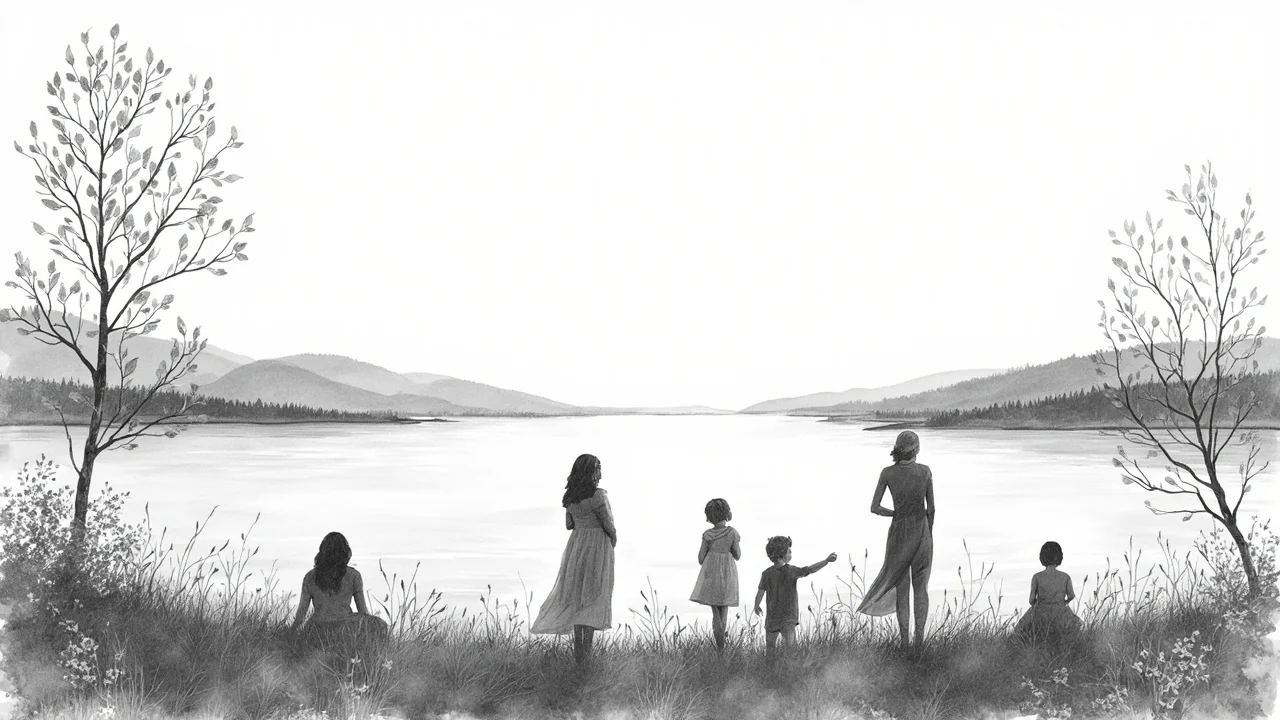
Finland's community-led response to maternal exhaustion is a weekend retreat in Kiuruvesi offering eight mothers a rare chance to sleep, sauna, and be alone. The initiative, born from conversations between two municipal workers who frequently encounter burnout among mothers, addresses what organizers call the relentless accumulation of daily responsibility and chronic sleep debt. 'We thought about developing this kind of concept, a bit more affordable than a hotel,' said Minna Heinonen, a deaconess who co-created the 'Tired Moms' Sleepover' with child guide Sanna Wåg.
The program's second iteration is scheduled for January 23-24, 2026, at the Hyvölänniemi camp center, following a successful pilot in May 2025. The core offer is simple: a private room, an evening snack, a brunch where 'mothers get to come to a ready-set table,' and absolutely no scheduled activities. Participants are free to socialize or retreat into complete solitude for the entire stay. 'If someone wants to go to their own room and be alone the whole time, that is completely allowed,' Heinonen stated. Feedback from the first event highlighted the profound relief of mundane freedoms: sauna visits and walks without children, and most notably, sleeping in without anyone waking them up.
Identifying a Gap in Community Support
The idea originated from Heinonen and Wåg's professional observations in their roles within the Kiuruvesi municipality. They noted that the logistical and financial weight of running a household often falls disproportionately on mothers, with the cost of a hotel stay or similar break frequently out of reach. The church-affiliated retreat, priced affordably, was conceived as a direct, practical intervention. It provides a sanctioned pause, what Wåg described as 'that kind of a moment for oneself,' acknowledging that the mental load of constant caregiving often continues even during supposed time off. The absence of programming is a deliberate feature, removing any pressure to perform or socialize, making the respite accessible even to those deeply drained.
A Crucial Partnership for Accessibility
A significant barrier emerged after the first retreat: potential participants could not attend because they lacked childcare. The solution marks the project's evolution. The upcoming January sleepover will run in partnership with the Ylä-Savo Emergency and Shelter Home (Ylä-Savon ensi- ja turvakoti ry), which will host a parallel sleepover for the first eight children registered. This collaboration directly addresses the primary logistical hurdle that excludes many parents, particularly single mothers, from accessing such respite services. Organizers expressed great satisfaction with this development, noting they lacked the resources and facilities to provide childcare themselves. 'This cooperation has been really important and necessary,' Heinonen said, emphasizing how the partner organization proactively reached out after hearing about the initial event.
The Structure of Simple Respite
The retreat is meticulously designed for passive restoration. For a flat fee, participants receive their own private space at the camp center. Meals are provided communally but without obligation, the brunch is a key component where mothers need only serve themselves. The environment of the Hyvölänniemi camp center, away from the familiar setting of home, is intended to facilitate a psychological break. Testimonials from the pilot focused on the novelty of uninterrupted sleep and the luxury of solitary walks, underscoring how basic needs become luxuries under constant caregiving pressure. The model challenges more elaborate—and expensive—concepts of self-care by focusing on the fundamentals of solitude and rest.
Analyzing a Community-Based Model
This initiative represents a hyper-local, needs-driven model of social support. It is not a government-funded welfare program but a grassroots response organized through the Kiuruvesi parish, leveraging existing community infrastructure like the camp center. Its success and expansion through partnership illustrate how identifying a specific, unmet need—respite for mothers without childcare—can lead to innovative, collaborative solutions. The model's replicability in other municipalities is high, as it relies on common resources: a community space, volunteer or low-cost organizational capacity, and network-building with existing family support services. The partnership with the children's shelter is particularly instructive, showing how siloed services can align to create a more holistic support system for families.