
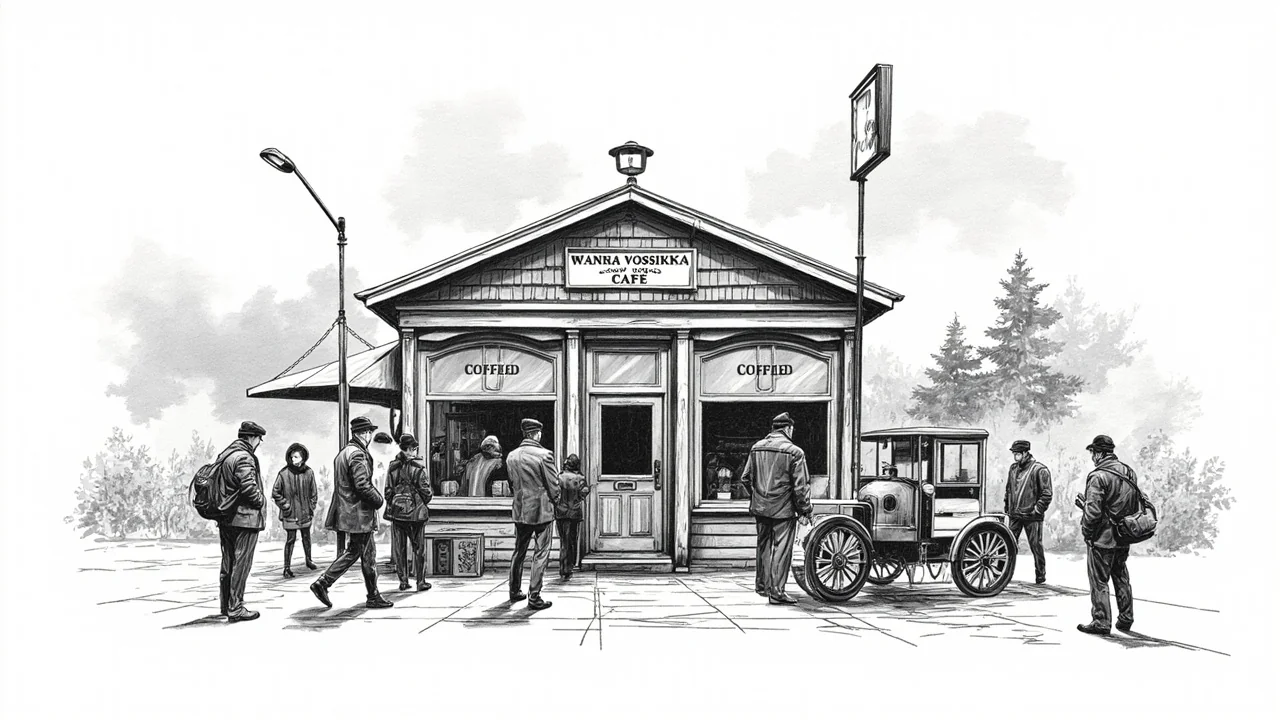
Finland's Wanha Vossikka café served its final meals today in Ristiina, Mikkeli, ending a local institution as its 76-year-old owner steps into retirement. The lounaskahvila, a staple for daily lunch and coffee, closed permanently following owner Saara Hiltunen's decision to retire, influenced by minor health concerns and a gradual decline in customer numbers over recent years. The closure marks the end of a community gathering spot that had weathered economic shifts and changing consumer habits in the South Savonia region.
A Final Day of Farewells
On its last day of operation, regular customers and former patrons stopped by Wanha Vossikka to say goodbye to Saara Hiltunen and share memories over one final coffee or lunch. The atmosphere was described as bittersweet, filled with gratitude for years of service and sadness at the loss of a familiar routine. Hiltunen, who has run the establishment for decades, interacted with guests throughout the day, accepting well-wishes for her retirement. The café's closure follows a common pattern seen in rural Finnish municipalities, where small, owner-operated businesses often close when the proprietor reaches retirement age without a successor.
The Owner's Decision to Retire
Saara Hiltunen's primary reason for closing Wanha Vossikka was her desire to finally retire at 76 years old. In running the daily operations of a lounaskahvila, the work is physically demanding, involving long hours on one's feet, food preparation, and customer service. Hiltunen also cited small health issues as a contributing factor, common considerations for entrepreneurs of her generation deciding to wind down their life's work. The decision was not made lightly, as the café represented not just a business but a significant part of her identity and daily life in Ristiina. The gradual decrease in customer traffic in recent times further solidified the economic rationale behind the closure, making retirement the most viable path forward.
The Role of the Local Lounaskahvila
The lounaskahvila, or lunch café, holds a specific place in Finnish food culture, particularly in smaller towns. It is distinct from a full-service restaurant, often focusing on affordable, home-cooked daily lunch specials, soups, pastries, and coffee. These establishments function as social hubs where townspeople, workers, and retirees gather. Wanha Vossikka fulfilled this role in Ristiina, providing a consistent and familiar menu. Its closure leaves a gap in the local service landscape, reducing options for a casual, sit-down meal in the town center. The business model relies heavily on consistent local patronage, which can be vulnerable to demographic changes and competition from supermarket lunch counters or larger cafés in nearby Mikkeli.
Economic Context for Small Finnish Businesses
The shuttering of Wanha Vossikka occurs within a broader national context of challenges for small and micro-enterprises in Finland's regional centers. Succession planning is a persistent issue, with many family-run businesses closing when the owner retires because children pursue different careers or are uninterested in taking over. Operating costs, including energy, ingredients, and wages, have risen steadily, squeezing margins for establishments with low price points. Furthermore, consumer behavior has shifted, with busier lifestyles sometimes reducing the frequency of leisurely café visits. These combined pressures make it difficult for standalone cafes to remain profitable without diversifying their services or adapting their models.
Community Impact and What Comes Next
The immediate impact of the closure is the loss of a daily destination for a segment of Ristiina's residents. For some, especially older patrons, the café provided a crucial point of social contact and a structured part of their day. Its absence may contribute to a subtle sense of erosion in the town's commercial and social fabric. The physical space occupied by Wanha Vossikka will now become vacant, posing a question for the property's owner. It could potentially be re-let to a new food service business, retail shop, or remain empty, a common sight in many Finnish town centers grappling with similar closures. The future of the space will be a practical indicator of local economic vitality.
A Wider Trend Across the Country
While a single café closure is a local event, it echoes a pattern observable across Finland, particularly in municipalities outside major urban regions. Public statistics from various years have shown a net decline in certain types of small food and beverage services in rural areas. Each closure is an individual story of retirement, economic calculation, or changing lifestyles, but the collective effect alters the character and convenience of small-town living. The story of Wanha Vossikka is, therefore, both uniquely about Saara Hiltunen's personal journey and broadly reflective of a slow-motion transformation in how Finns live and socialize in their home regions.