
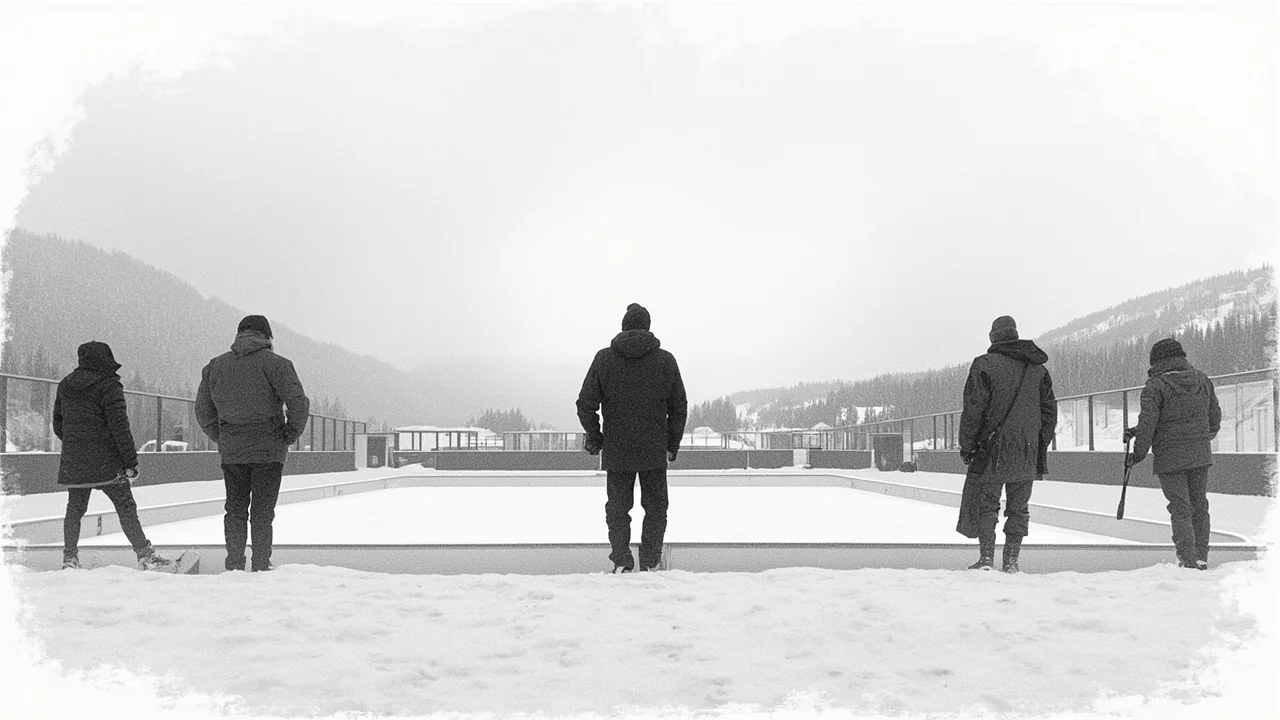
Finland's traditional winter sports culture faces an unprecedented challenge from increasingly mild winters, but the city of Hyvinkää is mounting a determined defense. With five operational outdoor ice rinks currently open, the municipality north of Helsinki presents a stark contrast to southern regions where natural ice has largely disappeared. "We currently have five outdoor ice rinks. South of here, they are hardly anywhere," said the city's sports director, highlighting a growing geographical divide in Finland's winter activity landscape. This local effort to preserve skating and skiing opportunities speaks to a broader national conversation about adapting Finland's deeply ingrained outdoor lifestyle to climate reality.
Hyvinkää's residents are poised for an active winter season, with nearly all skating tracks in usable condition. The city has also prepared for cross-country skiing at Perttula's artificial snow track, with another skiing area scheduled to open soon near the airport district. This proactive municipal approach combines traditional maintenance with technological intervention, creating rare pockets of winter normalcy. While many Finnish communities lament the loss of reliable ice, Hyvinkää's infrastructure demonstrates what targeted investment and planning can achieve, even as average temperatures creep upward.
The Shifting Geography of Finnish Winter
The situation in Hyvinkää underscores a dramatic shift in Finland's winter sports geography. For generations, frozen lakes and flooded fields provided free, ubiquitous skating surfaces from December through March across southern Finland. That predictability has vanished. The Finnish Meteorological Institute reports that the number of days with suitable ice conditions has decreased significantly over the past 30 years, particularly in the southern third of the country. This has created a new normal where organized, maintained outdoor rinks—not natural ice—are becoming the primary venue for recreational skating.
Hyvinkää's cluster of five rinks is now a regional attraction. Families from Helsinki and Espoo, where natural ice is sporadic and artificial rinks are crowded, are increasingly looking north. This represents a subtle but important change in social patterns. Winter activity, once a hyper-local part of daily life accessible just outside one's door, is becoming a destination pursuit requiring travel. Municipal sports officials note this places greater responsibility on cities to provide guaranteed facilities, shifting the cost and maintenance burden from individuals to local governments.
Artificial Solutions for a Natural Tradition
Facing unreliable snowfall, Hyvinkää's investment in artificial snow for skiing trails at Perttula is emblematic of the adaptation strategies Finnish municipalities are forced to consider. Producing artificial snow is energy-intensive and expensive, raising questions about sustainability and equity. Not every municipality can afford such measures, potentially creating a two-tier system for winter sports access. Wealthier or more populous cities that can invest in snowmaking and refrigeration technology will preserve their winter sports culture, while smaller towns may see traditions fade.
The Perttula artificial snow track allows the local ski club to maintain training schedules and host events, providing crucial continuity for competitive sports. For recreational users, it offers a guaranteed skiing experience in a season that can no longer promise natural snow cover. However, experts point out that artificial snow has different physical properties—it is often denser and icier—which can affect technique and increase injury risk. It is a pragmatic solution, but one that alters the very nature of the activity it seeks to preserve.
Cultural Identity on Thin Ice
The struggle to maintain ice rinks and ski trails is about more than recreation; it touches on Finnish cultural identity. Outdoor winter activity is woven into the national self-image, associated with concepts of sisu (perseverance) and connection to nature. The annual transition to winter sports is a cultural rhythm. As climate change disrupts this rhythm, it prompts a form of cultural dislocation. When children cannot learn to skate on a local pond or ski in nearby woods, a chain of intergenerational knowledge transfer is broken.
Sociologists observing this shift note a potential move from participatory culture to spectator culture. If accessing winter sports requires significant travel, booking fees, and reliance on artificial conditions, casual daily participation may decline. This could transform skating and skiing from commonplace life skills into specialized hobbies. The community-building aspect of local rinks and trails—where neighbors meet and children play unsupervised—is also at risk, potentially impacting social cohesion in Finnish towns.
Municipal Policy in a Warming Climate
Hyvinkää's approach provides a case study in municipal-level climate adaptation. Maintaining five outdoor rinks requires precise timing, efficient water use for flooding, and constant temperature monitoring. City crews must be ready to exploit brief cold snaps, often working overnight when temperatures are lowest. This operational intensity has increased costs. The city's sports department now treats weather forecasts as critical operational documents, planning maintenance around predicted temperature windows rather than traditional seasonal schedules.
Other Finnish cities are watching. The policy debate centers on resource allocation: how much public money should be spent to defend winter traditions against climatic forces? Some argue for doubling down on artificial infrastructure to guarantee activities. Others suggest it is time to diversify year-round sports offerings, reducing dependency on winter. Hyvinkää appears to be choosing a middle path—supporting traditional activities with technology while also developing its indoor sports facilities. This balanced approach may become the model for urban areas across southern Finland.
The Economic and Health Implications
The decline of reliable winter conditions carries economic and public health consequences. Sports equipment retailers face unpredictable sales cycles. Winter tourism destinations fear shorter seasons. Public health officials worry about decreased physical activity during winter months, a time when exercise is particularly important for combating seasonal mood disorders. The guaranteed winter sports facilities in Hyvinkää, therefore, serve a public health function, providing accessible avenues for cardiovascular exercise and social interaction during the darkest time of the year.
Finland's public health guidelines recommend daily outdoor activity for all ages. The convenience of local, free rinks and trails has been a cornerstone of achieving this goal. If these facilities become scarce or require payment, participation rates could fall, especially among lower-income families. Municipalities like Hyvinkää that maintain free access are effectively subsidizing preventive healthcare. The cost of maintaining rinks may be offset by reduced healthcare costs associated with sedentary lifestyles, though this equation is difficult for municipal budgets to calculate directly.
Looking Beyond the Current Season
The long-term outlook requires difficult conversations. Climate projections for Finland suggest warmer, wetter winters will continue. Investing in refrigerated outdoor rinks—a more reliable but vastly more expensive solution—is one option. Another is reimagining urban spaces for multi-season use. Could a winter skating rink transform into a summer splash pad or rollerblading track? Hyvinkää's planning will need to consider such flexibility.
Furthermore, the very definition of "winter sports" may evolve. Perhaps future Finnish winters will see more winter cycling, trail running, or adapted games that require less ice and snow. Preserving the cultural core of outdoor winter activity might mean changing its form. The commitment shown by cities like Hyvinkää is commendable, but it is a holding action against a powerful climatic trend. The true test will be whether Finnish communities can innovate new traditions that are equally meaningful, yet resilient to the changing environment.
Ultimately, the five rinks of Hyvinkää are more than recreational facilities; they are symbols of cultural resilience. Each cleared sheet of ice represents a choice to defend a way of life. As Finland navigates its changing climate, these local efforts provide valuable data points—and perhaps a dose of inspiration. They prove that while the climate is changing, human adaptation and community spirit can, for a time, create pockets of winter where tradition endures. The question for the next generation is how long such efforts can hold the line, and what new relationships with the northern winter will emerge when they no longer can.