
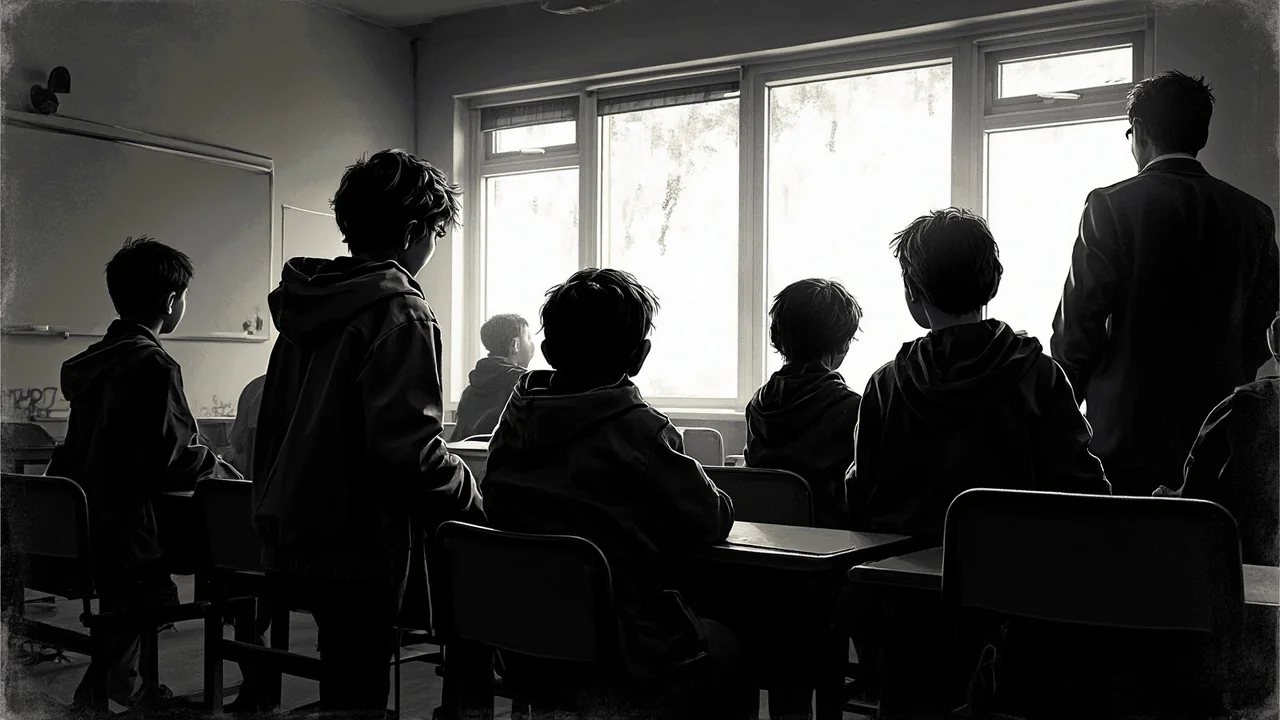
Finland's Jämsänkoski comprehensive school has required police intervention on approximately 170 separate occasions over recent years, a figure that underscores persistent behavioral challenges within its walls. While the school is not a statistical outlier for emergency calls, its reputation for recurring disturbances is recognized among local authorities. The school's new principal, who started in January, has launched a proactive strategy to directly confront and mitigate high-risk student behavior, aiming to transform the school's environment.
A Persistent Pattern of Disturbances
The Jämsänkoski school has made headlines multiple times in recent years due to various disruptions and dangerous situations. Incidents have ranged from frequent scuffles between students to threats involving serious violence. The most severe case came to light a year ago, when two youths were suspected of planning to murder a school employee and two students. This event cast a long shadow over the institution and intensified scrutiny of its climate. These episodes have collectively fostered a perception of a chronically unsettled learning environment, despite the school's efforts to maintain normal operations.
Principal Tiina Järvenpää, now in her first semester leading the school, states that passive observation is not an option. “We have to intervene actively in high-risk behavior,” Järvenpää asserts. Her approach centers on early and consistent engagement with students displaying concerning behaviors, rather than allowing situations to escalate to a crisis point. This marks a deliberate shift towards a more hands-on managerial philosophy, focusing on prevention and de-escalation within the school's own resources before external authorities are needed.
The Police Perspective and Proactive Reporting
From the viewpoint of law enforcement, the Jämsänkoski school does not stand out as an extreme exception in terms of the volume of emergency response tasks. Commissioner Teemu Karhunen from the Central Finland Police Department provided this context. However, he acknowledges that the school's restless reputation is familiar among officers working in the field. Karhunen notes that one contributing factor to the dynamic is classroom composition. “One class has been assigned students with behavior-related challenges, and that exposes it to disruptions,” he explains. He is quick to add, “Primarily, these disturbances have been very mild.”
A significant factor influencing the high number of police visits is the school's own policy of low-threshold reporting. The staff at Jämsänkoski have been instructed to contact authorities readily, a practice that likely explains the frequency of police visits. This protocol means many minor incidents that might be handled internally elsewhere result in an official police call. This strategy is double-edged, it ensures incidents are formally logged and addressed with professional support, but it also contributes to the public statistic of 170 police interventions, painting a picture of a school in constant turmoil.
Implementing a New Strategy on the Ground
The core of Principal Järvenpää's strategy involves strengthening the school's internal capacity to manage conflicts. This includes enhancing staff training in conflict resolution and behavioral management techniques. The goal is to equip teachers and support staff with the tools to defuse tense situations and address underlying issues without immediate recourse to calling the police. The school is also reviewing its support systems for students with behavioral or social-emotional difficulties, aiming to provide more targeted help that could prevent escalations. This work is complex and unfolds daily in classrooms and corridors, far from headlines.
Järvenpää's leadership represents a test case for whether a determined, proactive administrative approach can recalibrate a school's culture. The challenges are deeply rooted, involving not just individual students but group dynamics, resource allocation, and community perceptions. The school's situation reflects broader national conversations about inclusive education, student support, and how schools balance their educational mission with maintaining safe and orderly environments for all. The presence of police, while a sign of past failures, is also framed by the school as part of a responsible safety network.
The Long Road from Reaction to Prevention
The true measure of the new strategy's success will be a gradual decline in serious incidents and, ultimately, a reduced need for police presence. It is a long-term project that requires consistency, patience, and community trust. For parents and residents in Jämsänkoski, the hope is that the school's name becomes associated with positive change and effective education, rather than with conflict and emergency calls. The school's experience serves as a pointed example for municipalities across Finland grappling with similar issues of integration, special needs support, and classroom management in an era of complex student needs.
The path forward for Jämsänkoski comprehensive school is now clearly charted towards active intervention and internal capacity building. The coming academic years will reveal if this shift in policy can translate into a tangible and sustained change in the school's daily reality. The commitment from leadership is present, but the execution will depend on countless daily interactions between staff and students. The community watches, hoping the narrative shifts from counting police visits to celebrating educational achievements.