
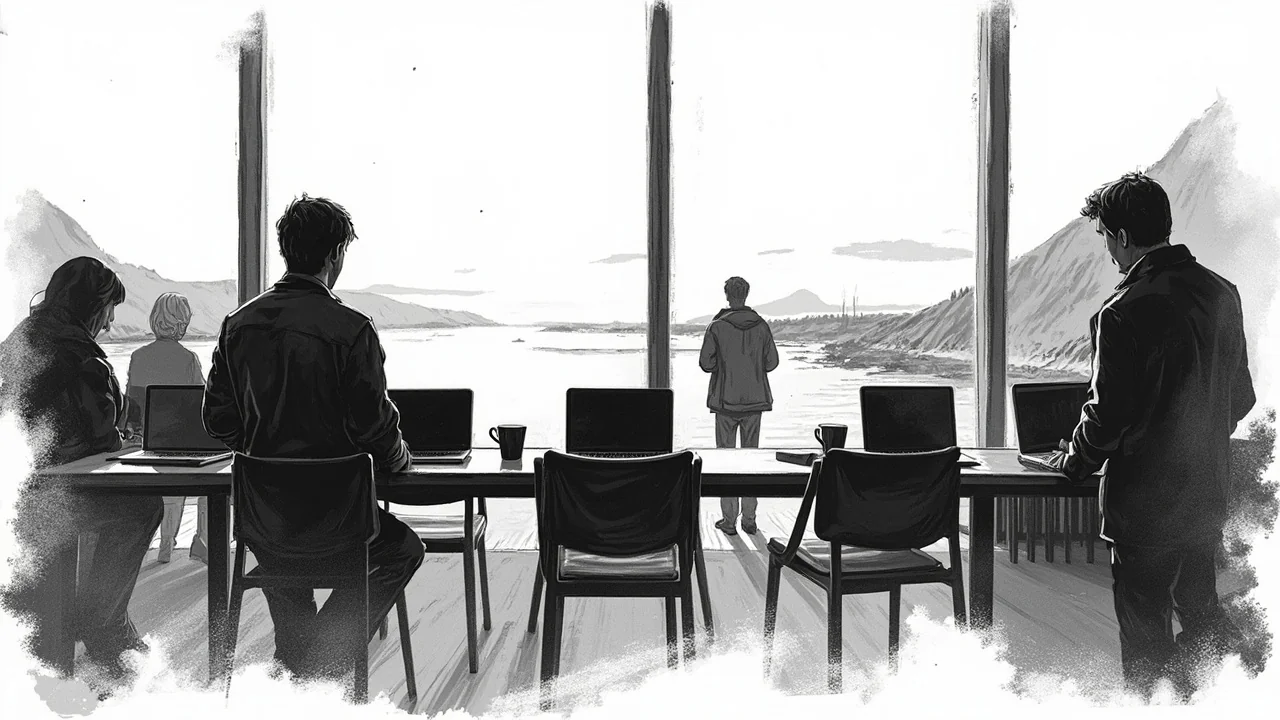
Bergen Municipality is enforcing a nightly shutdown of all school-issued laptops for its students, a move sparked by new screen time guidelines and security concerns. The policy, which will remotely power down devices at midnight, affects thousands of pupils across Norway's second-largest city and reignites a national debate over technology's role in education.
A Policy Born from Health and Safety Directives
The decision stems from recently updated municipal screen time recommendations, which advocate for clear boundaries between school and personal time. Officials cite both student well-being and digital security as driving factors. By implementing a forced log-off and system shutdown in the early hours, the municipality aims to guarantee a period of disconnection. This addresses growing unease about the constant availability of school platforms and the potential for unsupervised online activity during late hours, which can pose security risks. The technical implementation is managed through the centralized device management system used for all municipal school computers.
The National Context of Digital Learning
Norway has long been a pioneer in integrating technology into classrooms, with a national curriculum emphasizing digital skills. The provision of individual laptops to students is commonplace, intended to ensure equal access to learning resources. However, this move by Bergen represents a significant recalibration. It acknowledges persistent concerns from parents, educators, and health professionals about sleep disruption, reduced physical activity, and the blurring of home and school life. The policy implicitly questions the model of 24/7 access to the digital learning environment, proposing instead a mandated period of downtime. This places Bergen at the forefront of a practical response to critiques of the fully digital school day.
Operational Logistics and Immediate Impact
Administratively, the shutdown will be automated and applied uniformly to devices issued to students in municipal schools. The primary goal is to establish a predictable, non-negotiable boundary. For students, this means any unsaved work on their school machine after midnight would be lost, and access to learning platforms or homework portals will be cut until the device is restarted. This creates a clear operational incentive for students to manage their time and save work earlier in the evening. It also shifts the responsibility for enforcing screen curfews from the parent arguing with a child to a systemic rule. The municipality's approach removes the device from the equation of nighttime negotiation in the home.
Broader Implications for Norwegian Education Policy
Bergen's decision is being closely watched by other municipalities across Norway. It presents a tangible model for operationalizing well-being guidelines that have, until now, often been advisory. The policy tests a fundamental tension in modern education: between the flexibility and resource access provided by always-available technology, and the growing body of evidence supporting the benefits of disconnection for cognitive function and mental health. If deemed successful, similar overnight lockdowns could be adopted elsewhere, potentially shaping a new national standard for the management of school-issued technology. The debate is no longer just about if students should have laptops, but about when the community can justifiably limit their use.
Parental and Educational Reactions
Initial reactions from the community are mixed, reflecting the broader societal debate. Some parents welcome the enforced break as a support mechanism, aligning with their own efforts to limit screen time at home. They view it as the municipality sharing the burden of managing children's digital habits. Teachers' unions have shown cautious interest, noting potential benefits for student alertness in morning classes but also questioning the rigidity of the solution. Conversely, some parents and student advocates criticize the measure as paternalistic, arguing it undermines student autonomy and fails to trust young people to manage their own responsibilities. They also point to practical issues, such as students with differing circadian rhythms or those who work on assignments later due to extracurricular activities.
Analyzing the Precedent and Future Challenges
This policy represents more than a simple IT setting, it is a philosophical intervention into home life and student autonomy. Its analysis reveals a move towards a more precautionary principle in educational technology, prioritizing well-being assurances over open-ended access. The key challenge will be in its evaluation. Success metrics are unclear—will they measure improved reported sleep, fewer cybersecurity incidents, or simply compliance? Furthermore, it may lead to unintended consequences, such as students switching to personal devices after midnight, which are outside municipal control and may have fewer security protections. The policy also assumes a stable home environment for all students, which may not be the case. Its true test will be whether it fosters healthier habits or simply drives student activity onto other, less regulated screens.
A Nationwide Conversation Triggered
Bergen’s midnight shutdown has ignited a conversation that extends far beyond the city’s limits. It forces a national reevaluation of the boundaries of the digital school. The question for other municipalities, and for the national education authorities, is whether digital tools should be omnipresent facilitators or managed resources with defined hours of operation. Bergen has chosen a path of enforced disconnection. The coming school year will serve as a large-scale pilot, with the rest of Norway observing whether turning off the machines is an effective way to turn on more balanced lives for students, or if it simply adds a new layer of complexity to the challenge of educating in a digital age. The outcome will likely influence the next generation of Norway's famed digital education strategy.