
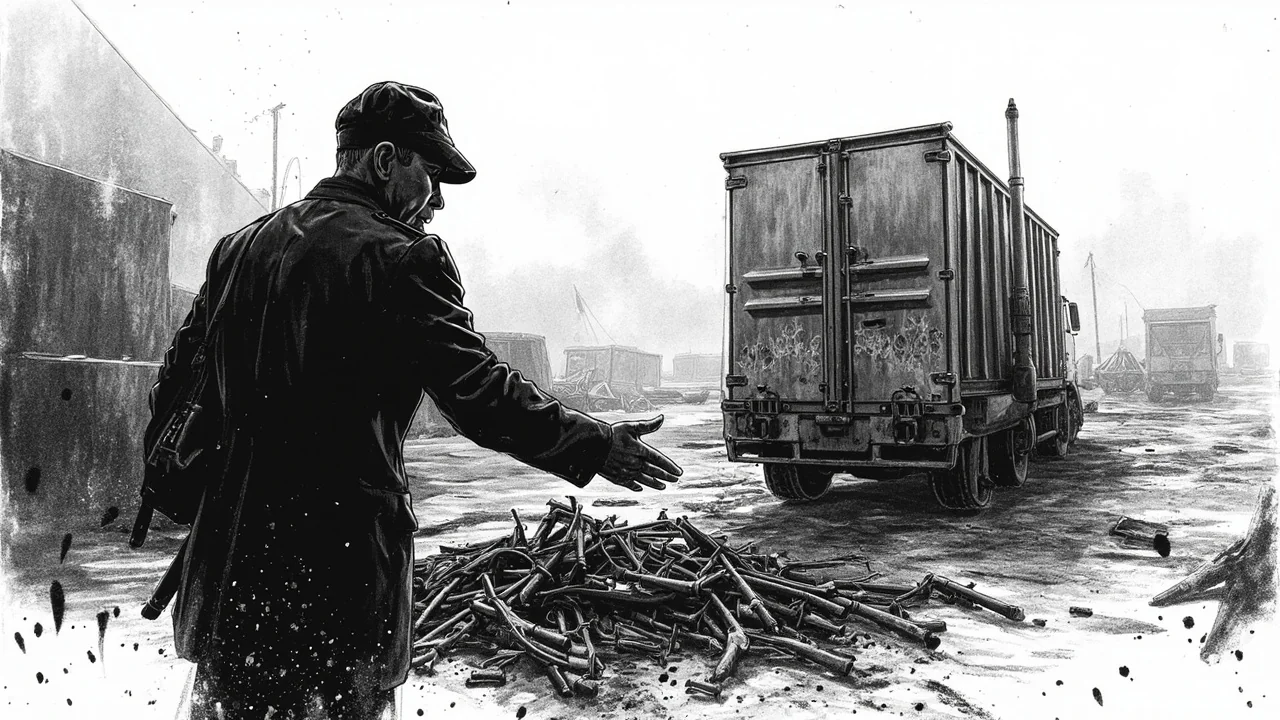
A 67-year-old man from Jämsä has received a suspended prison sentence for firearms and explosives offenses after police uncovered a significant cache of weapons and explosive materials at three different locations in the town in autumn 2024. The Central Finland District Court found the man guilty of serious weapons crimes, handing down a conditional sentence of one year and six months in prison. The conviction follows a coordinated police operation that revealed the scale of the illegal arsenal stored in residential and leisure properties.
The Scope of the Seizure
Police confiscated a pistol, a shotgun, and a black powder firearm from the man's possession. The ammunition haul was particularly substantial, numbering in the thousands of rounds and included approximately 1,500 assault rifle cartridges belonging to the Finnish Defence Forces. Beyond firearms, investigators discovered ten kilograms of gunpowder, boxes of cartridge primers, time fuse cord, ignition charges, and dynamite. The items were stored not only at the man's primary residence but also at a leisure property and in the cellar rooms of another person's apartment, indicating an effort to disperse the illicit materials.
Police Investigation and Court Proceedings
The investigation was launched by the Central Finland Police Department following a tip-off. Officers executed simultaneous search warrants at the three addresses, leading to the immediate seizure of the dangerous materials. During the court proceedings, the defendant argued the collection was for hobbyist and historical purposes, a claim the prosecution contested given the volume, modern military ammunition, and explosive compounds involved. The court weighed the nature of the items, their quantity, and the storage conditions against Finland's strict firearms and explosives legislation before reaching its verdict. The sentence is conditional, meaning the man will not serve time in prison unless he commits another crime during a probationary period.
Legal Ramifications and Sentencing Rationale
In determining the suspended sentence, the court considered several factors, including the defendant's age, lack of prior criminal record, and the fact that the materials, while dangerously stored, were not used in any violent act. However, the judgment underscored that the mere possession of such an arsenal constituted a grave risk to public safety. The court's decision aligns with Finnish penal practice, where non-violent first offenders often receive conditional sentences, especially when rehabilitation is deemed possible. The police have stated their investigation into the origin of the materials, particularly the dynamite and military ammunition, remains ongoing to determine if others were involved in their procurement.
A Broader Look at Security in Rural Finland
Incidents like this prompt discussions about security and illegal materials in rural municipalities. Jämsä, a town in central Finland, is not typically associated with major criminal activity. The case demonstrates that significant breaches of weapons laws can occur anywhere, challenging perceptions that such threats are confined to urban areas. It also highlights the challenges of monitoring legacy explosives and firearms, which may be inherited, found, or improperly retained from past decades when regulations were different. Local authorities have reiterated the importance of citizens reporting suspicious materials or behavior, emphasizing that community vigilance is a key component of national security.
Conclusion and Forward Look
The Jämsä case concludes with a judicial warning but leaves questions about the origins of a formidable private arsenal. It serves as a stark reminder of the legal boundaries surrounding firearms and explosives in Finland, a country with deep hunting and shooting traditions but equally deep commitments to public order. The suspended sentence will be scrutinized by some as lenient, while others may see it as a proportional outcome for a collector who crossed a legal line without violent intent. Regardless, the police operation successfully removed a tangible danger from the community, and the court has set a clear legal precedent. The case now passes into the records, a detailed footnote on the balance between individual hobbyism and collective security in modern Finland.