
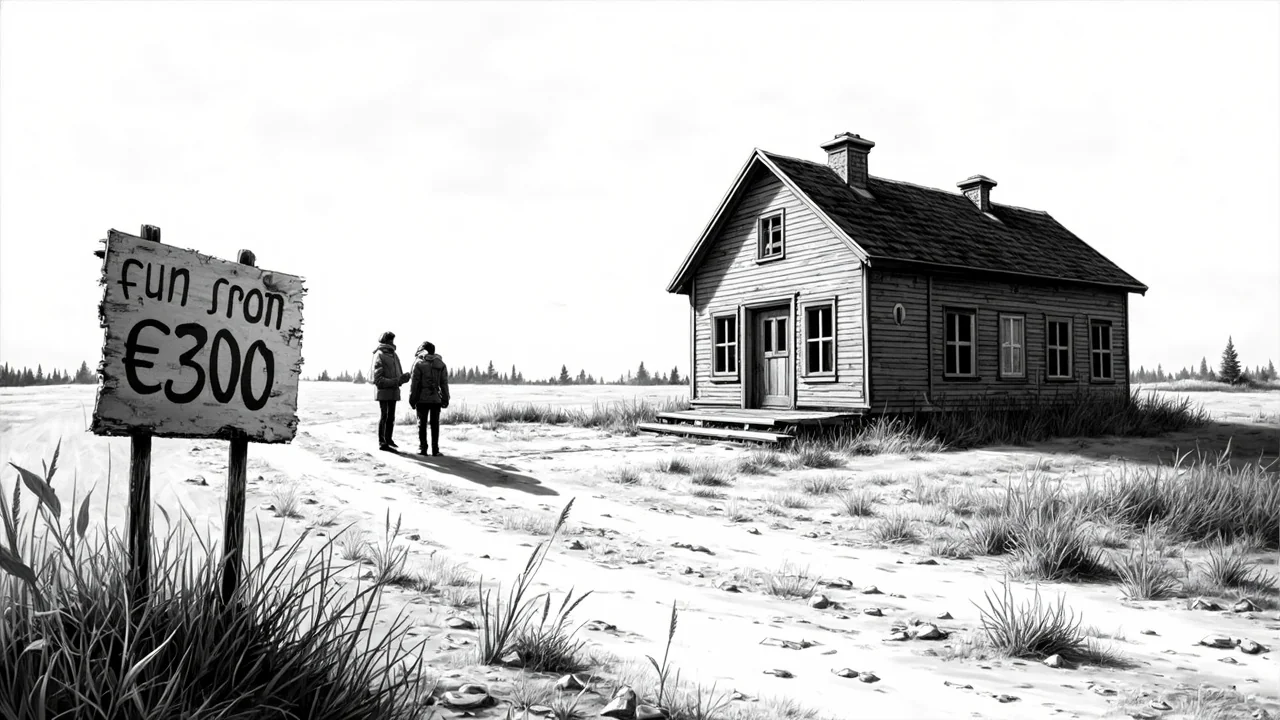
Finland's municipality of Mikkeli has sold the former school building in the village of Suomenniemi for 300 euros. The online auction concluded on December 16th with three bids, according to Linda Asikainen, director of rental and utility services for the City of Mikkeli. Asikainen confirmed the buyer made a serious offer, and the final sale is set to proceed in the near term. The buyer has not publicly commented on their plans for the property, leaving the future of the vacant school building open. This transaction highlights the stark challenges facing property assets in Finland's depopulating rural regions, where maintaining public buildings becomes an unsustainable burden on municipal finances.
A Symbol of Village Life Now a Liability
The sale of the Suomenniemi school represents a tangible endpoint in a long demographic trend. For decades, rural municipalities across Finland have grappled with declining birth rates and steady migration towards urban growth centers in the south. This outmigration forces the consolidation of public services, with smaller village schools often among the first institutions to close. Once a hub of community activity and local identity, the building transforms from a public asset into a financial liability. Municipalities are then left with the ongoing cost of maintenance, heating, and insurance for a structure with no clear public function, prompting difficult decisions about disposal.
The Mechanics of Municipal Property Disposal
The process leading to the 300-euro auction followed standard Finnish municipal procedures for surplus property. When a building like the Suomenniemi school is deemed redundant, the municipality assesses its potential for other public uses or tenancy. If no viable public need is identified, the property is typically offered for sale. The method of sale can vary, from direct sale to public auction, with the goal of securing the best possible return for taxpayers while also ensuring the property finds a new owner who will assume its upkeep. The extremely low final price in this case reflects the market's valuation of such properties in remote locations, where renovation costs can far exceed the purchase price and potential for commercial use is limited.
Broader Context of Rural School Closures
The story of Suomenniemi's school is far from unique. The Finnish National Agency for Education reports a consistent trend of school network consolidation over the past 30 years. This policy aims to ensure educational quality and cost-efficiency by concentrating resources in larger units. While economically rational from a national and municipal budget perspective, each closure carries a significant social impact. The loss of a local school often accelerates depopulation, as young families may choose to relocate to areas with accessible education. This creates a cycle where decreased population justifies further service cuts, a challenge recognized in both national and EU regional development strategies focused on countering territorial inequalities.
The Search for New Purpose in Old Buildings
The future of the Suomenniemi school now rests with its new private owner. Across the Finnish countryside, communities and entrepreneurs have found creative ways to repurpose former school buildings. Common transformations include private homes, artist studios, small workshops, tourism accommodations, or community co-working spaces. The success of these projects depends heavily on local initiative, access to funding, and the specific characteristics of the building and its location. The lack of comment from the buyer in Suomenniemi leaves the village waiting to see which path will be taken. A successful adaptive reuse can inject new life into a village, while a building left to deteriorate can become a symbol of neglect.
Municipal Finances and Tough Choices
For the City of Mikkeli, the sale, despite its nominal price, represents the resolution of a financial drain. Municipal budgets in Finland are under continuous pressure from rising healthcare and social service costs. Maintaining an unused property requires allocating funds that could be directed towards active services. Selling the property, even for a minimal sum, transfers the future maintenance costs away from the public ledger and can remove the building from the municipal tax roll if the new owner applies for exemption. The decision to sell is thus a pragmatic, if poignant, calculation made by local councils who must balance sentimental attachment with fiduciary responsibility to all residents.
What the €500 Price Tag Really Means
The final auction price of 300 euros serves as a powerful indicator of the perceived market value of certain rural assets. It is a figure that speaks louder than any demographic report about the economic realities of specific regions. It suggests that the cost of renovating and upgrading an old building to modern standards may be prohibitively high relative to any potential income it could generate. This valuation reflects broader challenges in the Finnish real estate market, where demand is intensely concentrated in growing urban areas and their commuter belts, while vast tracts of the countryside experience property value stagnation or decline.
Looking Beyond the Sale Notification
The notification of a 300-euro school sale is more than a curious anecdote, it is a data point in Finland's ongoing regional development discourse. It touches on issues of municipal governance, sustainable public finance, and the social fabric of rural communities. The Finnish government and the EU's cohesion policy have various programs aimed at revitalizing rural areas, supporting entrepreneurship, and improving digital connectivity to make remote locations more viable. The fate of individual buildings like the Suomenniemi school will ultimately be determined by whether these broader policies can reverse the trends that made the school redundant in the first place. For now, the empty classrooms in Suomenniemi await a new chapter, their sale a quiet testament to a changing Finland.