
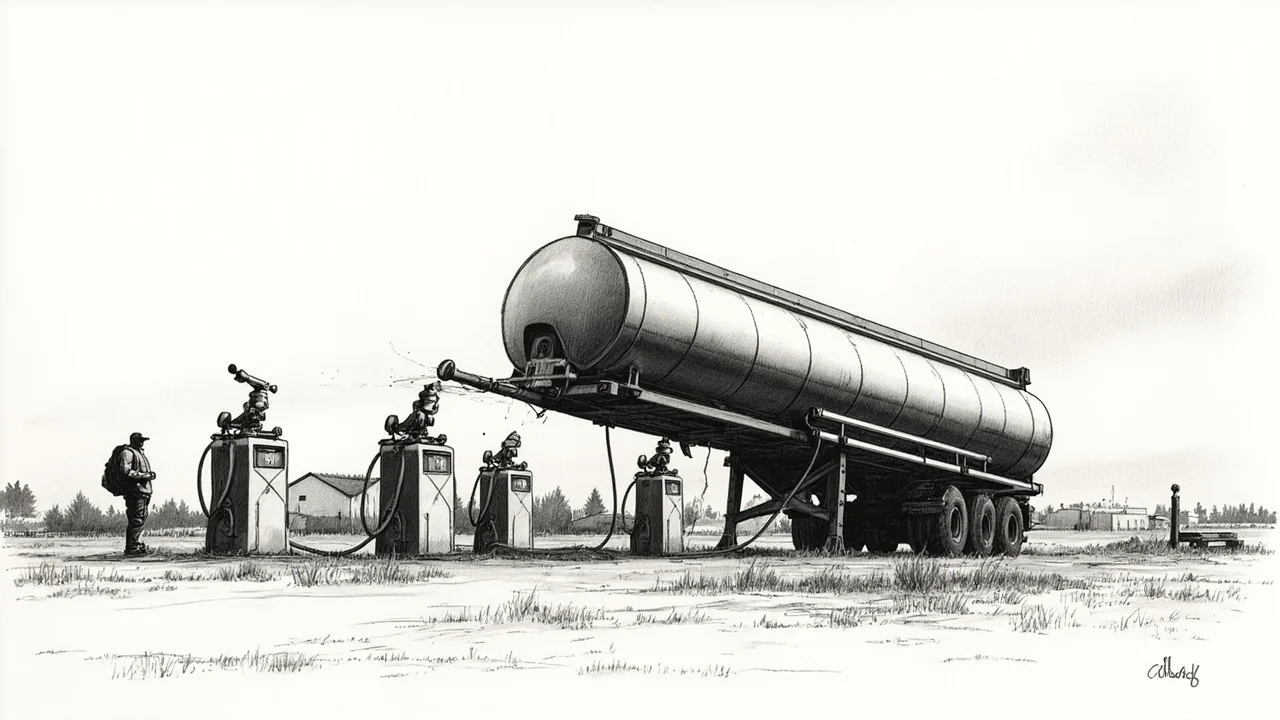
Finland fuel station accident in Pihtipudas could have escalated into a serious fuel spill or fire but was narrowly avoided thanks to an alert spotter this past Saturday. A delivery van's trailer became entangled in the fuel pump hoses at the Niemenharju travel center, ripping the entire metering system from its base in a dramatic incident caught on surveillance video.
A Chain of Minor Errors
The incident began with a simple parking mistake. According to the travel center's property manager, Jouni Arvola, a customer had parked their car too close to the front of another vehicle that was refueling. This reduced the available maneuvering space. The driver of the van with the trailer was being guided by a colleague using hand signals, but Arvola stated this person failed to account for how much space the trailer's swing would require. “The driver had to turn away from the meter very sharply. The trailer’s support leg caught onto those hoses and then ripped the whole system down,” Arvola recounted. The force of the turn caused the trailer's stabilizing jack to hook the flexible fueling hoses, which then acted as a cable, pulling the heavy pump and payment unit completely over.
The Critical Moment of Alertness
The surveillance footage shows the potential for a much worse outcome. As the trailer pulled away, the hoses remained snagged on the jack, creating significant tension. The situation could have led to ruptured fuel lines, creating a major spill and fire hazard. The damage was limited because the person guiding the driver noticed the hoses tangled on the support leg and alerted the driver to stop. “The pump side itself remained intact. Those hoses and the meter systems probably all need to be replaced,” Arvola estimated. This quick intervention prevented the hoses from being completely severed, which would have released a large volume of petrol onto the forecourt. The travel center is a common stop for trucks, campers, and passenger cars traveling through central Finland, making the potential for collateral damage high.
Resolving the Aftermath Directly
Arvola was informed about the destroyed meter immediately after the damage occurred. Unlike many incidents that immediately involve insurance claims and police reports, the parties involved chose a direct and conversational approach to resolution. The driver, the guiding colleague, and the travel center management discussed the incident and the associated compensation matters on the spot. The exact cost of the repair bill was expected to become clear the following Monday, but Arvola indicated the sum would be significant. “We can’t exactly be talking about small change here,” he said. This local, straightforward method of conflict resolution is often seen in smaller Finnish municipalities, where direct communication is frequently preferred as a first step.
Infrastructure Vulnerabilities in Everyday Settings
This incident highlights the inherent vulnerability of everyday infrastructure to simple human error. Fuel stations, while built to safety standards, have critical components exposed in public areas. The placement of fuel pumps, traffic flow design, and the increasing size of passenger vehicles and their trailers are constant factors station operators must consider. While major safety incidents at Finnish fuel stations are rare, minor collisions with pumps and canopies do occur, especially during winter driving conditions. Each event prompts a review of site layout and driver awareness. The Pihtipudas case is distinct due to the precise mechanical snagging that caused the failure, rather than a direct impact from a vehicle's body.
Looking at the Broader Context of Driver Awareness
The event serves as a practical reminder of the responsibilities of both drivers and those assisting them. Towing a trailer, especially a large one, significantly alters a vehicle's dynamics, increasing its width, length, and turning radius. The need for effective communication between a driver and a guide is paramount in tight spaces, as the driver's direct field of vision is severely restricted. In this instance, the guide’s eventual alertness prevented escalation, but the initial misjudgment of space created the dangerous situation. Driving schools in Finland include trailer handling in license categories, but practical experience varies widely among motorists. This incident underscores that a moment's inattention in a routine task like refueling can have costly and dangerous consequences.
The Road to Repair and Normal Operations
For the Niemenharju travel center, the immediate task is repairs and restoration of full service. Replacing a full fuel dispensing system involves more than just connecting new hardware. It requires certified technicians to install and calibrate the meters for accuracy, ensure all safety cut-offs and vapor recovery systems are functioning, and have the equipment inspected for compliance. During this period, the station likely operated with reduced pumping capacity, an inconvenience for a business reliant on steady customer flow. The financial impact includes not just the repair costs but also potential lost sales during the downtime, factors that were part of the discussion between the parties. The resolution of this matter without formal legal proceedings suggests a mutual acknowledgment of the shared role in the accident.
A Lesson Captured on Camera
The existence of clear surveillance video changes the nature of such incidents. It provides an unambiguous record of the event's sequence, removing doubt about how the damage occurred and validating the accounts of those involved. For the business owner, it is crucial for insurance and liability purposes. For the public, it serves as a stark, visual educational tool. A near-miss like this one, where disaster was averted by seconds and a shouted warning, can be more instructive than a report of a catastrophic fire. It vividly illustrates the thin margin between a costly mistake and a genuine tragedy. The video from Pihtipudas will likely become a case study in driver training discussions, emphasizing that the routine act of filling a tank demands the same focus as navigating a highway.