
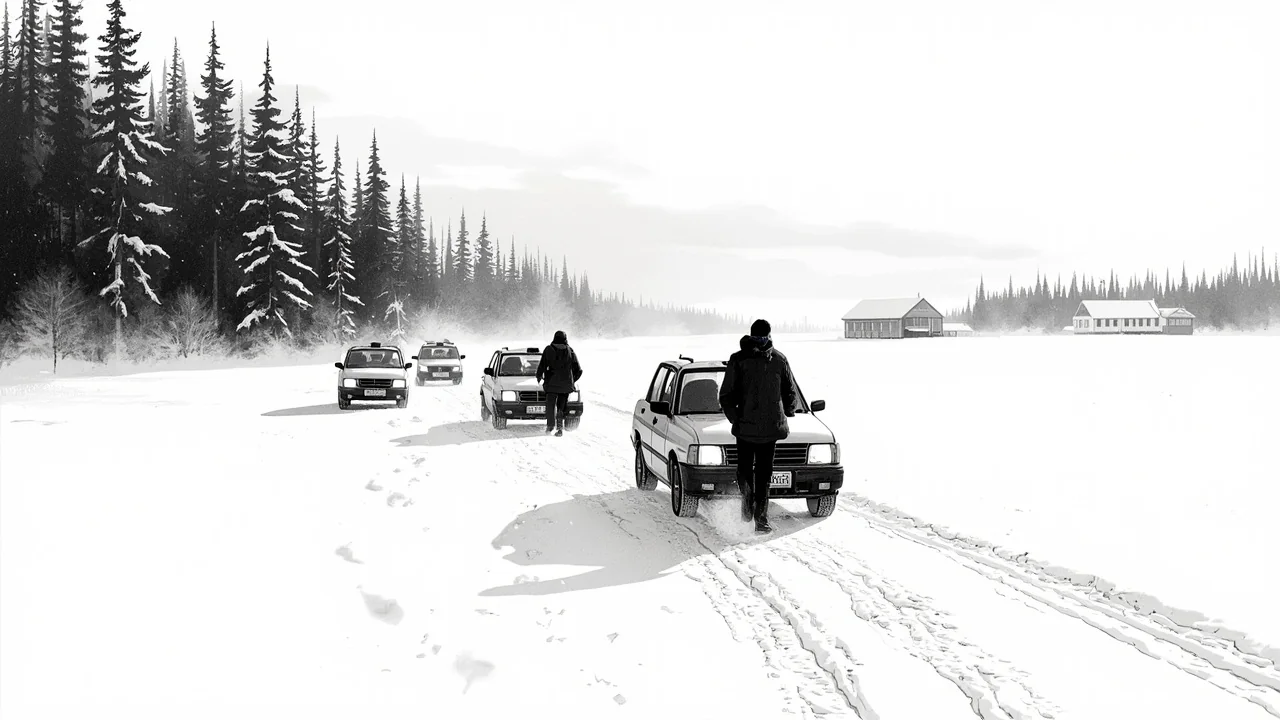
Finland's cross-country ski trails faced an unusual hazard this week when two taxi drivers navigated their vehicles directly across groomed tracks in Espoo's popular Oittaa recreation area. The incident, captured on video, has prompted city officials to review security measures and sparked a debate about winter navigation in a country where outdoor access is a cherished public right.
Espoo's district work manager Mika Salo confirmed the event occurred on Monday evening. "Certain taxi drivers were directed away from the ski trail," Salo stated. He expressed bafflement at the drivers' actions, noting they claimed their digital maps provided poor guidance. "I don't know what they were thinking or where they were going," Salo said. The drivers reportedly entered via a maintenance access point normally secured by a barrier, which was open for city upkeep vehicles.
A Breach of Winter Etiquette
The sight of cars on ski trails represents a profound violation of Finnish winter culture. In a nation with over 40 kilometers of prepared trails in the Oittaa region alone, the tracks are considered sacrosanct spaces for exercise and tranquility. Each winter, municipalities invest significant resources in grooming and maintaining these networks, which are freely accessible under Finland's concept of 'jokamiehenoikeus' or everyman's right. This right grants public access to nature but comes with a responsibility to avoid damage and danger.
Salo emphasized that while the frozen ground likely prevented physical damage to the trail surface, the principle remains critical. "Every vehicle not belonging on a trail creates a potential dangerous situation for skiers," he explained. The incident happened during a cold spell, with skiers present on the 2.3 kilometers of machine-packed snow available that day. The risk of a collision between a skier and a vehicle, particularly in low evening light, was a serious concern for officials.
Navigation Apps and Urban Wilderness
The drivers' defense—faulty digital maps—highlights a growing tension between technology and Finland's intricate landscape. Navigation systems designed for road networks can provide confusing instructions on the periphery of urban green spaces. Oittaa sits within the Espoo city region, a short distance from residential areas, creating a zone where city infrastructure blends into forest and trail networks. This incident is not isolated; Salo confirmed taxis have been seen on Oittaa trails before.
This raises questions about how location services interpret and route traffic through mixed-use areas. Are mapping algorithms adequately accounting for seasonal paths and protected recreational zones? For taxi drivers unfamiliar with local geography, especially those potentially new to Finland or working for international ride-hailing platforms, reliance on GPS can lead to literal off-road experiences. The Finnish Transport and Communications Agency (Traficom) has previously issued guidelines about the limitations of navigation software, but enforcement remains challenging.
Municipal Response and Access Management
In response, Espoo's outdoor area management is reconsidering its physical security protocols. "We have to start closing the barriers to prevent unpleasant situations for skiers," Salo stated. The current system allows flexibility for municipal maintenance crews, who need to cross trails with snow groomers and other equipment. This necessary access creates a vulnerability. Salo indicated a shift toward stricter closure once intensive winter maintenance in the area is complete.
The challenge for Espoo, and other Finnish municipalities, is balancing secure trail protection with the ethos of open access. Installing permanent barriers or gates contradicts the informal, trust-based system that governs much of Finland's outdoor recreation. Heavy-handed security could alienate residents who value unimpeded connection to nature. The solution may lie in smarter, temporary barriers or improved signage at key access points, clearly marking trails as non-vehicular zones in multiple languages.
The Broader Context of Espoo's Winter Network
The Oittaa incident occurs as Espoo is actively expanding its winter sports infrastructure. Beyond Oittaa's trails, the city has prepared tracks in Central Park and is well-advanced in creating a machine-packed snow trail in Puolarmaari. This week, an additional kilometer of packed trail is scheduled. In Leppävaara, 2.5 kilometers of machine-packed trail opened on Monday, with snow spreading operations continuing. Both Leppävaara and Oittaa also feature maintained sledding hills.
This investment underscores the importance of these facilities to urban wellbeing. Cross-country skiing is a cornerstone of Finnish physical and mental health during the dark winter months. Protecting the safety and integrity of these trails is therefore a public health priority, not merely a recreational one. Any threat to that safety, whether from careless individuals, confused drivers, or inadequate infrastructure, receives serious attention from local authorities.
Legal and Regulatory Implications
While the taxi drivers were only directed away, such actions could have legal consequences. Finland's traffic laws prohibit driving off-road in a manner that causes danger or damage. The Finnish Police could investigate such an incident under traffic endangerment statutes. Furthermore, if damage to the publicly funded trail surface had occurred, the drivers or their companies could face liability for repair costs.
The role of taxi companies also comes into focus. Do firms provide adequate training for drivers operating in cities with extensive green corridors like Espoo? With the rise of platform-based ride-hailing, the connection between driver training and local geographical knowledge may be weakening. Industry representatives from groups like the Finnish Taxi Association have historically emphasized professional knowledge, but the market's evolution may require renewed focus on this aspect.
A Question of Shared Winter Space
Ultimately, the event is a reminder of the shared responsibility required to maintain Finland's unique winter culture. It pits the convenience of modern transportation against the preservation of traditional, non-motorized outdoor spaces. For Finns, the ski trail is a communal living room in winter—a place for conversation, solitude, and rhythmic physical exertion. The intrusion of a car is as socially jarring as one driving through a crowded park patio in summer.
Espoo's officials now face the practical task of securing trails without resorting to a fortress mentality. The incident may accelerate the adoption of clearer markings, better barriers at vulnerable points, and perhaps public information campaigns aimed at all drivers, especially those in service industries. Collaboration with mapping companies like Google and Apple to better classify trail networks in their databases could be a longer-term technological solution.
As the winter deepens and more kilometers of trail are opened across Espoo, the memory of taxis on the tracks will likely influence maintenance schedules and security checks. The goal, as Mika Salo outlined, is to ensure skiers face no "unpleasant situations." In a country that masters winter rather than hides from it, protecting the purity of the ski track is a small but significant part of the national contract with the season. The sight of tire tracks in the machine-set grooves serves as a stark warning: even in a society built on trust and common sense, the boundaries of Finland's winter paradise occasionally need clear definition and vigilant protection.