
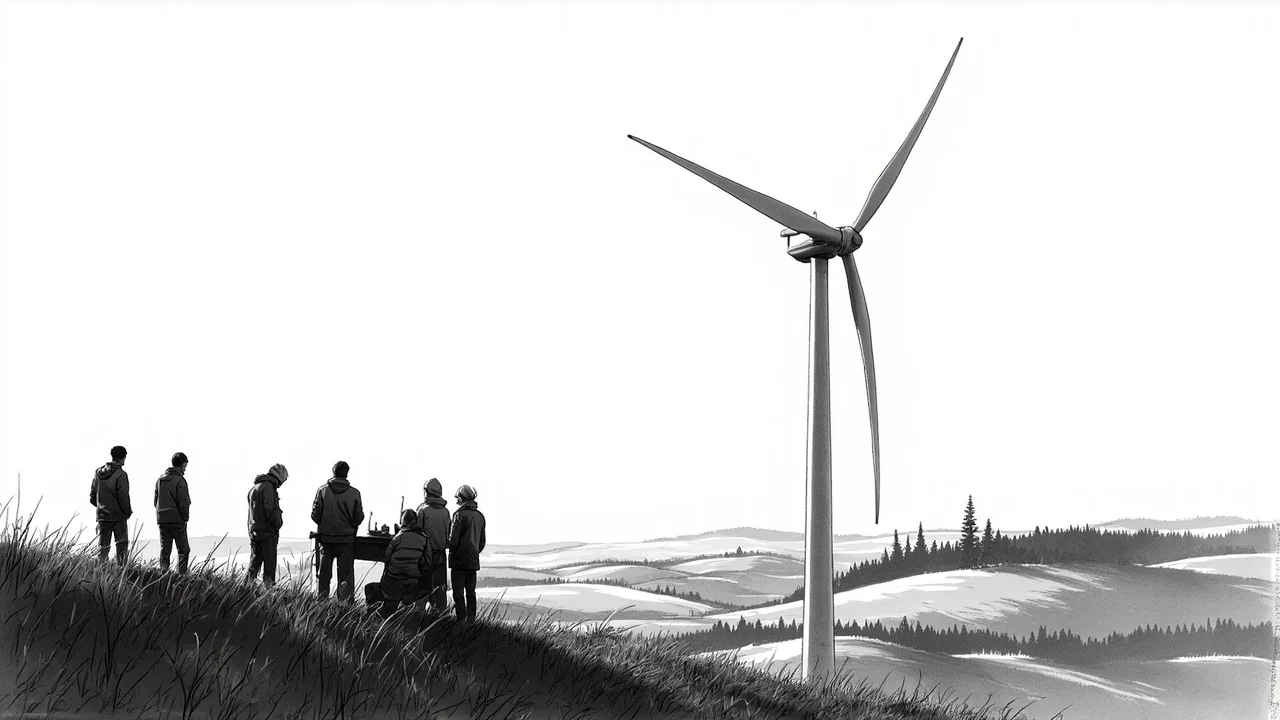
Finland's push to expand its renewable energy capacity to 22 terawatt-hours from wind power by 2025 is creating a new generation of technicians, with the first dedicated class for wind and solar power maintenance technicians now underway at a vocational college in Central Finland. At the heart of the workshop at the Pohjoisen Keski-Suomen ammattiopisto (POKE) in Äänekoski, a scale model of a wind turbine nacelle spins, a training tool for students like 16-year-old Miro Tuomi from Saarijärvi. 'This has everything that's in a wind turbine nacelle, but on a much smaller scale: the blades, the equipment, the brake, the generator, and the hydraulics,' said POKE's machinery and production technology teacher, Seppo Pietarila. 'You can also program faults into it, which the student then has to find and repair.'
A Path Forged in Family and Finnish Industry
Miro Tuomi is one of the first students to choose the new wind and solar maintenance specialization available within the electrician and automation degree program. He began his foundational studies in the autumn of 2025 and will start the specialized track next autumn, following in the footsteps of his father, who also works in the electrical field. His path was influenced by hands-on experience gained last summer during a traineeship where he got acquainted with maintenance work at hydropower plants run by energy company Enersense in Saarijärvi. The new curriculum represents a direct response from Finland's vocational education system to the demands of the country's rapidly growing green energy sector, aiming to ensure a steady pipeline of skilled workers for crucial infrastructure.
Building a Homegrown Maintenance Workforce
The specialization is a strategic addition to Finland's educational offerings, designed to domesticate expertise that has often been reliant on international technicians. For students, it provides a clear and modern career trajectory in a high-demand field. The training equipment, like the detailed turbine model, allows for practical, fault-based learning that mirrors real-world technical challenges without the risks and costs associated with training on full-scale operational turbines. This approach aims to produce technicians who can minimize downtime for energy producers, a critical factor for Finland's energy security and carbon neutrality goals. The program's location in Central Finland is also significant, placing it near existing and planned wind power projects across the region, facilitating potential partnerships and practical training opportunities.
The National Context for a Local Classroom
This educational initiative is not happening in a vacuum. It aligns with the energy policy objectives set by the Finnish government, which has committed to increasing the share of renewables in its energy mix as part of both national climate laws and European Union directives. The Finnish Parliament, the Eduskunta, has backed legislation that encourages renewable energy investment, creating the market demand that now drives the need for specialized workers. While the government in Helsinki sets the broad targets, it is institutions like POKE and students like Miro Tuomi who will implement them on the ground, maintaining the physical assets of Finland's energy transition. The move also reflects a broader trend in Finnish vocational education to dynamically adapt its programs in close collaboration with industry representatives, ensuring that training meets contemporary technological standards.
From Classroom to Career
For Miro, the future is taking a clear shape. The combination of his foundational studies, the upcoming specialized training, and his prior summer work experience is building a comprehensive skill set. His story exemplifies a classic Finnish narrative of skilled trades passing through families, now updated for the green economy. His choice signifies how Finland's climate goals are translating into tangible career opportunities for young people in regions outside the major metropolitan area. The success of this first cohort will likely be closely watched by other educational institutions and energy companies across the country, potentially serving as a model for similar programs as the renewable sector continues to expand. The ultimate test will come when these students graduate and begin their work, ensuring that the turbines spinning across the Finnish landscape deliver on their promise of clean, reliable power for decades to come.
The Human Element of Energy Transition
The story of this new class is ultimately about more than just machinery and megawatts. It is about preparing individuals for meaningful, future-proof careers in communities that are part of the energy transformation. It addresses a practical challenge of the green transition: who will keep it running? As Finland works to phase out fossil fuels and increase energy self-sufficiency, the technicians trained today will become essential workers tomorrow. Their role in preventative maintenance, troubleshooting, and repairs will directly impact the efficiency and reliability of the renewable energy grid. The investment in their education is, therefore, an investment in the resilience of Finland's entire energy system, making the work of students like Miro Tuomi a foundational component of the nation's strategic interests.