
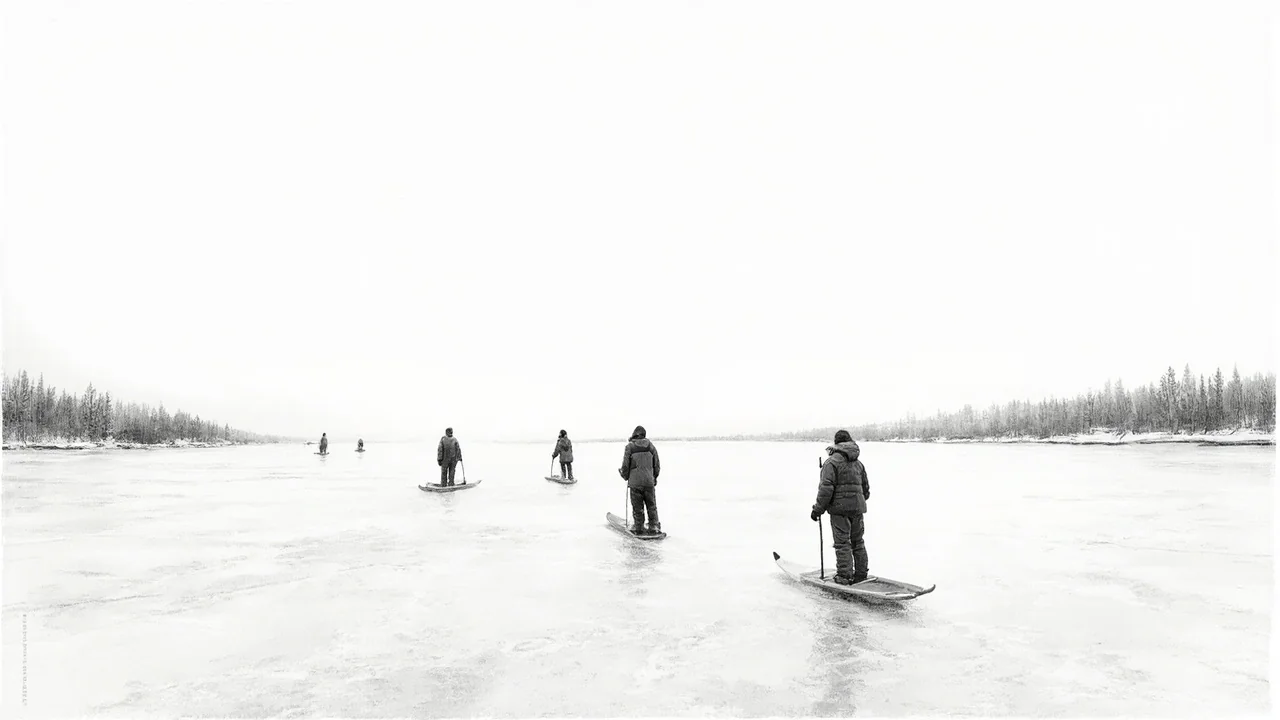
Finland's weather service Foreca has issued a serious warning over dangerously thin ice cover across parts of the country, creating a significant hazard as winter activities continue. Ice strengthening has slowed due to thawing frost and the thickening of insulating snow cover. As a result, in Eastern and Central Finland, ice is thinner at many observation points than is average for this time of winter. This creates a deceptive and potentially deadly risk on lakes and waterways. The warning was detailed in Foreca's weather blog, highlighting specific data and safety guidance.
Unseasonably Weak Ice Conditions
Foreca provided a stark example of the current conditions. At Saimaa's Lauritsala, the ice measured only 14 centimetres thick at the beginning of the week. This is substantially below the safe threshold for an individual. The ice cover can be treacherously weak on open waters, in current channels, narrows, and near the discharge points of ditches and pipes. The Finnish Environment Institute (Syke) reminds the public that ice load-bearing capacity cannot be judged by sight alone. Anyone venturing onto ice must always verify its safety, for example by using an auger to drill a test hole.
Official Safety Thresholds Explained
The official guidelines for safe ice are clear. Load-bearing capacity is assessed based on clear, hard ‘steel ice’. According to the Finnish Environment Institute, there must be at least 5 to 10 centimetres of this quality ice across the entire travel route for it to support a single walking person. The current measurements in parts of Eastern and Central Finland show conditions hovering near or even below this critical minimum. This makes traditional winter routes, often used for fishing, skiing, or commuting, unexpectedly perilous. Authorities stress that snowmobile or car travel requires significantly thicker, multi-layered ice, conditions not present in the affected regions.
A Tale of Two Winters in One Country
While the warning focuses on specific regions, the situation elsewhere in Finland contrasts sharply. In most other parts of the country, ice thickness is conventional for the season. On inland waters in the area between the southern coast and the heights of Kainuu, ice thicknesses range from 20 to 40 centimetres. In the north, ice is predominantly 40 to 55 centimetres thick. Sea coasts are covered in ice, though its thickness varies. Offshore, sea water is in places warmer than usual, affecting ice formation dynamics. This regional disparity means national safety messages must be hyper-local to be effective.
The Role of Recent Weather Patterns
The development of this hazardous situation is directly linked to recent meteorological conditions. The slowing of ice strengthening is attributed to the thawing of frost periods and the accumulation of a thick, insulating layer of snow. Fresh snow acts as a blanket, preventing the deep cold from further solidifying the ice beneath. This leaves a weaker base layer vulnerable to stress. Foreca notes that by the end of the week, returning frosts may form new ice on currently ice-free river mouths. However, this new ice will be thin, smooth, and particularly dangerous, offering a false sense of security without underlying strength.
Historical Context and Seasonal Norms
Finland's relationship with winter ice is deep-rooted, with centuries of experience informing current safety standards. The average ice thickness for late winter in the affected lake districts is typically far greater than the 14 centimetres now recorded. This deviation from the seasonal norm is what triggers official warnings. Municipalities and rescue services historically see an increase in ice-related incidents during such periods of unstable weather, where early-winter habits conflict with mid-winter conditions. The annual cycle of freeze and thaw is being disrupted, presenting new challenges for public safety communication.
Practical Implications for the Public
The immediate implication of the warning is a call for heightened public caution. Activities like ice fishing, which are culturally significant, require extra verification steps. The Finnish Environment Institute's rule is absolute: always check with an auger. Furthermore, individuals should avoid areas known for currents, such as narrows or discharge points, even if surrounding ice seems solid. Local authorities often mark safe routes with signs, these should be strictly followed, and unmarked areas should be considered unsafe unless personally verified. Carrying ice picks and not going out alone are standard safety practices that become critically important now.