
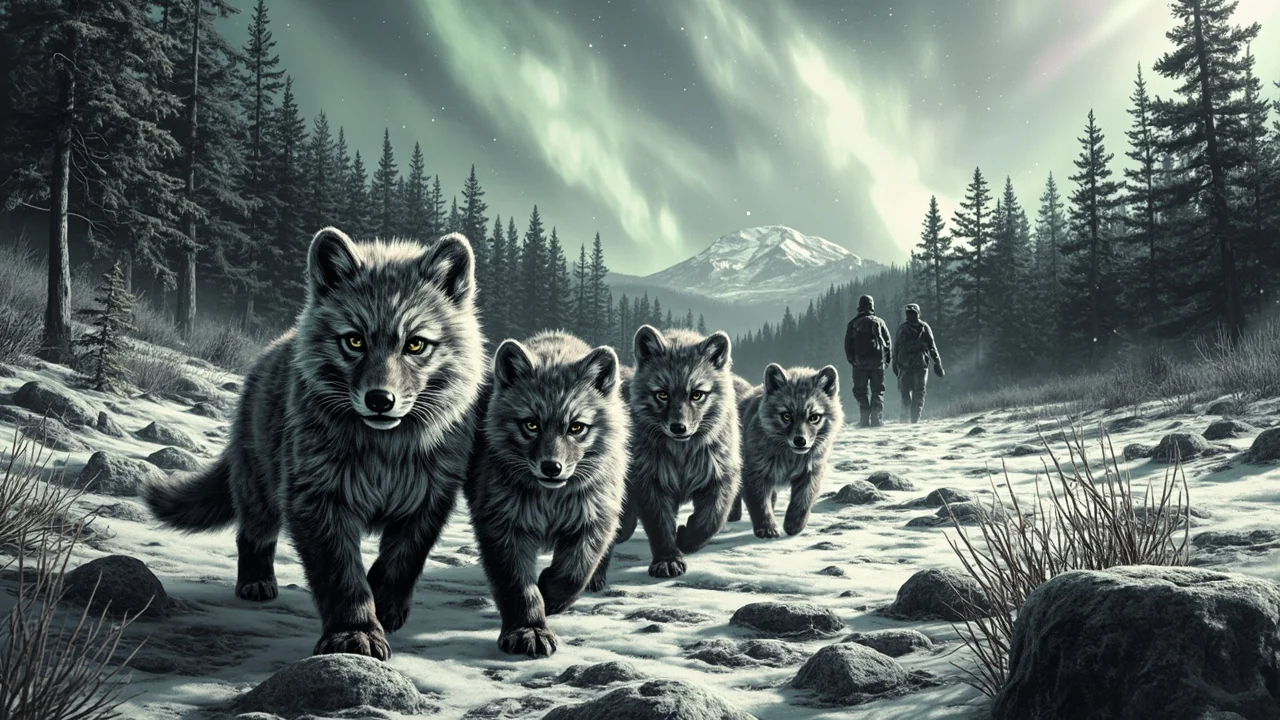
Finland's critically endangered wolverine population has recorded a vital success with the birth of three cubs last year. The births, confirmed by Metsähallitus and the WWF in a joint statement, mark the fourth consecutive year the species has successfully bred in the country, signalling a potential turnaround from its most critical phase. The elusive predators, known in Finnish as 'naali,' remain one of the nation's rarest mammals, with every new litter representing a crucial step for the fragile population.
A Sustained Breeding Streak Offers Hope
For four straight years, wolverines have now managed to produce offspring within Finnish forests. This consistent breeding success is a key metric for conservationists who have long monitored the species' precipitous decline. The three new cubs, while a small absolute number, contribute to a slowly strengthening genetic and demographic foundation. The announcement did not specify the locations of the dens to protect the animals from potential disturbance, a standard practice for such sensitive species. The continued collaboration between the state-owned forestry agency Metsähallitus and the global environmental organisation WWF underscores the coordinated effort required for large carnivore management in Finland.
From the Brink of Disappearance
The wolverine's situation in Finland has historically been dire, with the population hovering on the edge of local extinction for decades. Intensive hunting and persecution throughout the 19th and 20th centuries, driven by conflict with reindeer herding in Lapland and general predator control, decimated their numbers. Their recovery is a modern conservation story, heavily influenced by EU directives like the Habitats Directive, which provides strict protection status. National legislation now aligns with these EU mandates, making the wolverine a legally protected species. This legal shield, enacted in the 1990s, was the essential first step that halted the outright decline and allowed for the possibility of the current slow recovery witnessed over the past four years.
The Complex Path of Large Carnivore Conservation
The progress, while encouraging, exists within Finland's complex and often contentious political landscape of large carnivore management. The Wolverine population remains concentrated mainly in the eastern and northern parts of the country, regions where their presence can clash with traditional livelihoods like reindeer husbandry. The Finnish Parliament, or Eduskunta, periodically debates predator compensation schemes and population management plans, balancing conservation obligations with rural interests. Ministry of Agriculture and Forestry officials must navigate these waters, setting population targets that satisfy both EU conservation requirements and domestic stakeholder groups. The successful breeding years provide concrete data for these ongoing policy discussions, demonstrating that protection measures can yield measurable, if gradual, results.
Monitoring the Elusive Forest Dweller
Gathering data on such a secretive and wide-ranging animal is a significant challenge. Metsähallitus employs a range of techniques, including snow-tracking surveys in winter, camera traps, and genetic analysis of scat and hair samples, to estimate population size and distribution. The confirmation of these three cubs likely resulted from this meticulous field monitoring work. Each breeding female represents a critical asset for the population's future, and their survival through the denning period is a major focus for wardens. The involvement of WWF brings additional expertise and resources to these monitoring programs, which are vital for assessing the real-world impact of conservation policies and adapting strategies as needed.
Looking Beyond Finland's Borders
The wolverine's fate in Finland is not isolated; it is part of a broader Fennoscandian population shared with Sweden and Norway. Cross-border cooperation is essential for maintaining genetic diversity, as animals move between these national territories. Finland's recent breeding success contributes to the health of this shared Nordic population. Furthermore, as an EU member state, Finland's reporting on the conservation status of species like the wolverine feeds into wider European assessments, influencing broader biodiversity strategies. The nation's ability to demonstrate a recovering wolverine population strengthens its position in EU environmental forums and complies with its transnational legal commitments.
The Challenges That Persist Ahead
Despite four years of breeding success, significant hurdles remain for the wolverine's long-term recovery in Finland. The population base is still exceedingly low, making it vulnerable to stochastic events like disease or poor breeding seasons. Habitat fragmentation from forestry and infrastructure projects poses an ongoing threat to connectivity. Perhaps the most persistent challenge is human-wildlife conflict. While illegal killing has decreased under strict protection, it has not been eliminated, and legal culling for damage prevention remains a tool within management plans. The continued breeding success is the best argument for maintaining the protective framework that enabled it, but it requires constant vigilance and adaptive management to sustain.
The birth of three wolverine cubs is a quiet victory in the Finnish wilderness, a small but hard-won gain in a decades-long conservation effort. It proves that legal protection and targeted monitoring can create the conditions for a critically endangered species to begin a tentative comeback. The story of these cubs is not just about three animals but about a national and European commitment to preserving its natural heritage, one successful breeding season at a time.