
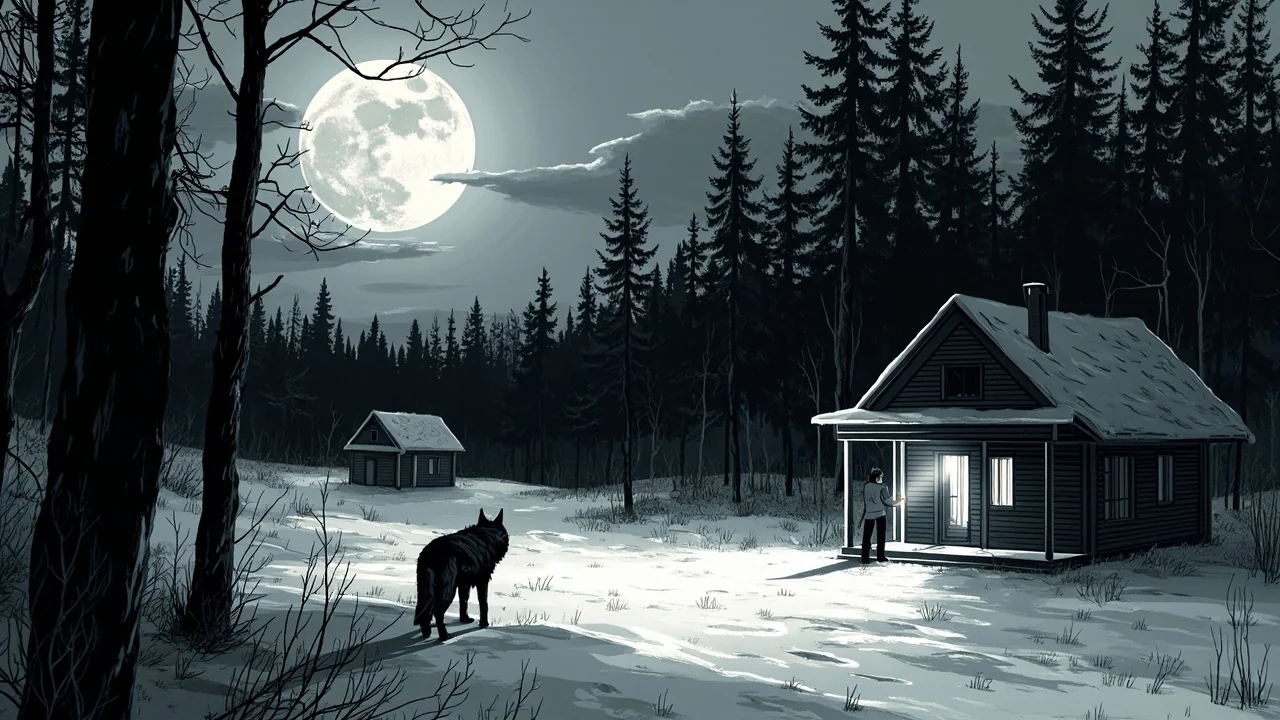
Finland's wolf population is hunting within meters of suburban homes, with three recent attacks in Savitaipale highlighting a dangerous new normal. Residents of the Paimensaari area now avoid outdoor activities after dark, as a wolf pack killed and ate a roe deer directly beside a lit suburban road. This incident follows a pattern of increasing boldness, with wolves observed on lake ice and making direct visual contact with humans through windows. The situation has escalated local fears and ignited a national debate about predator management in one of Europe's most forested nations.
A Suburban Hunt Under Streetlights
A fresh layer of snow in Savitaipale's Paimensaari district now masks the evidence of a recent predator kill. Just nights before, a wolf pack successfully hunted a roe deer in the direct glow of streetlights along Paimensaarentie road. This was not an isolated foray into human-occupied space. Last spring, wolves killed a white-tailed deer on the ice just off the Paimensaari shore. Multiple visual sightings have been reported on both sides of the New Year, confirming a sustained presence. The wolves' complete disregard for the illuminated environment marks a significant behavioral shift, moving their territory from deep forest to the woodland's edge.
Local resident Tuure Puonti had an unnerving personal encounter on the first Saturday of the year. While using his lakeside sauna, he was unaware that a wolf watched him intently through the window from a distance of just four meters. Only later, upon discovering the tracks in the snow, did he realize how close the predator had come. "They no longer fear humans at all," Puonti assessed, summarizing the core concern of his community. This erosion of the natural fear barrier between large carnivores and people represents the central crisis for residents in these rural-urban fringe areas.
The Failed Process of "Problem Animal" Removal
The community's response has been one of growing frustration directed at official channels. Activists and residents have repeatedly applied to police for a license to remove the so-called 'problem wolves.' This legal process, governed by the Finnish Wildlife Agency, requires demonstrating a direct and serious threat to human safety or property. Each application has been denied, leaving residents feeling powerless. The rejections are based on a strict interpretation of conservation directives and a high burden of proof for immediate danger, which locals argue fails to account for the psychological terror and restriction of daily life.
Conservation activists acknowledge the complexity of the issue but are now actively discussing potential solutions. The debate pits the strict protections of the EU Habitats Directive, which lists the wolf as a strictly protected species, against the practical security concerns of Finnish citizens. Finland maintains one of Europe's largest wolf populations, estimated at around 300 individuals, and their expansion into traditional human areas creates inevitable conflict. The legal framework, designed for species recovery, struggles to adapt to a scenario of successful repopulation and subsequent human-wolf interface.
National Policy Clash: Conservation vs. Security
This local conflict in South Karelia mirrors a fierce national political debate within the Eduskunta, Finland's parliament. The current government, led by Prime Minister Petteri Orpo, has signaled a desire to ease wolf hunting regulations to address rural concerns. However, any significant policy shift faces immediate legal challenges from environmental groups and potential infringement procedures from the European Commission. The Ministry of Agriculture and Forestry is caught between implementing EU biodiversity commitments and responding to the legitimate safety fears of its electorate.
Finland's wolf management plan allows for limited culls based on regional population targets, but the process for authorizing the removal of specific 'problem packs' is notoriously slow and bureaucratic. Local police authorities, who field the removal applications, must coordinate with wildlife experts and national agencies, creating a delay that residents say renders the process meaningless when facing an immediate threat. The Savitaipale case exemplifies this systemic failure, where a demonstrably bold pack continues to operate despite numerous official complaints and a clear pattern of behavior.
The Human Cost of Coexistence
The impact on daily life in Paimensaari is profound and restrictive. The simple Nordic tradition of evening walks, winter sports, or commuting home after dark has been voluntarily suspended by many. This self-imposed curfew affects mental well-being and a sense of security in one's own community. For families with children and pet owners, the anxiety is particularly acute. The psychological burden of living alongside large predators, without a clear and responsive safety mechanism from the state, fosters a deep sense of abandonment.
This situation is not unique to Savitaipale but is being replicated across southern and central Finland. As wolf territories stabilize and packs require larger hunting ranges, interactions with scattered rural settlements and suburban expansions are increasing. The Finnish model of everyman's right, which guarantees public access to all forests, is now under strain. When the forest no longer feels safe, a fundamental aspect of Finnish cultural and recreational life is eroded. The conflict is as much about a way of life as it is about physical safety.
Seeking a Sustainable Path Forward
Finding a solution requires navigating a minefield of ecological science, EU law, and human emotion. Conservationists argue that habituation is often caused by accessible human food sources or deliberate feeding, and that better public education and waste management are key. They warn that reactive culling can disrupt pack structures and potentially increase conflicts. Rural communities and many politicians counter that tolerance has its limits, especially when established prevention methods have failed and the animals show no avoidance of human proximity.
The Finnish government is likely to continue pushing for more flexible management powers within the EU framework. Potential compromises include faster-track protocols for removing individual wolves that demonstrate habituated behavior, increased resources for non-lethal deterrents like fencing, and greater local involvement in monitoring and decision-making. However, the EU's core principle of strict protection remains a significant legal barrier. The Commission has previously sanctioned Finland for authorizing wolf hunts deemed disproportionate, setting a firm precedent.
The pristine snow in Paimensaari will continue to record the tracks of both humans and wolves, a silent testament to a shared landscape. The question for Finnish policymakers is whether the current legal tools are sufficient to ensure this sharing is safe and sustainable, or if a fundamental renegotiation with Brussels is the only path to restoring peace of mind in the Finnish countryside. The wolves, for their part, are simply following the available prey, unaware of the political storm their presence has ignited. The resolution will define Finland's relationship with its wilderness for decades to come.