
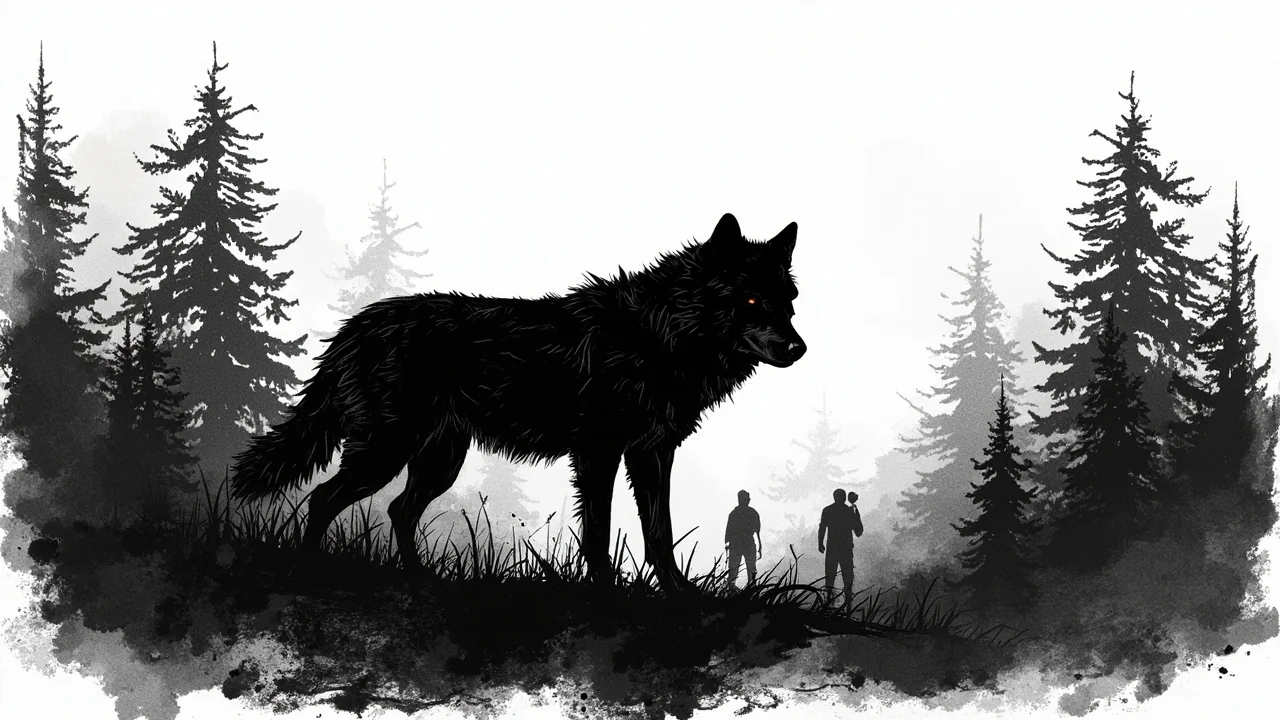
Finland's wolf management conflict has escalated after police in South Karelia rejected a formal request to cull a pack near Savitaipale. The decision shifts responsibility to the Finnish Wildlife Agency, highlighting a growing urban-rural divide over predator policy. This case exposes the complex legal and emotional battle between conservation directives from Brussels and the daily realities of life in Finland's forest communities.
Local hunters in Savitaipale submitted the culling application following repeated sightings, including a recent incident in the yard of a property at Karhurinteen Loma. They argued the wolves' proximity to homes created an acute public safety risk. South Karelia police, however, determined the situation did not meet the threshold for immediate police intervention. In a statement, police clarified their role is limited to providing official assistance only in genuinely acute, dangerous situations. The authority to issue permits for preventive culling rests solely with the Finnish Wildlife Agency, a unit under the Ministry of Agriculture and Forestry.
A System Under Strain
The rejection has frustrated residents who hoped for a swift resolution. Finland's wolf management operates on a dual-track system. The police can act under the Act on the Protection of Public Order if an animal poses an immediate threat. For preemptive population control, the Wildlife Agency evaluates applications based on national management plans and EU legislation. This Savitaipale case fell into a grey area—wolves were documented near human habitation, but no direct attack had occurred. The police decision effectively deemed it a wildlife management issue, not a public order emergency.
This procedural punt to the Wildlife Agency is not unusual, but it intensifies local feelings of helplessness. The agency's process involves biological surveys, assessing damage to livestock, and considering the conservation status of the species. It is a deliberative, science-led approach that can take weeks or months. For rural Finns, this timeframe feels disconnected from the urgency of finding wolf tracks near your children's play area. The conflict embodies a deeper tension: the European Union's strict Habitats Directive, which protects wolves, versus the Finnish everyman's right to feel secure in their own yard, or jokamiehenoikeus.
The EU's Shadow Over Finnish Forests
Finland's hands are partly tied by its EU membership. The wolf is listed under Annex IV of the Habitats Directive, requiring strict protection. Member states must maintain a "favourable conservation status" for the species. While derogations for culling are permitted to prevent serious damage (like livestock predation) or in the interest of public safety, the burden of proof is high. Finland has faced criticism from the European Commission in the past for its wolf management practices, leading to tighter national regulations.
This EU framework shapes every decision made in Helsinki. The Finnish Wildlife Agency must justify any cull permit against potential infringement proceedings from Brussels. Consequently, the default position often errs on the side of caution and conservation. For policymakers in the government district of Helsinki, the wolf file is a perennial headache, balancing international obligations with domestic political pressure from rural constituencies. The coalition government, led by Prime Minister Petteri Orpo, must navigate demands from parties like the Centre Party, which represents many rural areas, and the Green League, a staunch defender of EU environmental laws.
The Political Pack Dynamics
The issue routinely erupts in the Eduskunta, Finland's parliament. Rural MPs frequently table questions to the government minister responsible, demanding more flexible rules and swifter action. They cite not just economic losses from killed livestock but the psychological toll and restricted freedom the presence of large predators imposes. Urban MPs, often from the south, tend to emphasize biodiversity and Finland's international commitments. This geographical split in political opinion mirrors the physical landscape of the country itself.
Recent governments have attempted to decentralize some authority through regional game management committees. However, their recommendations can still be overruled by the central Wildlife Agency if they conflict with national conservation goals. The Savitaipale case will now enter this bureaucratic labyrinth. Local hunters must compile evidence of the pack's movements and behavior to support a new application to the agency. This evidence-gathering process itself is fraught, requiring expertise and resources that small hunting associations may lack.
Beyond the Howl: A Cultural Divide
Analysts see the wolf debate as a proxy for wider cultural and economic tensions in Finland. "It's rarely just about the animal," said one political scientist familiar with rural issues, who asked not to be named due to the sensitivity of the topic. "It's about a perceived loss of agency. Rural communities feel decisions affecting their daily lives are made by distant bureaucrats in Helsinki or Brussels, who don't understand the context. The wolf becomes a powerful symbol of that imposition."
This sentiment fuels support for groups advocating for stronger rural rights and can influence voting patterns. The debate also touches on traditional livelihoods like reindeer herding in Lapland, where predator attacks cause significant economic damage. While the Savitaipale case involves a southern Finnish municipality, the underlying grievances are national. The government's challenge is to craft a policy that is both ecologically sustainable under EU law and socially acceptable to the people who share the landscape with protected predators.
What Happens Next in Savitaipale?
The immediate future for the Savitaipale pack is uncertain. The Finnish Wildlife Agency will now review the case. They may dispatch their own experts to assess the risk level. Options range from granting a limited culling permit for specific individuals to recommending non-lethal deterrents like fencing or warning lights. A denial of the permit would likely ignite further local protest and political appeals.
Meanwhile, residents are advised to exercise caution, secure pets, and report all sightings. The police have reiterated they remain ready to respond if a clear, immediate danger arises. This leaves the community in a state of watchful waiting, a situation increasingly common across rural Finland. The saga of the Savitaipale wolves is a single chapter in a much longer national story about coexistence, authority, and the meaning of wilderness in a modern European state. The howls in the forests of South Karelia are echoing all the way to the committee rooms of Helsinki and Brussels, with no easy resolution in sight.