
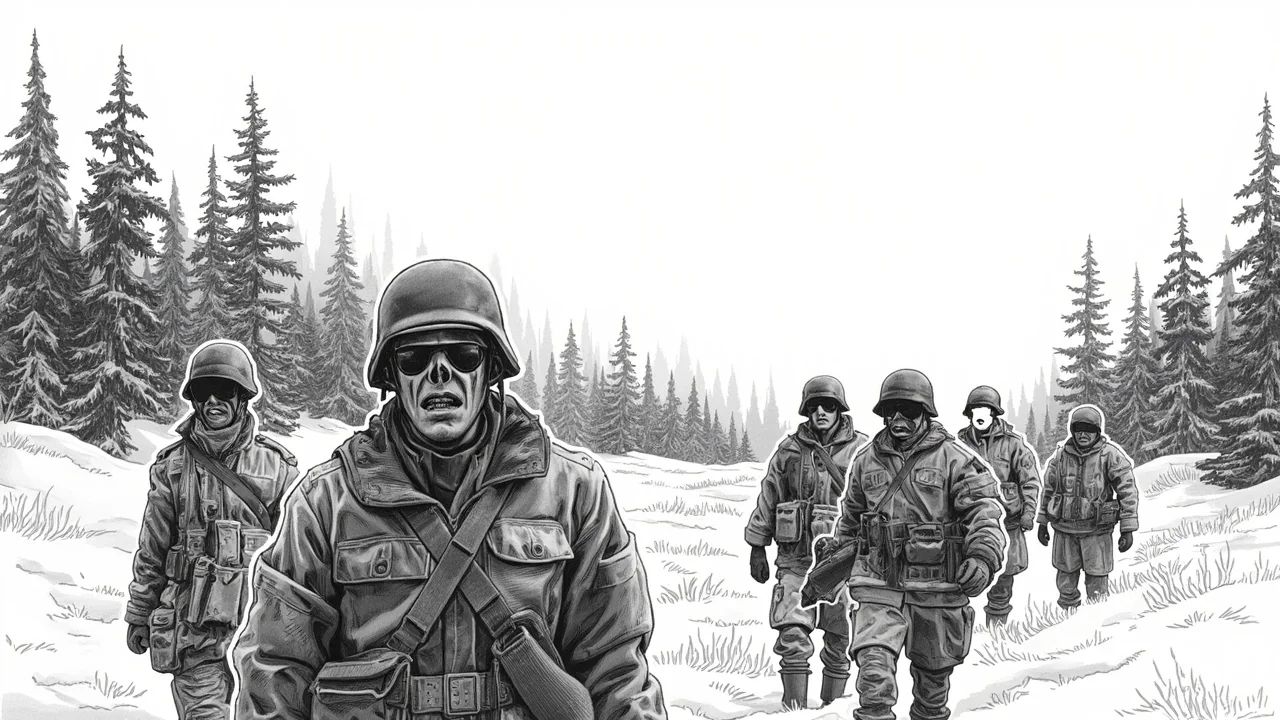
Finland's Defense Forces is investigating an incident where 37 conscripts suffered frostbite injuries during a routine survival training exercise in Sodankylä earlier this month. The unprecedented number of injuries, which included five second-degree cases involving blisters, has prompted an internal review of training protocols within the Jaeger Brigade. The exercise, held on January 6-7, involved soldiers plunging into an ice hole while wearing full gear, including skis and backpacks, in temperatures that plummeted to -35 degrees Celsius at night.
The Training Exercise and Its Consequences
According to data provided by the Jaeger Brigade, the number of injuries marks a dramatic deviation from recent years. The brigade has tracked cold-weather injuries since 2015. In the same exercise last year, only two individuals sustained frostbite. The year before, in 2024, only one person was injured. The jump to 37 cases in a single exercise has raised immediate questions about supervision and procedure. The exercise was led by a regular career soldier assisted by a contract soldier, both of whom the brigade stated had participated in the same drill multiple times and knew the basics of operating in winter conditions well.
The Finnish Meteorological Institute recorded daytime temperatures of around -25 Celsius during the training period, with nighttime lows hitting -35. In the survival drill, conscripts are required to jump into a man-made hole in the ice while wearing their uniform, skis, and a field pack—a standard procedure meant to simulate falling through ice and the immediate action required to save oneself. The brigade has not specified which body parts were frostbitten on the conscripts.
Aftermath and Institutional Response
In response to the incident, the Jaeger Brigade has announced it will clarify its training instructions and increase the number of instructors present to prevent similar situations. The brigade communicated this via email but did not provide further details on what specifically went wrong during the January exercise. The lack of an immediate, detailed explanation underscores the seriousness with which the military views the lapse. Cold-weather operations are a fundamental component of Finnish defense doctrine, given the country's geography and climate. A failure in basic survival training for conscripts strikes at the core of the army's operational credibility in winter warfare.
The conscript system is the backbone of Finland's defense, and public trust in its safety and professionalism is paramount. Incidents of this scale are exceptionally rare, which is why the brigade's own statistics show only a handful of cases in any given year. The shift from single-digit injuries to nearly forty suggests a significant breakdown in either risk assessment, execution, or supervision during this particular iteration of the training.
A Soldier's Perspective on What Happened
Matias Hämäläinen, who participated in the identical exercise as a conscript with the Jaeger Brigade's reconnaissance company in 2011, read the news with confusion. His firsthand experience provides context for how the drill is intended to run. 'How can there be that many cases of frostbite?' Hämäläinen asked, reflecting the bewilderment shared by many with service experience. His reaction highlights that the drill, while challenging, is not designed or historically known to cause mass casualties. His surprise implies that the conditions, the execution, or the preparedness of the conscripts this year may have deviated sharply from the established norm.
Hämäläinen's testimony is crucial because it moves the discussion from pure statistics to lived experience. It confirms that the exercise has a long history and is considered a manageable, if extreme, part of winter training. His bewildered question—'How can there be that many?'—is the central question the brigade's investigation must answer. It points toward a possible perfect storm of factors, including the extreme cold, the duration of exposure, the effectiveness of the gear, or the speed with which soldiers were able to get dry and warm after completing the drill.
Historical Context and Statistical Anomaly
The following table illustrates the stark anomaly represented by the January 2025 incident, based on data provided by the Jaägeri Brigade:
| Year | Number of Frostbite Injuries in This Exercise |
|---|---|
| 2023 | 2 |
| 2024 | 1 |
| 2025 | 37 |
The data shows a stable, low level of risk in previous years, making the 2025 figure an extreme outlier. This historical context is what defines the incident as a major procedural failure rather than simply a result of harsh conditions. The Finnish army routinely trains in severe cold, managing that environment safely is a point of professional pride and operational necessity. The statistical jump indicates a failure in the system's safeguards, which are supposed to ensure that training, no matter how demanding, does not result in widespread injury.
Broader Implications for Conscript Training
While the investigation focuses on the specific events of January 6-7, the incident has broader implications for the entire conscript training system. It tests the resilience of the protocols designed to protect young soldiers during high-risk, high-reward training. The Finnish public places immense trust in the Defense Forces to train its conscripts effectively and bring them home safely. This incident, while not resulting in permanent disability based on current reports, challenges that covenant. The speed of the brigade's response—promising revised guidelines and more instructors—is a necessary first step in rebuilding confidence.
The probe will likely examine every element: the briefing given to conscripts, the condition and adequacy of their clothing, the length of exposure in the water, the immediate aftercare procedures, and the decision-making of the instructors on the ground given the actual weather conditions that day. The findings will be closely watched, not just within the military but by parents and future conscripts across Finland. The core tenet of 'tough but fair' training has been brought into question. The army's ability to conduct a transparent investigation and implement concrete changes will determine how quickly that trust can be restored.
As the Jaeger Brigade works to pinpoint the exact failure, the 37 injured conscripts are left as a stark reminder that even the most routine drills in the Arctic conditions of Lapland carry inherent risks. The soldier's simple question—'How can there be that many?'—remains unanswered, hanging over the investigation until a clear, factual explanation for the systemic lapse is provided to the public and to the servicemen and women who rely on the army's judgment.