
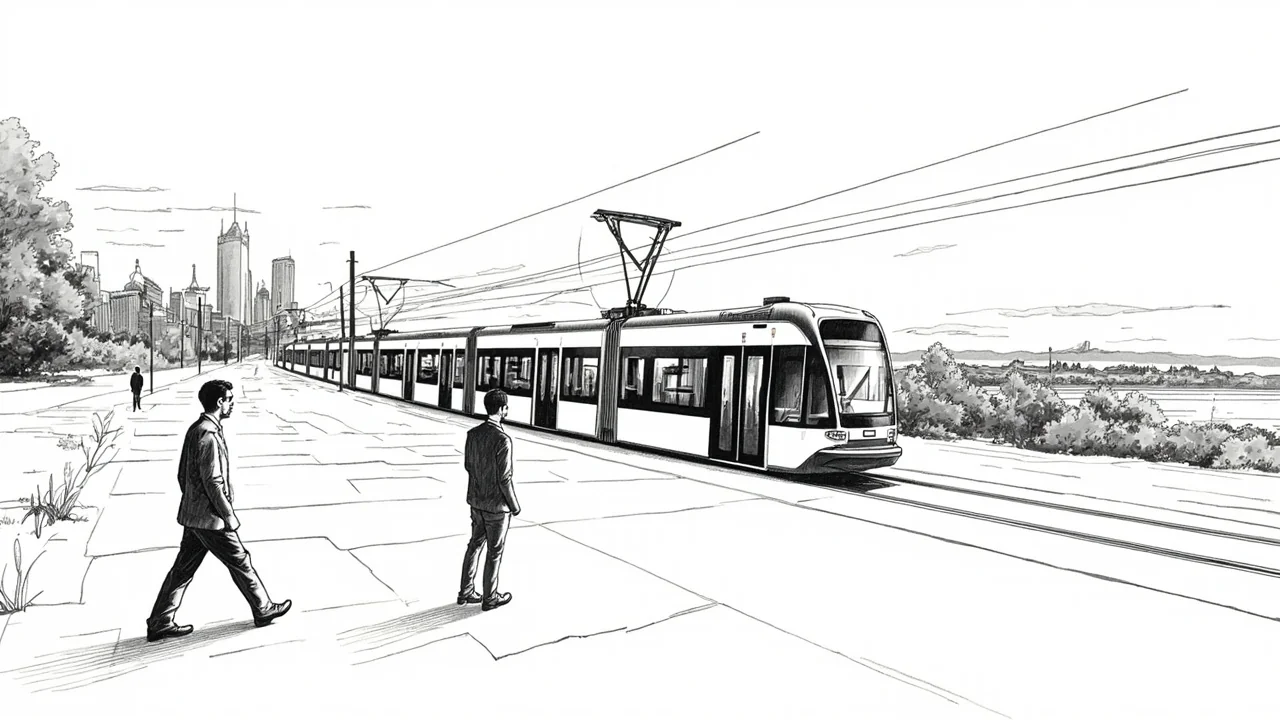
Helsinki residents in Laajasalo will gain direct tram access to the city center in early 2027, fundamentally altering daily commutes across the eastern archipelago. The Helsinki Regional Transport Authority board formally approved a service plan for 2026 and 2027 this Wednesday, anchoring the start of tram traffic on the new Kruunusilta bridges. This decision shifts the public transport paradigm for a growing urban district, replacing several bus lines with a higher-capacity rail connection. The move is part of a long-term city strategy to enhance sustainable mobility and support new housing developments, aligning with broader Finnish urban policy goals and EU cohesion funding objectives for green infrastructure.
HSL Board Approves Tram Network Expansion
The Helsinki Regional Transport Authority board's vote sets in motion the operational timeline for integrating the Kruunusilta corridor into the city's tram grid. This administrative step follows years of planning and construction under the City of Helsinki's infrastructure wing, with funding scrutinized by the Eduskunta's transport committee. The approval means tangible schedule commitments for both the new services and the necessary bus network revisions. It represents a key implementation phase of Helsinki's master plan, which prioritizes rail-based public transport to reduce private car reliance and cut carbon emissions, a target echoed in Finland's national transport policy and EU Green Deal initiatives.
New Tram Lines 11 and 12 Detailed
Two specific tram lines will commence operation once the Kruunusilta bridges open to traffic in early 2027. Tram line 11 will run from Pasila through Kalasatama to the terminal at Kruunuvuorenranta in Laajasalo, linking major business and residential hubs. Tram line 12 will connect Rautatientori in the central city to Hakaniemi and then to Yliskylä, providing another axis into the eastern neighborhoods. These routes are designed to offer frequent service, potentially every 10 minutes during peak hours, creating a reliable backbone for the area. The integration with existing metro lines at Kalasatama and mainline rail at Pasila is a critical component, aiming for a seamless multi-modal network that Finnish transport ministers often cite as a model for peripheral EU urban areas.
Comprehensive Bus Service Revisions
With the tram lines launching, the bus network in Laajasalo will undergo significant restructuring to avoid redundancy and optimize resources. Bus line 84 will be discontinued entirely, as its route is largely superseded by the new trams. Lines 85 and 85N will remain unchanged, though a special morning rush hour variant 85K will operate via Reiherintie. Line 86 will be rerouted to use Reiherintie, while its 86K and 86N versions will cease. Lines 87 and 88 will adjust to serve Gunillantie and Yliskylä, with line 87's night variant 87N taking a detour via Gunillantie. Bus line 89 will also be terminated. These changes reflect HSL's data-driven approach to network planning, aiming to balance coverage and efficiency in a way that meets EU accessibility standards for public transport.
Kruunusilta Bridge Project Status Update
The Kruunusilta project comprises three distinct bridges that are in various stages of completion. Merihaansilta, connecting the city center to Kalasatama, opened to pedestrians and cyclists last year. Finkensilta, spanning between Kalasatama and Korkeasaari, is also open for foot traffic, with cycling permitted from spring 2026. The final segment, Kruunuvuorensilta from Korkeasaari to Laajasalo, is scheduled to open for walking and cycling in spring 2026. The full trio of bridges will be ready for tram and road traffic by early 2027, marking a major engineering milestone for Helsinki's coastal infrastructure. This project has been a fixture in city council debates, with broad cross-party support from the Social Democrats to the National Coalition Party, highlighting its strategic importance for urban development.
Upcoming Commuter Train Disruptions
Before the tram benefits materialize, commuters face significant disruptions in the summer of 2026 due to planned maintenance on the commuter rail network. For instance, train service on the west side of Leppävaara will be suspended for a five-week period, affecting thousands of daily passengers. These interruptions are part of essential upgrade works to improve long-term reliability and capacity on the ring rail line. HSL has indicated that replacement bus services will be organized, but the scale of the disruption underscores the challenges of maintaining and expanding metropolitan transport systems simultaneously. Such projects often require careful coordination with VR, the state-owned rail company, and involve considerations under EU rail safety directives.
Broader Transport Strategy and Implications
The launch of trams on Kruunusilta is more than a new route, it is a cornerstone of Helsinki's ambition to foster dense, transit-oriented development in former industrial ports. The Kruunuvuorenranta area is slated for thousands of new homes, and reliable tram access is crucial for its viability. This aligns with Finland's national policy to promote public transport and active mobility, reducing greenhouse gas emissions in line with EU climate targets. The project also reflects the city's commitment to the Helsinki-Uusimaa region's growth pact, which coordinates infrastructure investments across municipal borders. While the 2026 train disruptions pose short-term inconvenience, the long-term vision is a more integrated, resilient transport network that supports economic growth and quality of life, setting a precedent for other Baltic Sea cities.
As Helsinki charts its course toward 2027, the success of this tram expansion will depend on meticulous execution and continued political will, with all eyes on how it reshapes the daily rhythm of city life.