
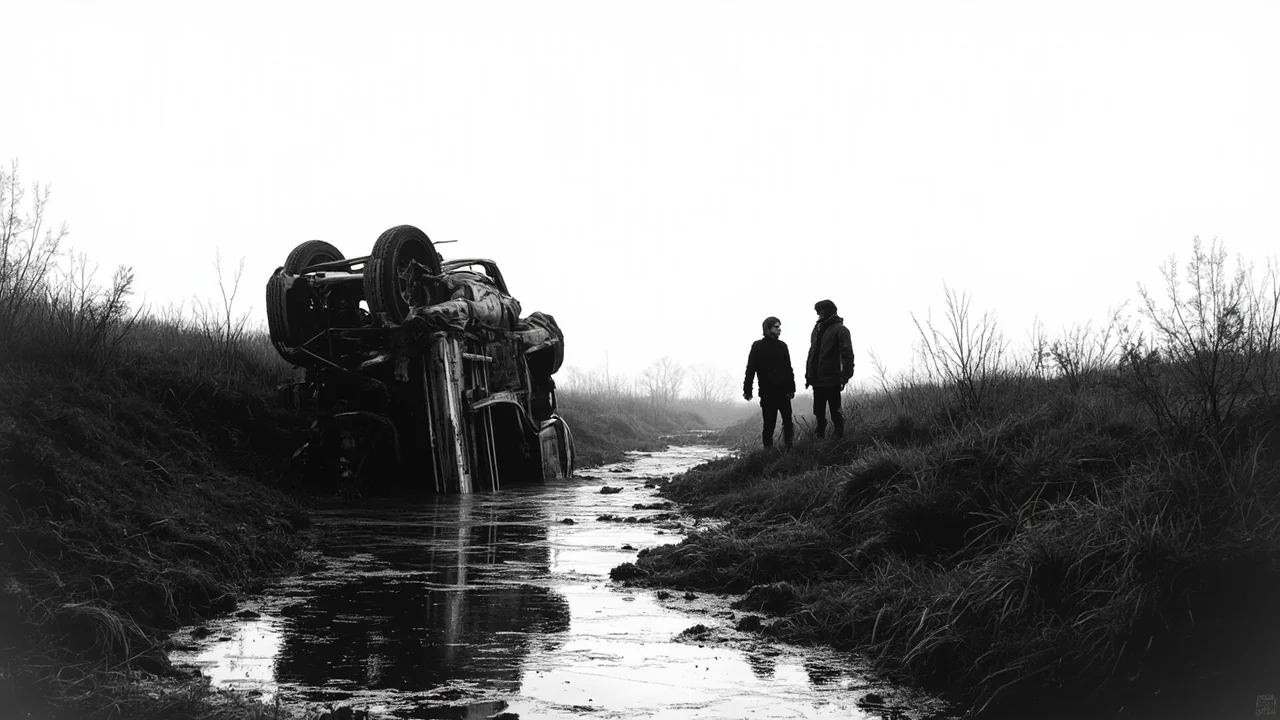
Finland's road safety record was underscored Sunday evening when two passengers emerged unscathed from a car that flipped into a ditch in Jyväskylä. The incident occurred at the intersection of Taka-Keljontie and Ronsuntaipaleentie in the Taka-Keljo district. Emergency services recorded the call at 17:38, responding swiftly to the scene. Both occupants exited the vehicle on their own and were assessed by paramedics at the site. Initial reports confirmed no serious injuries and no significant disruption to traffic flow on the rural road.
This non-fatal accident in Central Finland provides a timely window into the nation's broader traffic safety environment. As a political correspondent, I see such events as tangible tests of infrastructure spending and regulatory frameworks. The fact that both individuals walked away highlights the effectiveness of vehicle safety standards and rapid emergency response protocols common across the country.
A Close Call in Central Finland
Details from the Jyväskylä incident are straightforward. A private car left the roadway at a junction and came to rest on its roof in a drainage ditch. The specific cause remains under preliminary investigation by local authorities. What stands out is the outcome: zero casualties. In many nations, a single-vehicle rollover could lead to severe injury or death. Here, it resulted in a routine check-up and a tow truck call.
Finland's consistently low road fatality rates do not happen by accident. They are the product of deliberate policy, sustained investment, and a cultural emphasis on safe driving. This event in Jyväskylä, while minor, feeds into a larger national narrative of proactive risk management. The quick and efficient medical response is a standard expectation, funded and organized through Finland's decentralized yet highly coordinated rescue services.
Policy Foundations of Finnish Road Safety
The Finnish government, based in Helsinki's parliamentary district, has long treated traffic safety as a core public health issue. Current road safety strategy is anchored in the Vision Zero principle, which aims to eliminate all traffic fatalities and serious injuries. This policy direction has received cross-party support in the Eduskunta, Finland's parliament. It translates into concrete actions like rigorous winter maintenance, extensive street lighting, and progressive enforcement of speed limits.
Minister of Transport and Communications Lulu Ranne has frequently emphasized the link between infrastructure investment and accident prevention. In a statement last autumn, she noted, "Every euro spent on safer road design saves multiples in healthcare and social costs." Annual budget allocations for road maintenance and improvement are seldom contentious, reflecting a political consensus on their importance. The government's four-year transport system plan consistently prioritizes safety upgrades on rural roads like those around Jyväskylä.
The European Union's Framework
Finland's approach is deeply intertwined with European Union directives. The EU's Road Safety Policy Framework 2021-2030 sets ambitious targets for reducing deaths and injuries, which member states like Finland are obligated to translate into national action plans. Brussels mandates stringent vehicle safety standards, which ensure that cars on Finnish roads—including the one in this Jyväskylä ditch—are equipped with advanced crash protection systems.
Finnish officials often contribute actively to shaping these EU regulations, advocating for measures that suit Nordic conditions, such as regulations on winter tires and lighting. Compliance is monitored through regular reporting to the European Commission. This supranational layer adds accountability and drives continuous improvement, ensuring that even local incidents are viewed through a lens of systemic performance.
Analyzing the Numbers and Trends
While this single event had a fortunate outcome, statistical trends provide context. Finland typically boasts one of the lowest road mortality rates in the European Union. Preliminary data for 2023 suggests a continued decline in serious accidents. Experts attribute this success to a combination of factors: strict drunk-driving laws, a successful graduated driver licensing system for young people, and high seatbelt usage rates exceeding 95%.
Investment in road infrastructure is also key. The Finnish Transport Infrastructure Agency allocates significant funds to eliminate high-risk accident locations, often focusing on intersections and rural lanes similar to where Sunday's crash occurred. These projects are evaluated based on accident history and potential risk reduction, ensuring taxpayer money is directed where it can save lives.
Local Response and National Resilience
The Jyväskylä incident required a coordinated local response from police, rescue services, and healthcare providers. Central Finland's rescue department operates under a model that is replicated nationwide, ensuring a standardized level of preparedness. This efficient system minimizes response times and ensures that even in remote areas, professional help is minutes away.
Such resilience is built on steady funding and training. It reflects a societal choice to prioritize public safety through taxation and governance. The calm professionalism displayed in handling this crash is a daily reality, not an exception. It is a output of political decisions made in Helsinki to resource and empower local authorities.
Future Challenges on the Horizon
Despite strong performance, challenges remain. An aging road network in some regions requires renewed investment. The rise of electric vehicles and new mobility services presents regulatory puzzles. Furthermore, maintaining public vigilance and compliance with traffic rules is an ongoing effort for authorities.
The Finnish government is already adjusting its policies. Debates in the Eduskunta have touched on updating speed limits, enhancing cyclist and pedestrian protection, and integrating new technology into traffic enforcement. These discussions are evidence of a policy ecosystem that does not become complacent with past success.
Sunday's event in Taka-Keljo, while minor, serves as a microcosm of a much larger system. It reminds us that behind every traffic statistic are real people, vehicles, and roads. Finland's ability to turn a potential tragedy into a mere inconvenience is not luck. It is the result of decades of thoughtful legislation, strategic investment, and a collective commitment to safety that transcends political cycles. As the car is retrieved from the ditch, the broader machinery of Finnish governance continues its work to ensure that the next driver on that road faces even lesser risks.