
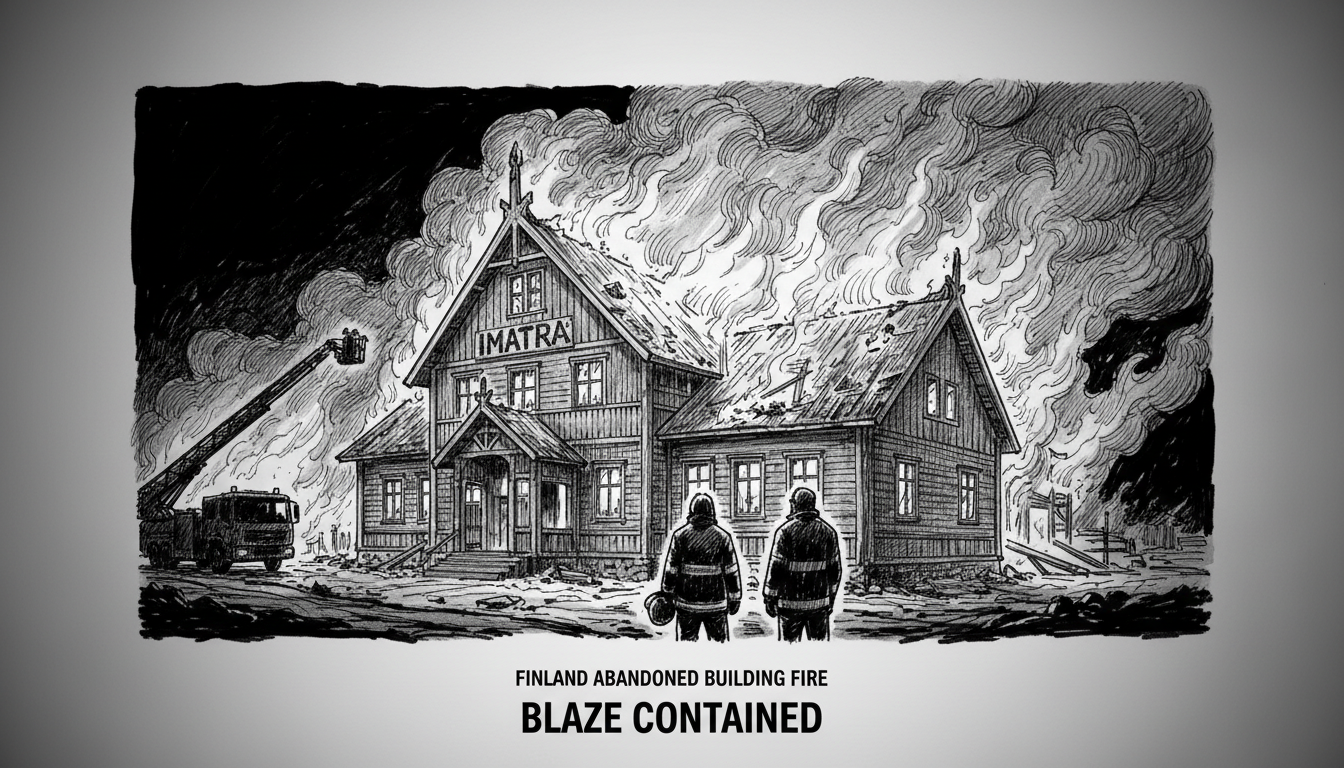
Finland's emergency services responded to a fire in an abandoned hotel building in Imatra on Boxing Day evening. The blaze ignited in a single hotel room within the vacant Väärässätalo property, a structure standing empty in the southeastern border town. Firefighters from the local rescue department quickly contained and extinguished the flames, preventing the fire from spreading to other parts of the building. Smoke, however, filled multiple rooms, requiring extensive ventilation operations to clear the premises. The cause of the fire is now under official investigation by authorities.
A Common Risk in Vacant Properties
Fires in unoccupied buildings represent a persistent challenge for Finnish rescue services, particularly in regions with declining populations or shifting industrial landscapes. Imatra, a town of approximately 25,000 people known for its historic rapids and border crossing with Russia, has faced economic transitions that can leave structures unused. Vacant buildings like Väärässätalo often lack active heating, lighting, and security systems, creating environments ripe for accidental ignition or intentional vandalism. "An empty building is a vulnerable building," said a veteran fire safety engineer familiar with such cases, who spoke on condition of anonymity as the investigation is ongoing. "Electrical systems may degrade, trespassers might use unsafe heating methods, and there's no one present to spot a small spark before it grows."
The Boxing Day incident highlights a nationwide issue that intersects with municipal planning, property law, and public safety budgets. Local governments across Finland maintain registers of vacant properties and have legal tools to compel owners to secure them, but enforcement can be slow. The risk extends beyond the building itself to neighboring structures and places a burden on public rescue resources. A quick response, as seen in Imatra, is crucial to prevent a single-room fire from escalating into a major conflagration that could threaten entire blocks, especially in older urban areas with closely built wooden structures.
The Tactical Challenge for Rescue Services
Responding to a fire in an abandoned building presents unique dangers that differ from fires in occupied homes or businesses. Firefighters arriving at the Väärässätalo building had to immediately assess structural integrity. Years of neglect can weaken floors, staircases, and roofs, creating collapse hazards. The presence of unknown debris or hazardous materials left behind also complicates entry and firefighting tactics. The primary reported issue in Imatra was smoke infiltration, which can cause extensive secondary damage to any remaining interiors and requires careful, controlled ventilation to expel without fanning hidden embers.
"Our first priority is always life safety, but in a confirmed vacant building, the strategy shifts to containment and exposure protection," explained a chief officer from the South Karelia rescue department, which covers Imatra. He noted that while no lives were at direct risk in this case, firefighters' lives are still on the line. They must operate without reliable knowledge of the building's layout or potential hazards. The successful containment to a single room indicates effective firefighting and likely the presence of intact fire doors or compartmentalization within the hotel's original design, which helped prevent the smoke and flames from spreading uncontrollably.
Economic and Social Roots of Vacancy
The story of a vacant building in Imatra cannot be separated from the broader economic currents affecting Finland's border regions. The town's history is deeply tied to industry and cross-border traffic with Russia. Changes in industrial fortunes, coupled with the near-total cessation of Russian tourism following the war in Ukraine and subsequent border closures, have impacted local economies. Properties that once catered to visitors or housed workers can find themselves without a purpose, leading to a cycle of decline. An abandoned building can depress property values nearby and attract antisocial behavior, making revitalization efforts more difficult for municipal planners.
Local authorities have various measures at their disposal, from tax incentives for redevelopment to stricter enforcement of building maintenance codes. In some Finnish cities, successful projects have transformed old hotels or factories into apartments, student housing, or cultural centers. The feasibility of such projects in smaller towns often hinges on public investment and private partnership. The fire at Väärässätalo may serve as a catalyst for the building's owner and the City of Imatra to re-evaluate the property's future, whether that means demolition, renovation, or enhanced security measures to prevent future incidents.
Investigation and Preventive Measures
The official investigation into the fire's cause will follow standard procedures. Fire investigators will examine the point of origin in the hotel room, looking for evidence of electrical faults, signs of forced entry, or remnants of materials used to start a fire intentionally. Determining the cause is essential not only for potential legal proceedings but also for compiling national statistics that inform preventive safety campaigns. Data on abandoned building fires helps the Finnish National Rescue Association (SPEK) and insurance companies identify risk patterns and advocate for policy changes.
Prevention remains the most effective tool. Experts advocate for a multi-layered approach: securing doors and windows with sturdy materials, installing basic alarm systems that alert authorities directly, conducting regular exterior inspections by owners or municipal officials, and maintaining minimal utilities to power security lights. Community vigilance is also key; residents are often encouraged to report broken windows or signs of trespassing at vacant properties to police before more serious incidents occur. The cost of these preventive measures is invariably lower than the cost of fighting a major fire and dealing with its aftermath.
A Warning Sign for Municipalities
The Imatra fire, while efficiently handled, acts as a microcosm of a wider Finnish challenge. As demographics shift and industries evolve, managing the built environment becomes a complex task of balancing property rights, public safety, and urban vitality. Each vacant building represents a potential drain on municipal resources and a pocket of risk. Proactive management of these properties is not merely a regulatory issue but a matter of community safety and economic health. The smoke that filled the rooms of Väärässätalo is a visible signal of the invisible processes of neglect that affect towns across the country.
For now, the building in Imatra stands secured once more, its latest incident logged by rescue services. The investigation will conclude, a report will be filed, and the building will likely return to its silent state. Yet, the questions raised by the Boxing Day blaze remain. How many other Väärässätalos are waiting in Finnish towns, and what will it take to address the risks they pose before the next call to the fire brigade is made? The answer requires coordination between property owners, local governments, and residents, turning isolated fire responses into a sustained strategy for safer communities.