
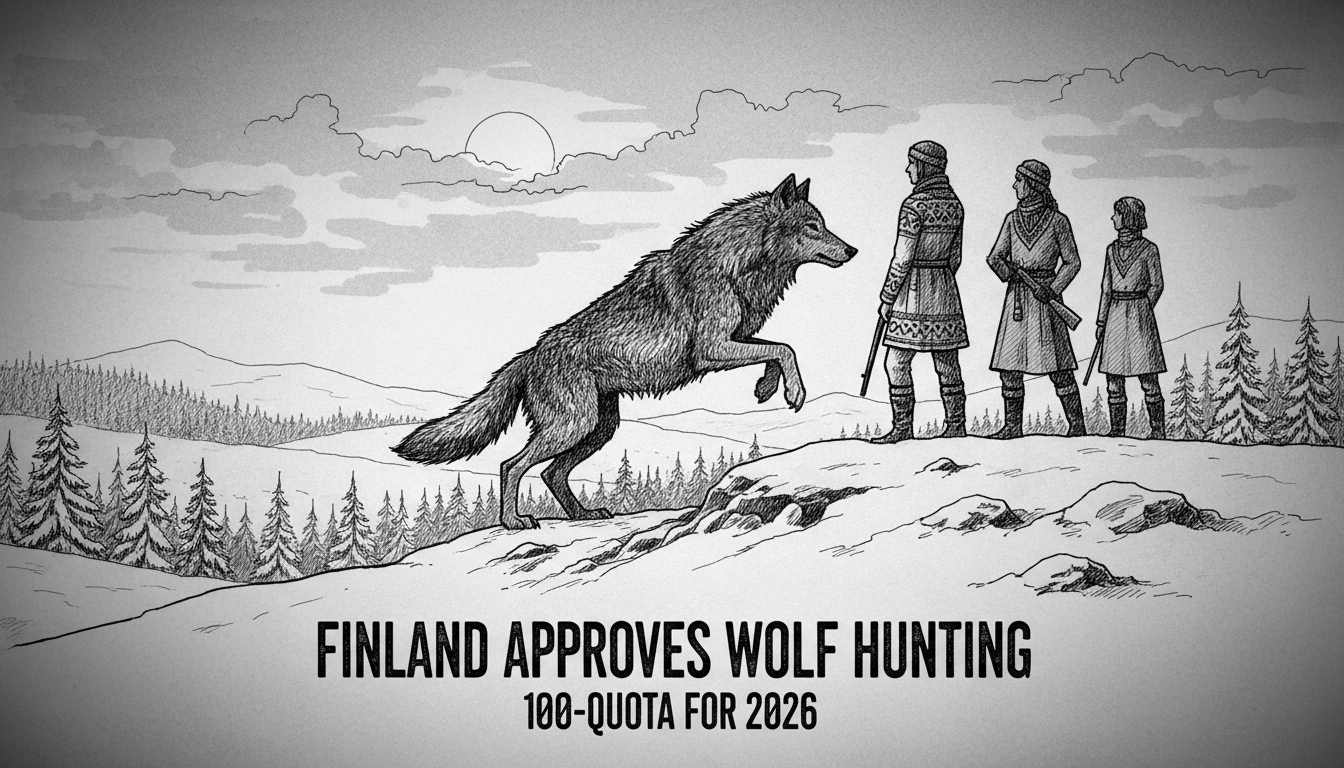
Finland's wolf hunting regulations have been fundamentally reshaped by a government decision that establishes a new annual hunting season and removes year-round protection for the predator. The Council of State, along with the Ministry of Agriculture and Forestry, approved decrees on Tuesday that will permit the culling of up to 100 wolves outside the reindeer herding area during a specific window in early 2026. This move, aimed at addressing long-standing rural tensions, marks a significant shift in Finland's approach to large carnivore management and sets the stage for intense debate between conservationists and hunting advocates.
A Legal Framework for Controlled Culling
The newly approved decrees create a structured system for what the government terms 'sustainable wolf hunting.' The most consequential change is the removal of the wolf's year-round protected status under the Hunting Act. In its place, a closed season from February 11 to November 30 will be established annually. The open hunting season will run from December 1 to February 10. For the inaugural season under this new regime, hunting is scheduled for January 1 to February 10, 2026, with the regulations coming into force on January 1 of that year. A final confirmation on the exact hunting period is expected from the Ministry on December 30, 2025. The framework empowers officials to set regional quotas, with the nationwide limit for the 2026 season capped at 100 animals outside the northern reindeer management zone.
Decades of Conflict Culminate in Policy Shift
The decision is not an isolated event but the culmination of a protracted and often bitter conflict that has divided Finnish society for decades. Wolves were nearly driven to extinction in Finland by the 1970s, with only a handful of individuals remaining. Protective measures led to a slow recovery, but as populations have grown, so have conflicts with livestock owners, particularly sheep farmers, and local hunting communities who report wolves preying on hunting dogs. The latest population estimate from the Natural Resources Institute Finland (Luke) places the number of wolves at approximately 430 individuals as of March 2025, a notable increase from the 291-331 estimated in March 2023. This growing population, concentrated in certain parts of Western and Eastern Finland, has increased pressure on policymakers to act.
‘This is about balancing two important interests: the protection of biodiversity and the legitimate concerns of people living in rural areas,’ said a senior official from the Ministry of Agriculture and Forestry, speaking on background. ‘The quota-based system is designed to allow for population management while maintaining a favorable conservation status.’ The government argues that regulated, legal hunting can help reduce illegal poaching, which has been a persistent problem, by giving local communities a sense of agency and control.
Conservationists Voice Alarm Over Sustainable Limits
Reaction from environmental and animal rights organizations has been swift and critical. Conservation biologists question the sustainability of a 100-wolf quota, representing nearly a quarter of the current estimated population outside the reindeer area. They warn that such intensive hunting could disrupt pack structures, reduce genetic diversity, and potentially push the population into decline again. ‘Setting a quota this high, based on a management plan that many scientists have contested, is a political decision dressed up as conservation,’ said a representative from the Finnish Nature League. ‘It risks undermining decades of recovery work and fails to comply with the EU's Habitats Directive, which mandates strict protection for the wolf.’
The EU dimension is crucial. Finland's wolf population is subject to the EU Habitats Directive, which allows derogations for controlled hunting under specific conditions, such as preventing serious damage to livestock or for reasons of public safety. The Finnish government insists its new framework complies with these provisions. However, previous Finnish wolf hunting permits have faced legal challenges at the national level and scrutiny from the European Commission. Any perceived overreach could trigger infringement proceedings from Brussels, a scenario Helsinki is keen to avoid.
The Rural Perspective: Fear, Livelihoods, and Culture
In rural municipalities, the government's decision is largely seen as a long-overdue recognition of their daily realities. For sheep farmers, a single wolf attack can mean devastating financial losses and profound psychological stress. For hunters, the loss of valuable hunting dogs to wolves is both an emotional and economic blow. ‘People here have felt abandoned and unheard for years,’ said a municipal mayor from a wolf-populated area in Ostrobothnia. ‘The constant fear for the safety of your animals and the feeling that your way of life is under threat has been immense. This decision is a step toward restoring some balance and trust.’
The regional quota system is intended to target hunting in areas with the highest levels of conflict. The Ministry of Agriculture and Forestry will publish a separate wolf decree detailing the specific quotas for each hunting district. This localized approach aims to ensure that hunting addresses specific problem areas rather than being a blanket cull. However, the practical enforcement of these quotas and the prevention of overhunting will be a significant logistical challenge for authorities.
A Political Compromise Forged in the Eduskunta
The policy shift reflects the current political landscape in the Eduskunta, Finland's parliament. The governing coalition, led by Prime Minister Petteri Orpo's National Coalition Party, includes the Finns Party, which has long advocated for more aggressive carnivore management to protect rural interests. The approved decrees represent a classic Finnish political compromise, attempting to navigate a middle path between competing factions. It provides concrete action to satisfy coalition partners and rural constituencies while attempting to frame the hunt within a scientifically managed, legal structure to appease the EU and domestic environmental laws.
Opposition parties, particularly the Green League and the Left Alliance, have condemned the move. They accuse the government of capitulating to populist pressure and jeopardizing biodiversity for short-term political gain. The debate in parliamentary committees was reportedly heated, with experts providing conflicting testimonies on population viability and the effectiveness of non-lethal prevention methods. The final vote on the enabling legislation was split largely along urban-rural and left-right lines.
Looking Ahead to the 2026 Hunting Season
As the decrees are set to take effect on January 1, 2026, all eyes will now be on the Ministry of Agriculture and Forestry as it finalizes the regional quotas later this year. The announcement of how the 100-wolf national quota will be distributed among hunting clubs will be the next flashpoint. Meanwhile, conservation groups are reportedly examining the final legal text, with some hinting at potential court appeals to stop or limit the hunt before it begins.
The winter of 2026 will be a profound test for Finland's model of large carnivore coexistence. Can a regulated, quota-based hunt alleviate rural tensions without harming the long-term viability of the wolf population? Will this policy reduce conflict and illegal killing, or will it simply legitimize a level of culling that conservationists view as unsustainable? The forests of Finland, and the communities that live alongside them, await the answers. The howl of the wolf, a sound that symbolizes wildness for some and threat for others, now echoes through the corridors of power in Helsinki, a reminder that some policy decisions are measured in more than just votes.