
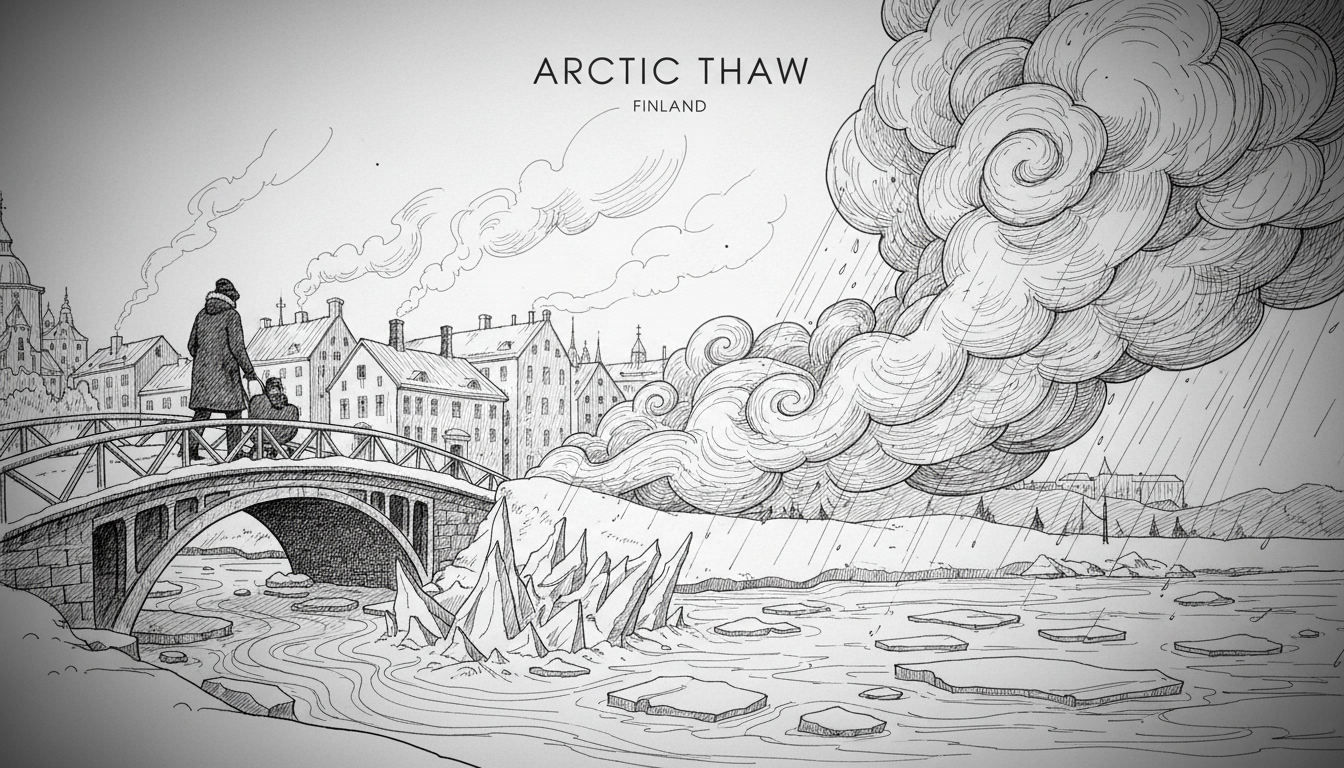
Finland's severe winter conditions are finally easing after weeks of extreme cold that saw temperatures plunge below minus thirty-one degrees Celsius. Meteorologist Joanna Rinne confirmed the shift in weather patterns through her detailed forecast blog, stating that the current cold spell appears to have ended with no extended freezing periods visible in immediate predictions. The dramatic temperature change stems from milder Atlantic weather systems moving across the country, bringing precipitation that may reach even Northern Lapland as rain rather than snow.
Wednesday's weather across southern and central Finland will hover around zero to five degrees below freezing, while Lapland experiences daytime temperatures between five and fifteen degrees below zero. The Finnish Meteorological Institute has issued no severe weather warnings for Wednesday except for moderate wind alerts along the Perämeri coastal region. Northern winds will strengthen throughout the country by midweek, with precipitation expected nationwide by Friday.
By Friday, daytime temperatures in southern Finland will rise to seven degrees Celsius, while Southern Lapland maintains above-freezing conditions between one and three degrees. Northern Lapland will experience milder frosts of one to five degrees below zero. The weekend forecast predicts continued cloudy and rainy weather across all regions, with northern areas potentially experiencing sleet or snow mixtures.
This weather transition carries significant implications for Finnish infrastructure and daily life. The thaw brings relief to energy systems strained by heating demands during the deep freeze, but introduces new challenges with potential ice formation on roads and walkways. Municipal authorities across Helsinki and other urban centers are preparing for slippery conditions that typically follow such rapid temperature increases.
Finnish residents have developed sophisticated adaptation strategies for these seasonal transitions, with public transportation systems implementing special winter schedules and property owners conducting proactive maintenance. The changing conditions also affect cross-border travel and transportation networks connecting Finland to neighboring Sweden and Norway, where similar weather patterns often develop simultaneously across the Nordic region.
The gradual warming trend reflects broader seasonal patterns that characterize Finland's climate, where extreme winter conditions typically yield to more moderate spring weather through March and April. These transitions demonstrate the resilience of Finnish society in managing one of Europe's most challenging climate environments while maintaining normal economic and social activities throughout the year.