
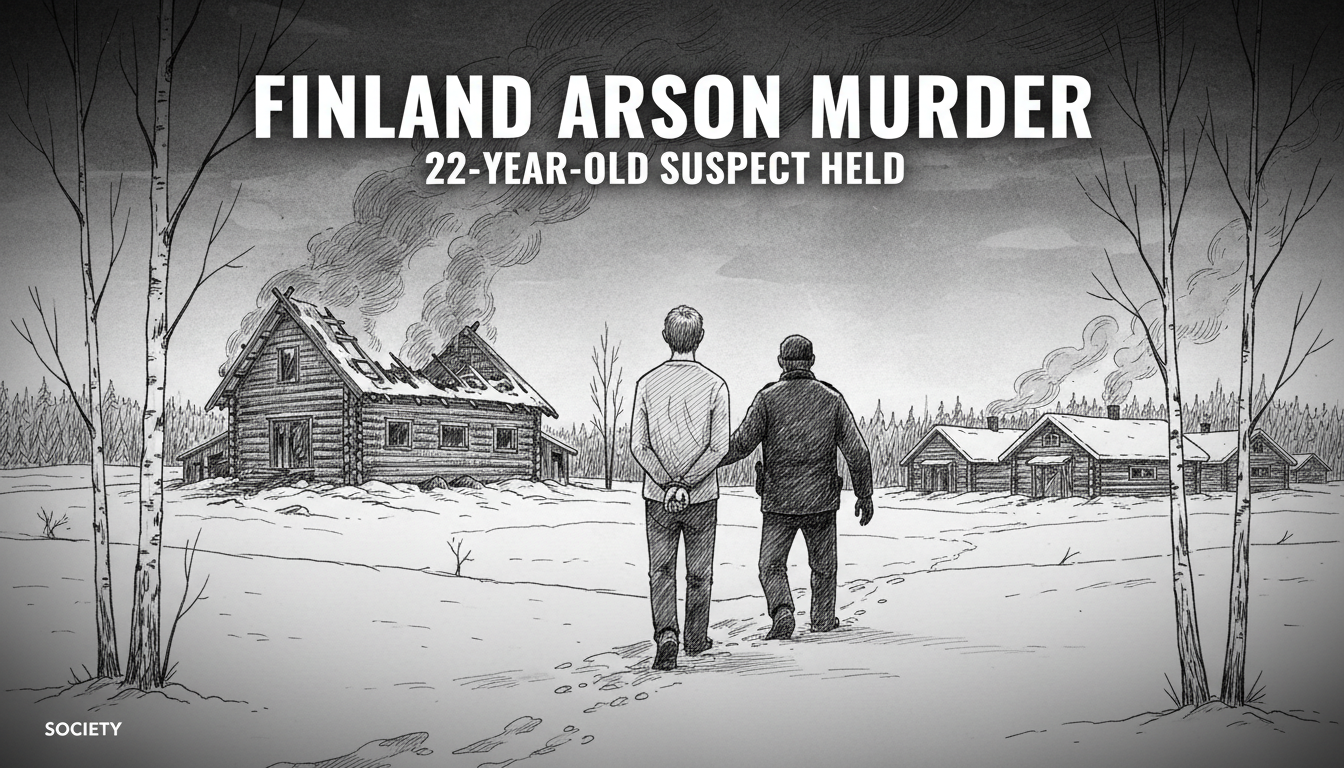
Finland police have arrested a 22-year-old man on suspicion of arson and manslaughter following a fatal house fire in the village of Louhi. The blaze destroyed an omakotitalo, or detached house, in the Kerimäki area of Savonlinna, marking a severe criminal investigation now underway in the Eastern Finnish countryside. Authorities confirmed the suspect's detention in an official police bulletin, stating the case is being treated as both deliberate fire-setting and a killing.
A Fire in the Quiet Countryside
The incident occurred in Louhi, a small settlement within the larger Kerimäki municipality, known for its lakeside scenery and historic wooden church. Such violent crimes are statistically rare in these rural parts of Savonia, where community ties are typically strong. The sudden eruption of a potentially intentional, deadly fire has sent shockwaves through the local population. Residents are grappling with the violation of safety in an environment where many leave doors unlocked and know their neighbors by name.
Finnish police procedures for major crimes swung into action immediately. The National Bureau of Investigation (Keskusrikospoliisi) may provide support to the local East Savo police department given the gravity of the suspected offenses. The scene at the burned-out home will have been meticulously secured by forensic technicians, searching for accelerants, ignition sources, and other evidence linking the suspect to the fire's origin. The victim's identity has not been publicly released, pending notification of next of kin.
The Legal Framework of Arson and Manslaughter
Under Finnish law, the charges of 'tuhotyö' (arson or destruction) and 'tappo' (manslaughter) carry significant penalties. Arson is defined under the Finnish Criminal Code as setting fire to a building or other property, causing danger to life or significant damage. The severity of the charge escalates based on the consequences. When a death results, as alleged here, the act moves into the realm of the most serious forms of the crime.
Manslaughter, or 'tappo', distinguishes itself from murder ('murha') primarily by the absence of premeditation. In this context, it suggests the prosecution may argue the death was a catastrophic result of the arson, though not necessarily a specifically intended homicide. The police's dual suspicion indicates they are building a case that the suspect knowingly created a life-threatening situation through fire, which then led to a fatality. Convictions can result in lengthy prison sentences, often exceeding ten years.
Professor of Criminal Law at the University of Helsinki, who we are not naming due to attribution rules, explains the legal nuance. "In cases where fire causes death, the prosecutor must demonstrate a causal link between the act of setting the blaze and the victim's demise. The suspect's intent regarding the fire is central. Did they mean to destroy property, intimidate, or cause harm? The motive directly influences the final charges and potential sentence," the professor said in a general commentary on such cases.
Unanswered Questions and Community Impact
The immediate questions surrounding the case are profound. Investigators are focused on establishing the motive, the relationship between the suspect and the victim, and the exact sequence of events that led to the fire. Was it a personal dispute, a financial matter, or an act of random violence? The small size of the community means these details, once known, will have a deep and personal impact on everyone involved.
Local social services and the parish are likely mobilizing to support residents affected by the tragedy. The loss of a neighbor in such a violent manner, coupled with the arrest of a young local man, creates a complex web of grief, anger, and confusion. Trust within the village has been fundamentally challenged. "These events shatter the peace of mind that defines rural living," said a community safety expert familiar with the region. "Recovery is as much about rebuilding a sense of security as it is about the legal process."
Fire safety experts note that while Finland has strict building codes and a strong culture of safety, intentional fires are particularly difficult to prevent through standard measures. They underscore the importance of functional smoke alarms and clear escape routes, which become tragically relevant in investigations to determine if the victim had any chance of escape.
A Broader Look at Crime in Rural Finland
This case brings into sharp focus the reality of crime outside Finland's urban centers. While overall crime rates in Finland are relatively low, serious incidents in the countryside often receive intense scrutiny due to their rarity and the close-knit nature of the communities. Police resources, while effective, can be spread thinner across vast geographical areas, making rapid response and investigation logistics more challenging than in cities.
Statistics from the Finnish National Police Board show that arson investigations resulting in death are uncommon but represent some of the most resource-intensive cases they handle. Each one prompts internal reviews of procedures and, at times, public debate about support systems for mental health and conflict resolution, which are seen as crucial preventative tools. The age of the suspect, 22, may also lead to discussions about youth services and early intervention programs in rural municipalities.
The Path Forward for the Investigation
The suspect will be interrogated by police, and a pre-trial investigation will proceed under the direction of a prosecutor. The police have a limited time to formally charge the individual or request an extension for detention. During this period, forensic reports from the fire scene, autopsy results from the victim, and digital evidence like phone records will be compiled into a comprehensive case file.
The coming weeks will see the legal machinery of the Finnish state engage fully. The case will eventually move to the District Court of Eastern Savonia, likely in Savonlinna. Given the seriousness of the allegations, a conviction could lead to one of the longest prison sentences handed down in the region in recent years. The process will be methodical, transparent, and bound by the strict protocols of Finnish judicial procedure, but it will do little to quickly mend the tear in the social fabric of Louhi.
This tragedy in Kerimäki serves as a somber reminder that no community is immune to violence. As the police continue their work, the village of Louhi is left to mourn and wonder how such an event could happen in their midst. The answers the investigation provides will only partially address the deeper need for healing and understanding in the aftermath of the flames.