
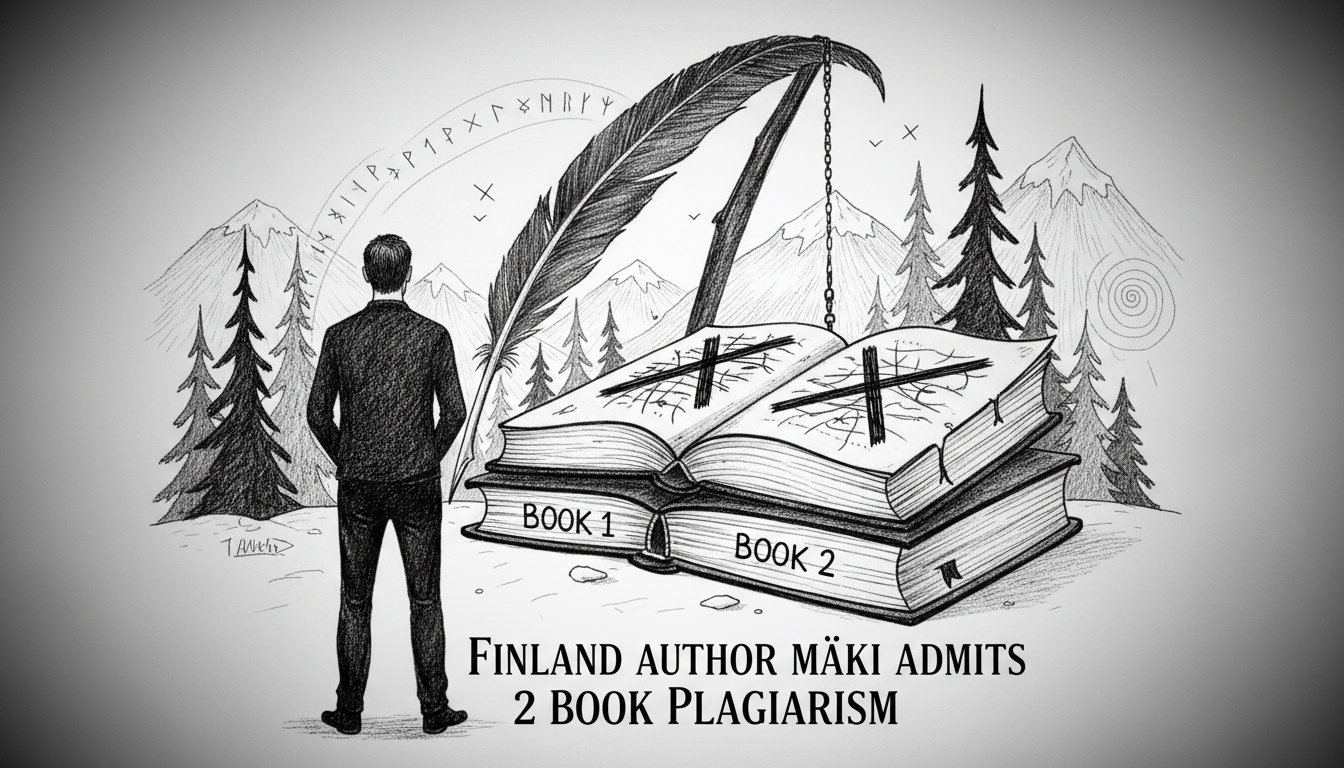
Finnish author Harri István Mäki has confessed to plagiarizing two published books from American poet Richard Brautigan's works. This admission has triggered a significant scandal in Finland's literary circles, prompting immediate action from his publishers. Mäki, a noted theater director, revealed the plagiarism in an email statement to Yle, acknowledging direct copying from Brautigan's iconic texts.
His book 'Pinkki knalli' (Pink Bowler Hat) is a verbatim plagiarism of Brautigan's 1976 novel 'Sombrero Fallout'. Another work, 'Kafka avaa grillikioskin' (Kafka Opens a Grill Kiosk), extensively borrows from multiple Brautigan pieces without attribution. These confirmations came after initial suspicions surfaced online, leading to a rapid investigation.
The Publisher Response and Market Removal
Publishing houses Enostone and Helmivyö removed all of Mäki's recent works from sale last Sunday. This decision was made public within hours of the plagiarism allegations gaining traction. Both publishers issued separate statements emphasizing their zero-tolerance policies for intellectual property theft. They expressed disappointment and affirmed their commitment to original content, offering refunds to customers who purchased the affected books.
The swift removal highlights the publishing industry's proactive stance in maintaining ethical standards. It also underscores the legal risks involved, as Brautigan's estate holds copyrights to his works. Finnish copyright law allows for serious penalties, including fines and damages, for such violations.
Mäki's Explanation and Public Apology
In his email, Harri István Mäki detailed a lifelong admiration for Richard Brautigan's unique creative vision. He described Brautigan's influence as central to his own artistic development since his teenage years. Mäki claimed his intention was to create literary pastiches that fused Brautigan's style with Franz Kafka's thematic elements.
"The goal was to distance the original works so that Kafka's world would meet Brautigan's, potentially creating something experimental," Mäki wrote. He admitted this conceptual framework was never communicated to his publishers or editors. This lack of transparency led to the unauthorized publication of the plagiarized material as original works.
Mäki issued a comprehensive apology to his readers, publishers, Brautigan's rights holders, and the broader Finnish literary community. He accepted full responsibility for the ethical breach, calling it a serious error in judgment. His statement avoided excuses, focusing instead on remorse for the harm caused.
Expert Analysis on Literary Ethics and Impact
Literary scholars and publishing experts weigh in on the ramifications of this case. Professor Liisa Laakso, a literary ethics specialist at the University of Helsinki, explains that plagiarism strikes at the heart of creative integrity. "When an author presents another's work as their own, it breaches the fundamental trust between writer, publisher, and reader," she says. "In Finland's close-knit literary scene, such actions can have lasting reputational damage."
Publishing industry analyst Jukka Korhonen notes the procedural lessons for houses like Enostone and Helmivyö. "This incident will likely lead to stricter manuscript vetting processes across the industry," Korhonen states. "Digital tools for plagiarism detection are becoming essential, but human editorial oversight remains critical. The case shows that even established authors require rigorous checks."
Legal expert Anna-Maija Tiitto highlights the cross-border implications. "Richard Brautigan was an American author, so this involves international copyright law," she points out. "Finnish publishers must navigate not only local norms but also potential claims from foreign rights holders. The swift withdrawal of books may mitigate legal risks, but disputes could still arise."
Historical Context of Plagiarism in Literature
Plagiarism scandals are not new in global literature, but they remain rare in Finland's historically transparent publishing environment. Notable international cases, like the controversy surrounding German author Helene Hegemann in 2010, show how blurred lines between inspiration and theft can spark debate. In the Nordic region, Sweden faced a similar scandal in 2013 when novelist Barbro Lindgren was accused of unattributed borrowing.
Finnish literature has generally prided itself on high ethical standards, with previous incidents involving academic texts rather than creative fiction. This case involving Harri István Mäki is particularly striking because of his professional standing. It challenges perceptions that plagiarism is solely a issue for inexperienced writers or academic settings.
The digital age complicates these matters further. Online access to global texts makes copying easier, but also increases the likelihood of detection. Social media and reader communities often expose discrepancies before official investigations begin, as seen here.
Implications for Finland's Literary Community
The fallout extends beyond Mäki's personal reputation. Finnish publishers now face increased pressure to implement more thorough verification systems. Small independent houses like Enostone and Helmivyö, which focus on niche literary works, may struggle with the resource demands of enhanced checks. This could lead to broader industry discussions about funding and support for editorial processes.
Author associations in Finland are likely to revisit their codes of conduct. The Union of Finnish Writers emphasizes originality and attribution in its guidelines, but this case may prompt stricter enforcement and education for members. Emerging authors might see more mentoring on ethical writing practices.
Readers' trust is another casualty. Finnish book buyers have historically valued authenticity, and this scandal could make them more skeptical of new releases. It may also encourage greater scrutiny of translations and adapted works, where lines between inspiration and plagiarism can be subtle.
The Path Forward for Harri István Mäki
Harri István Mäki's career faces an uncertain future. Public admissions of plagiarism often lead to long-term professional ostracism in the arts. He may find opportunities in theater directing, where his work is separate from the plagiarized texts, but the stigma will linger. Legal consequences depend on actions by Brautigan's estate, which has not yet commented publicly.
Mäki's apology could be a first step toward redemption, but experts caution that rebuilding trust takes years. "Sincere remorse must be followed by tangible actions, such as withdrawing all plagiarized works and compensating affected parties," says Professor Laakso. "The literary community is forgiving, but not forgetful."
This case also opens a dialogue about creative experimentation versus ethical boundaries. When does homage become theft? Mäki's stated intent to blend Brautigan and Kafka highlights the fine line artists walk. Clear communication with publishers and proper attribution are non-negotiable safeguards.
A Critical Moment for Nordic Publishing Standards
Finland's response to this plagiarism scandal will set a precedent for the wider Nordic region. Other countries like Sweden, Norway, and Denmark monitor such cases closely to inform their own policies. The swift action by Finnish publishers demonstrates a commitment to integrity that could inspire regional best practices.
Ultimately, this incident serves as a stark reminder that literary creativity thrives on originality and respect for predecessors. As the Finnish literary world absorbs this shock, one question remains: How can the industry foster innovation while protecting the very foundations of artistic expression? The answers will shape Nordic literature for years to come.