
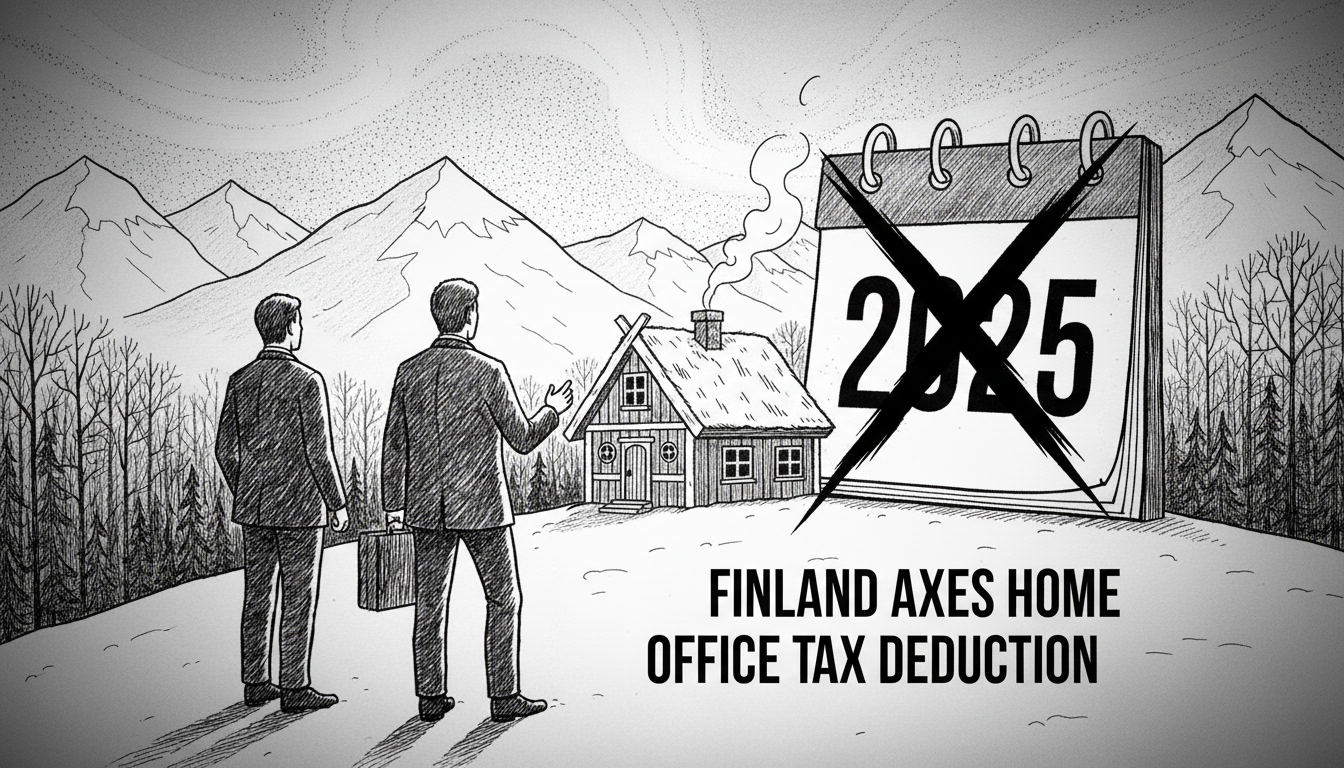
Finland's work-from-home tax deduction will end for many taxpayers in 2025, stripping away a key financial benefit for remote workers across the country. The Finnish Tax Administration, Verohallinto, confirmed this week that the standard deduction for home office expenses cannot be applied to salary income from next year. This policy shift marks a significant rollback of tax support that became widely popular during the pandemic-era remote work boom.
From January 2026, employees working from their private residences or holiday homes will lose all ability to deduct associated costs from their taxable income. The change phases in gradually, with the standard 'kaavamainen' deduction eliminated first. Taxpayers have one final opportunity to claim the deduction for the 2024 tax year when they file returns in spring 2025.
Understanding the Upcoming Change
The work space deduction has allowed Finns to reduce their taxable income by a set amount if they regularly use part of their home for employment purposes. Verohallinto established clear conditions: the space must be used primarily for work and necessary for fulfilling job duties. This could include a dedicated room or a distinct area within a living space. The deduction compensated for increased electricity, heating, internet, and equipment costs.
'From 2026, you can no longer deduct work space expenses from your salary income, nor deductions based on actual costs, if you work in your own apartment or holiday home,' Verohallinto stated plainly. The administration emphasized that the 2024 tax year remains eligible under current rules. This creates a narrow window for employees to secure this benefit one last time.
Immediate Steps for 2024 Filings
Finnish taxpayers must act promptly to claim the deduction for the past year. The spring 2025 tax filing season will be the final chance to apply the standard deduction or to itemize actual expenses. Verohallinto recommends keeping detailed records of all work-related home costs incurred during 2024. Receipts for utilities, rent proportional to workspace size, and equipment purchases should be organized now.
Failure to claim during the upcoming filing window means permanently forfeiting the benefit. The change affects all palkansaajat, or salary earners, who have grown accustomed to this relief. It does not impact self-employed individuals or entrepreneurs who operate businesses from home; they will continue to deduct expenses under different tax rules. This distinction is crucial for Finland's growing gig economy and freelance community.
Policy Drivers Behind the Elimination
The deduction's removal stems from broader government efforts to simplify the tax code and address budgetary concerns. Finland's coalition government, led by Prime Minister Petteri Orpo of the National Coalition Party, has signaled a shift towards streamlining deductions and closing perceived loopholes. The Ministry of Finance has argued that the home office deduction lacks precision and often benefits those with larger homes and higher incomes.
Historical context shows this deduction expanded in relevance post-2020. Remote work participation in Finland surged from approximately 30% to over 60% during pandemic peaks, according to Statistics Finland. While hybrid models have stabilized, a significant portion of the workforce still operates from home several days a week. The policy reversal reflects a recalibration as the government seeks new revenue streams without raising direct income tax rates.
EU state aid rules and tax harmonization discussions have also influenced Finnish fiscal policy. Though not directly mandated by Brussels, Finland's move aligns with a European trend of scrutinizing work-related expense regimes. Neighboring Sweden and Denmark maintain similar deductions but have also reviewed their sustainability. Helsinki's decision may prompt regional comparisons during upcoming Nordic Council meetings.
Expert Analysis on Economic Impact
Tax professionals across Finland are analyzing the ramifications for different income groups. 'This will disproportionately affect middle-income remote workers in sectors like IT, consulting, and education,' said Helsinki-based tax advisor Liisa Järvinen. She notes that employees in urban centers with high living costs often relied on the deduction to offset expensive housing. The loss could amount to several hundred euros annually for individual taxpayers.
Järvinen suggests exploring alternative deductions that remain available. These include costs for mandatory work tools, profession-specific subscriptions, and travel expenses not reimbursed by employers. However, she acknowledges these are often more restrictive. The change may discourage remote work arrangements, potentially impacting Finland's carbon neutrality goals by increasing commuting.
Labor unions have reacted cautiously. The Central Organisation of Finnish Trade Unions (SAK) has requested impact assessments from the government. Some members fear employers might not increase salaries to compensate for the lost tax benefit. This could effectively reduce net income for remote workers, creating disincentives for flexible work models that many companies now champion.
Navigating the New Tax Landscape
Looking beyond 2025, Finnish employees must adapt their financial planning. Verohallinto will update its online tax guidance and calculators to reflect the new rules. Taxpayers should review their employment contracts to see if remote work allowances are specified. Negotiating for employer-covered expenses, such as internet stipends or equipment budgets, becomes more critical.
The Eduskunta, Finland's parliament, passed supporting legislation for this change as part of a wider tax reform package. Votes largely followed party lines, with the governing coalition supporting the measure. Opposition parties, particularly the Left Alliance and the Green League, argued that it penalizes sustainable work habits. They proposed amendments to target the deduction more narrowly at high earners, but these were rejected.
For the Finnish economy, the long-term effects remain uncertain. The deduction removal is projected to increase state tax revenue marginally. Yet it risks slowing the diffusion of remote work, which has boosted regional development by allowing people to live outside major cities. Policymakers will monitor these trends closely as Finland balances fiscal health with modern work-life preferences.
Final Recommendations and Forward Look
As the deadline approaches, Verohallinto urges taxpayers to use its phone and chat services for clarification. The administration plans an information campaign early next year to prevent confusion. Employees should consult with tax advisors if their work situation is complex, such as having multiple employers or cross-border remote work within the EU.
This policy shift underscores a larger transition in how societies value remote work. Finland, often praised for its flexible work culture, now joins a debate on the tax treatment of home offices. Will other Nordic countries follow suit, or will Finland reconsider if remote work proves essential for competitiveness? The answer may shape the future of work across the region.
The end of this deduction closes a chapter that began with the digitalization of work. For thousands of Finns, it means reassessing the true cost of working from home. As tax season approaches, the focus turns to claiming what is still available while preparing for a leaner 2026.