
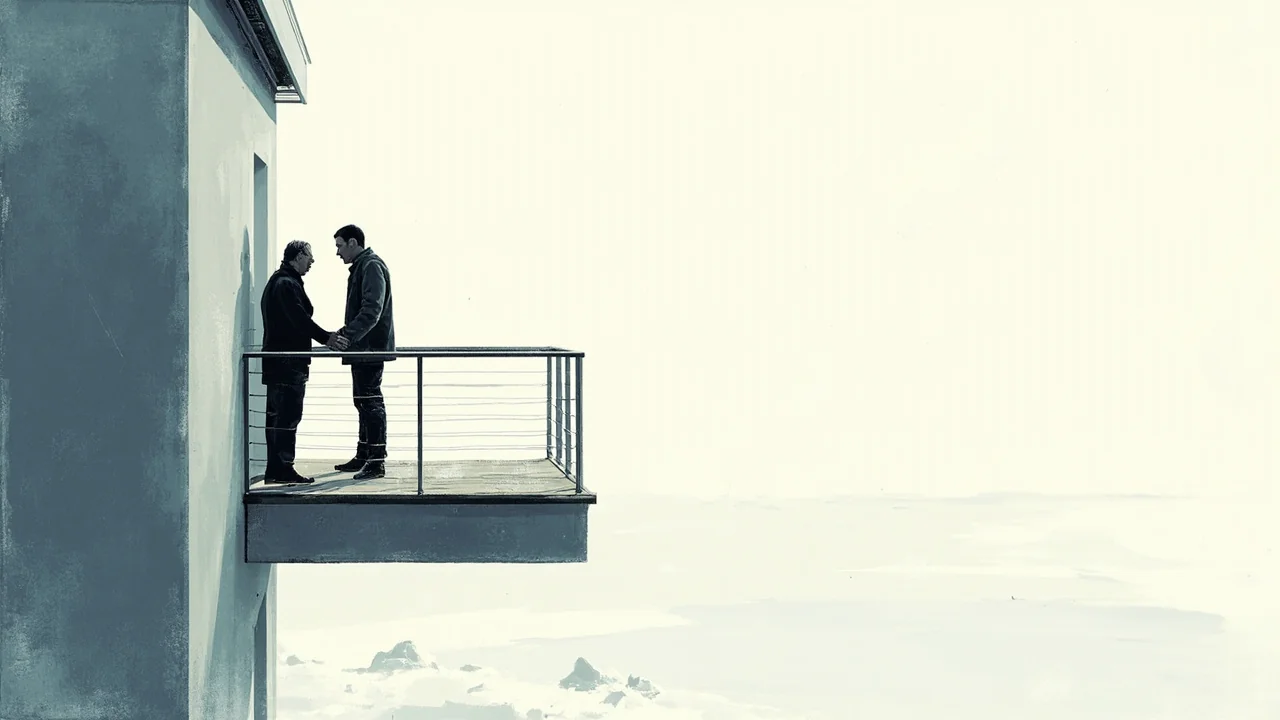
Finland's building safety regulations face intense scrutiny after a 23-year-old woman's fatal balcony fall in Vantaa ignited a protracted legal dispute in Espoo. The March 2023 tragedy, where a glass balcony panel shattered, has exposed critical gaps in construction oversight and led to a two-year conflict between the City of Espoo's building control authority and construction firm Hausia.
In the early hours of March 2, 2023, a young woman spent an evening with a friend listening to music, playing cards, and drinking alcohol in an apartment in Tikkurila, Vantaa. Around 2 a.m., she stumbled backward towards the balcony's glass enclosure. The glass gave way instantly. The 23-year-old fell from the seventh floor and died immediately at the scene.
"It happened so damn fast. It was less than a second before she disappeared," the friend later described the accident to police. "Somehow the whole event still feels completely unreal. As if it were a dream." This personal tragedy became a catalyst for a nationwide examination of balcony safety, forcing municipal authorities to confront potentially dangerous defects in thousands of existing apartments.
A Cascade of Safety Inspections
The accident prompted immediate action from building control authorities across the Helsinki metropolitan area. In Espoo, officials conducted urgent reviews of building records, focusing on glass balcony panels and their compliance with safety standards. Their investigation led them to a residential building constructed by Hausia. A final partial inspection for this specific building had been completed in January 2023, less than two months before the fatal accident in neighboring Vantaa. That inspection had not specifically examined the suitability of the glass structures.
Following the Tikkurila tragedy, Espoo's building control authority determined it had to intervene in Hausia's balcony solutions. The authority demanded the company repair balcony structures it deemed non-compliant with regulations. The core issue centered on the load-bearing capacity and safety of the glass barriers. A year after the initial partial inspection, a water and sewer inspector approved the building. Hausia then requested the building control authority to provide a final inspection certificate and mark the final inspection as approved.
Building control refused to grant final approval. In a decisive move in June 2025, a chief building inspector issued a formal decision demanding the railings be fixed. The justification was stark: "The defect is such that it poses a threat of an accident or damage from the building that cannot be considered acceptable." The authority argued the structures did not meet safety requirements, creating an unacceptable risk for residents.
The Legal Battle Reaches the Courts
Faced with the repair order and the refusal of final approval, Hausia escalated the dispute to the Helsinki Administrative Court. The company's legal argument hinged on the timing of regulations and inspections. Hausia contended that the decision to allow occupancy was based on requirements and interpretations valid at that time, and contained no error. The firm asserted that building control could not retroactively demand point-load calculations for a project whose building permit was granted and which was even occupied before new guidelines came into force.
"Building control cannot require a retrospective computational dimensioning of point load in a project whose building permit has been granted and the properties even taken into use before the guidelines came into effect," Hausia argued. This position highlighted a significant challenge in construction regulation: applying updated safety standards to existing, already-approved buildings. The case became a test of how far municipal authorities could go in enforcing new safety interpretations on old permits.
In a ruling with wide implications, the Helsinki Administrative Court sided with Hausia. The court determined that the balcony glass structures had been approved for occupancy in the partial final inspections. Consequently, the building control authority could no longer issue orders concerning them. The court's decision underscored the legal principle of finality in administrative approvals, setting a boundary for retroactive safety enforcement. This legal victory for the constructor, however, did little to address the underlying public safety concerns raised by the original tragedy.
Systemic Gaps in Finnish Building Oversight
The case exposes a fragmented system for ensuring long-term building safety in Finland. The national building code sets minimum requirements, but final inspections and ongoing compliance are primarily municipal responsibilities. The process relies heavily on a chain of inspections during construction, with less focus on post-occupancy audits or the long-term durability of materials like structural glass. Experts point out that glass fatigue, thermal stress, and improper installation can create latent defects that initial inspections might miss.
"This tragedy and the legal fight that followed reveal a gray zone," says a Helsinki-based architectural safety consultant who wished to remain anonymous due to ongoing work with municipalities. "We have a system good at checking paperwork against the code at a single point in time. We are less adept at proactive, risk-based monitoring of building components as they age, especially in private residential buildings. The legal framework makes it very difficult for cities to mandate costly retrofits unless they can prove an immediate and clear violation of the code that was applicable when the permit was issued."
This gap means potentially hazardous situations may persist until a tragic event forces a re-evaluation. The Vantaa accident served as that catalyst, prompting cities like Espoo to look more critically at previously approved buildings. However, the Hausia court case demonstrates the legal and financial limits of such retrospective action.
The Human Cost Beyond the Courtroom
While lawyers and officials debated regulatory jurisdiction, the human impact of the Vantaa accident continued to resonate. The victim's family and friends were left to grapple with a sudden, violent loss. The friend present during the incident described a lasting sense of unreality, a common trauma response to witnessing a sudden death. The accident also sowed anxiety among residents in buildings with similar balcony designs, many of whom received notices about usage restrictions or mandatory inspections from concerned housing companies.
In Espoo, the building control authority's actions, though later challenged in court, led to immediate safety measures. Several balconies were temporarily closed for use pending further engineering assessments. These precautionary steps, while disruptive, reflected a new risk-averse approach born from tragedy. Housing cooperatives across the capital region began reviewing their maintenance plans and insurance coverage, aware that liability in such accidents can become a complex web involving builders, inspectors, and building managers.
A Search for Solutions and Lasting Change
The fatal fall and its legal aftermath have sparked calls for systemic reform. Proposals include establishing a national register for building component failures, similar to systems used for consumer products, to identify recurring safety issues. Others advocate for clearer, more robust standards for structural glass in balconies and mandatory periodic safety inspections for certain building elements, akin to elevator inspections.
Insurance companies are also taking note, potentially adjusting premiums for buildings with certain construction methods or advocating for stronger liability clauses. The ultimate goal is to create a more proactive safety culture that prevents accidents rather than litigates them after the fact. This requires balancing the need for legal certainty for construction companies with the paramount duty to protect residents from foreseeable harm.
The story that began with a terrible accident in a Vantaa apartment now serves as a grim case study. It asks a difficult question: how does a society update its safety standards for the built environment without creating impossible burdens or legal chaos? Finland's response, still evolving, will involve lawmakers, the construction industry, municipalities, and courts. The memory of the 23-year-old woman whose death started this chain of events remains the most powerful argument for getting the answer right. Her story is a stark reminder that building codes are not just bureaucratic documents; they are foundational to public trust and safety in our everyday homes.