
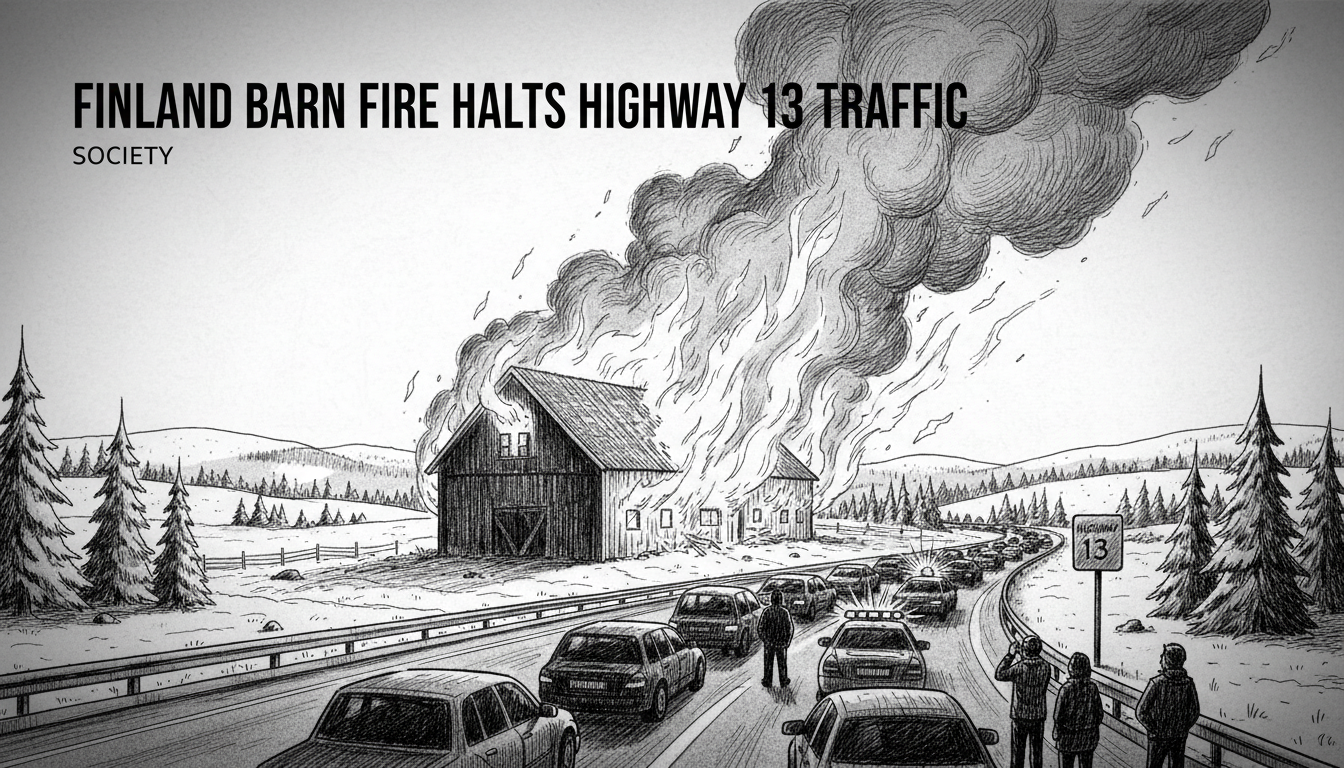
Finland rescue services are combating a major barn fire on Mikkelintie in Lappeenranta that has shut down part of Highway 13, a critical regional artery. Thick smoke billowed from the wooden structure early Tuesday morning, creating visible plumes over Lake Saimaa and prompting a large-scale emergency response. The Lappeenranta rescue department confirmed multiple units are on scene working to contain the blaze and prevent its spread to nearby properties. Traffic authorities have diverted vehicles away from the affected section of Highway 13, warning commuters of significant delays throughout South Karelia.
The incident highlights the acute vulnerability of Finland's agricultural infrastructure to fire. Initial reports suggest the navetta, or traditional cowshed, was fully engulfed before firefighters arrived. Witnesses described hearing popping sounds, possibly from electrical systems or stored materials, as flames consumed the building. The rescue operation focuses on preventing structural collapse and protecting adjacent farmland. No human or animal casualties have been reported, but the total property loss is expected to be substantial.
Emergency Response in South Karelia
South Karelia's rescue services deployed several fire engines and specialized equipment to the Mikkelintie site. The response protocol for agricultural fires is complex due to the presence of hay, fertilizers, and aging electrical wiring. Firefighters are employing defensive strategies, dousing the perimeter to create firebreaks. A rescue service spokesperson said in a statement that the primary goals are full extinguishment and ensuring public safety on the highway. The Finnish Transport Infrastructure Agency has coordinated with police to manage traffic flow, setting up detours via regional roads. This collaboration is standard under Finland's multi-agency crisis management framework.
Highway 13 connects Lappeenranta to other key cities like Imatra and Parikkala, making it vital for logistics and daily commutes. The closure disrupts freight movement and local travel, with real-time traffic systems advising alternative routes. Such incidents test the resilience of Finland's transport networks, especially in rural regions where options are limited. The Finnish government has invested in emergency communication systems to alert drivers swiftly, but physical bottlenecks remain a challenge during unexpected events.
Agricultural Fire Risks in Finnish Context
Barn fires are a recurring issue in Finland, where an estimated 70% of farm buildings are constructed from wood. This traditional material is cost-effective and readily available but highly flammable, particularly in older structures lacking modern fire retardants. In 2023, Finnish Rescue Services recorded approximately 2,500 structural fires across the country, with agricultural buildings representing a significant portion. The risk escalates in seasons when hay is stored dry or when heating equipment is used in poorly ventilated spaces. Fire safety experts consistently warn that preventive maintenance is the first line of defense.
A senior inspector with the Finnish Rescue Services Association noted in a recent briefing that electrical faults are a leading cause of farm blazes. Many barns in regions like South Karelia were built decades ago and have not undergone comprehensive safety upgrades. The inspector emphasized that regular checks of wiring, heating systems, and storage practices can drastically reduce ignition risks. This message is echoed in national fire prevention campaigns run by the Ministry of the Interior, which targets rural communities with educational materials.
Government Policy and EU Safety Directives
Finland's approach to agricultural fire safety intersects with broader national and European Union policies. The Eduskunta, Finland's parliament, has debated enhancing building codes for rural structures, though progress is often slow due to cost concerns for farmers. Current regulations mandate basic fire safety measures, but enforcement varies by municipality. The Centre Party and the Swedish People's Party have previously advocated for subsidies to help farmers retrofit old buildings, citing both safety and economic sustainability.
At the EU level, directives like the Machinery Regulation and the Construction Products Regulation set baseline safety standards that influence Finnish law. However, these frameworks primarily address new constructions and industrial equipment, leaving older agricultural buildings in a gray area. Finnish MEPs have occasionally pushed for more EU funds from the Common Agricultural Policy to be allocated for safety renovations. This fire in Lappeenranta may reignite those discussions in Helsinki and Brussels, especially as climate change increases the frequency of dry, fire-prone conditions.
Economic and Community Impact Analysis
The immediate economic impact of the Highway 13 closure includes lost productivity for businesses relying on timely deliveries. Local farmers in the Lappeenranta area also face indirect consequences, as such fires can affect insurance premiums and community trust. The destroyed navetta likely represented not just storage space but also a part of the farm's operational history. South Karelia's agricultural sector, while not the largest in Finland, contributes to the regional identity and food supply chain.
Long-term, incidents like this underscore the need for integrated risk management. Traffic safety analysts point out that Finland's highway network is increasingly vulnerable to disruptions from accidents and natural events. Investing in resilient infrastructure, such as better diversion routes and real-time monitoring, could mitigate future impacts. The Finnish government's upcoming budget discussions may include proposals for reinforcing critical transport corridors against such shocks.
Learning from Past Fire Incidents
Historical data shows that similar barn fires have occurred across Finland, often with lessons unheeded. For instance, a 2019 fire in Ostrobothnia destroyed a large dairy barn, leading to calls for stricter safety audits. The Finnish Rescue Services subsequently published updated guidelines for farm owners, recommending smoke detectors and accessible fire extinguishers. However, adoption remains voluntary in many cases. The Lappeenranta fire will likely prompt local authorities in South Karelia to review compliance with these guidelines.
Fire investigations typically take weeks to determine the exact cause, but preliminary findings often reveal preventable factors. In the Helsinki government district, officials at the Ministry of Agriculture and Forestry monitor these trends to inform policy adjustments. Past Eduskunta votes have shown cross-party support for enhancing rescue service funding, particularly for rural areas. This incident may test that consensus as Finland balances fiscal constraints with safety imperatives.
Expert Perspectives on Prevention Strategies
Fire safety engineers stress that technology offers new solutions, such as thermal imaging for early detection and automated sprinkler systems. These innovations, while effective, require investment that many small-scale Finnish farms cannot afford without support. Experts advocate for a tiered approach where government grants cover part of the cost, similar to programs in Nordic neighbors like Sweden. Public-private partnerships could also play a role, with insurance companies offering discounts for verified safety upgrades.
From a traffic management standpoint, analysts recommend improving digital alert systems to give drivers earlier warnings about road closures. Finland's smart transport initiatives, funded partly by EU digital transition funds, could integrate real-time data from rescue services. This would reduce secondary incidents and ease congestion during emergencies. The ongoing development of 5G networks in rural Finland may accelerate such capabilities, making responses more efficient.
The Path Forward for Rural Safety in Finland
This fire in Lappeenranta serves as a microcosm of broader challenges facing Finland's countryside. As the population ages and farms consolidate, maintaining safety standards in older buildings becomes increasingly critical. The Finnish government must weigh traditional practices against modern risks, a tension evident in political debates between agrarian and urban parties. Upcoming municipal elections in South Karelia may see fire safety emerge as a local issue, with candidates proposing specific measures for agricultural zones.
Looking ahead, Finland could leverage its EU presidency periods to advocate for enhanced rural safety frameworks at the European level. Collaborative research with other Nordic countries on fire-resistant materials for farm buildings is another potential avenue. Ultimately, preventing future incidents requires a concerted effort from farmers, rescue services, and policymakers. As the smoke clears over Highway 13, the question remains whether this event will catalyze meaningful change or fade into the statistics of seasonal fires.