
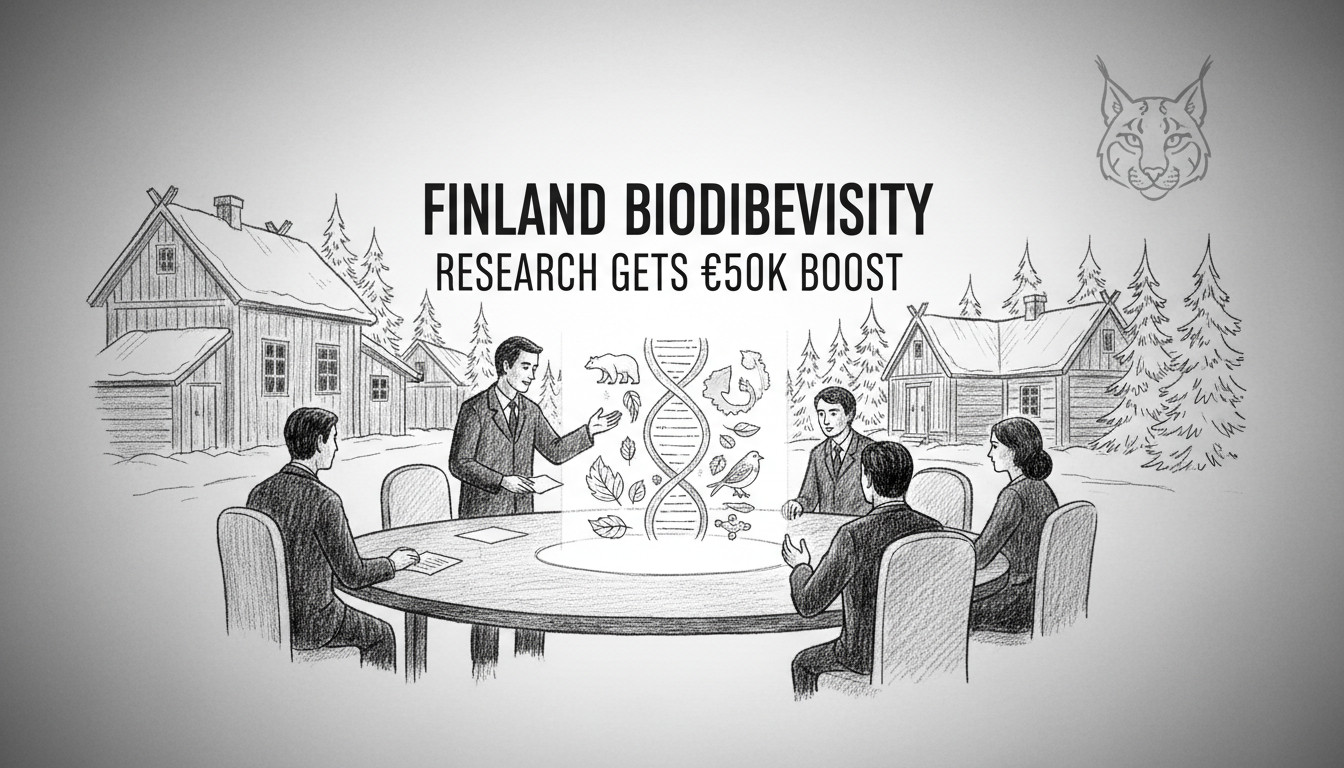
A €50,000 injection from Nordea is fueling critical biodiversity research at the University of Jyväskylä, but can this funding help quantify the true cost of economic activity on nature? This additional support brings Nordea's total commitment to the university's four-year nature footprint program to €250,000, following an initial €200,000 grant earlier this year. The research aims to develop standardized methods for assessing the 'luontojalanjälki' or nature footprint of business operations, a growing priority for Finland's financial sector amid tightening EU sustainability regulations.
As Finnish Political Correspondent Aino Virtanen, I see this move as part of a broader Helsinki policy shift where economic tools are increasingly deployed for environmental goals. The funding signals how major Nordic banks are responding to pressure from the European Green Deal and Finland's own ambitious climate laws. With the Eduskunta debating new sustainability reporting requirements, this research could provide the metrics needed to translate ecological damage into balance sheet liabilities.
The Funding and Its Strategic Timing
Nordea's decision to boost funding arrives as the European Union finalizes its Corporate Sustainability Reporting Directive (CSRD), which will mandate detailed environmental disclosures from large companies. For Jyväskylä University researchers, the €50,000 enables expanded fieldwork and data modeling to create reliable nature footprint assessments. "Our goal is to give financial institutions and businesses clear indicators for biodiversity impact, similar to carbon accounting," explained a university project lead in a statement. This work directly supports Finland's national biodiversity strategy, updated in 2023 with cross-party support in the Eduskunta.
The timing aligns with Nordea's public commitment to align its financing activities with the Paris Agreement and EU taxonomy for sustainable activities. By investing in academic research, the bank positions itself at the forefront of a market where green finance products are demanding verified environmental data. Finnish government officials have quietly encouraged such public-private partnerships, viewing them as essential for meeting the country's 2035 carbon neutrality target without stifling economic growth.
Why Nature Footprint Metrics Matter for Finland
Finland's economy remains heavily tied to forestry, agriculture, and mining—sectors where operations directly affect ecosystems. Current environmental impact assessments often lack the granularity to inform investment decisions or policy reforms. The Jyväskylä research program seeks to change that by developing metrics that can assign tangible values to biodiversity loss, such as the decline of pollinators or soil degradation. These metrics would allow banks like Nordea to screen loans for hidden ecological risks and help companies avoid regulatory penalties.
From the Helsinki government district, the Ministry of the Environment has emphasized that accurate nature footprinting is crucial for implementing the EU's Biodiversity Strategy for 2030. Finland, holding vast boreal forests and thousands of lakes, faces international scrutiny over its conservation records. Reliable assessment methods could bolster Finland's negotiating position in Brussels, especially in debates over resource extraction permits and agricultural subsidies. The research also dovetails with Prime Minister Petteri Orpo's coalition agreement, which stresses innovation-driven sustainability despite budget constraints.
Expert Insights on the Financial Sector's Evolution
Financial analysts note that Nordea's funding reflects a sector-wide pivot. "The days when banks considered biodiversity a niche concern are over," said a sustainable finance expert at a Helsinki-based think tank. "Investors now demand evidence that portfolios are resilient to nature-related shocks, from soil depletion affecting food supply chains to water scarcity halting production." The Jyväskylä project could produce tools for stress-testing investments against such scenarios, much like climate risk models used today.
Nordea's involvement also hints at competitive advantages. As the largest bank in the Nordic region, developing proprietary assessment methods could attract environmentally conscious clients and meet stricter disclosure rules ahead of rivals. The bank's Finnish operations have faced pressure from environmental groups over financing practices, making this research a potential reputation booster. In the Eduskunta, members of the Green League have praised the initiative but caution that voluntary corporate actions must eventually be backed by binding legislation.
EU Directives Driving Finnish Research Priorities
The European Union's evolving regulatory landscape is a powerful driver for this research. Beyond the CSRD, the upcoming EU Nature Restoration Law will set binding targets for member states to rehabilitate damaged ecosystems. Finland's implementation will require precise baseline data on biodiversity loss—exactly what the Jyväskylä metrics aim to provide. University researchers are already coordinating with the Finnish Environment Institute (Syke) to ensure their methods comply with emerging EU standards.
This EU context explains why the Finnish government has increased research funding for environmental sciences in recent budgets, though direct industry partnerships like Nordea's fill specific gaps. The Ministry of Economic Affairs and Employment has highlighted sustainable finance as a growth sector, with Helsinki aspiring to become a hub for green investment expertise. Success in developing nature footprint assessments could position Finnish academia and finance as exporters of knowledge to other boreal regions in Sweden and Norway.
Future Implications for Policy and Business
Looking ahead, the Jyväskylä research program's outcomes could influence everything from corporate taxation to urban planning. If nature footprint metrics gain acceptance, the Finnish government might consider tax incentives for companies with low ecological impacts or penalties for high footprints. Municipalities could use the data to guide land-use decisions, balancing development with conservation. For businesses, adopting these metrics early may streamline compliance with future EU laws and access to green bonds.
Nordea has indicated that findings from the research will inform its own lending policies and investment products, potentially setting a precedent for other Nordic banks. The four-year timeline means preliminary tools could emerge by 2025, coinciding with the next Finnish parliamentary elections where environmental policy will likely be a key issue. Opposition parties, particularly the Left Alliance and Greens, are already framing biodiversity as a social justice matter, linking it to rural livelihoods and indigenous Sámi rights.
In conclusion, Nordea's €50,000 may seem modest, but its strategic value lies in bridging academic innovation with financial practicality. As Finland navigates its dual identity as an industrial economy and environmental steward, such partnerships test whether market mechanisms can drive ecological preservation. The real question is whether these nature footprint metrics will gain enough traction to change how Finland measures prosperity itself.