
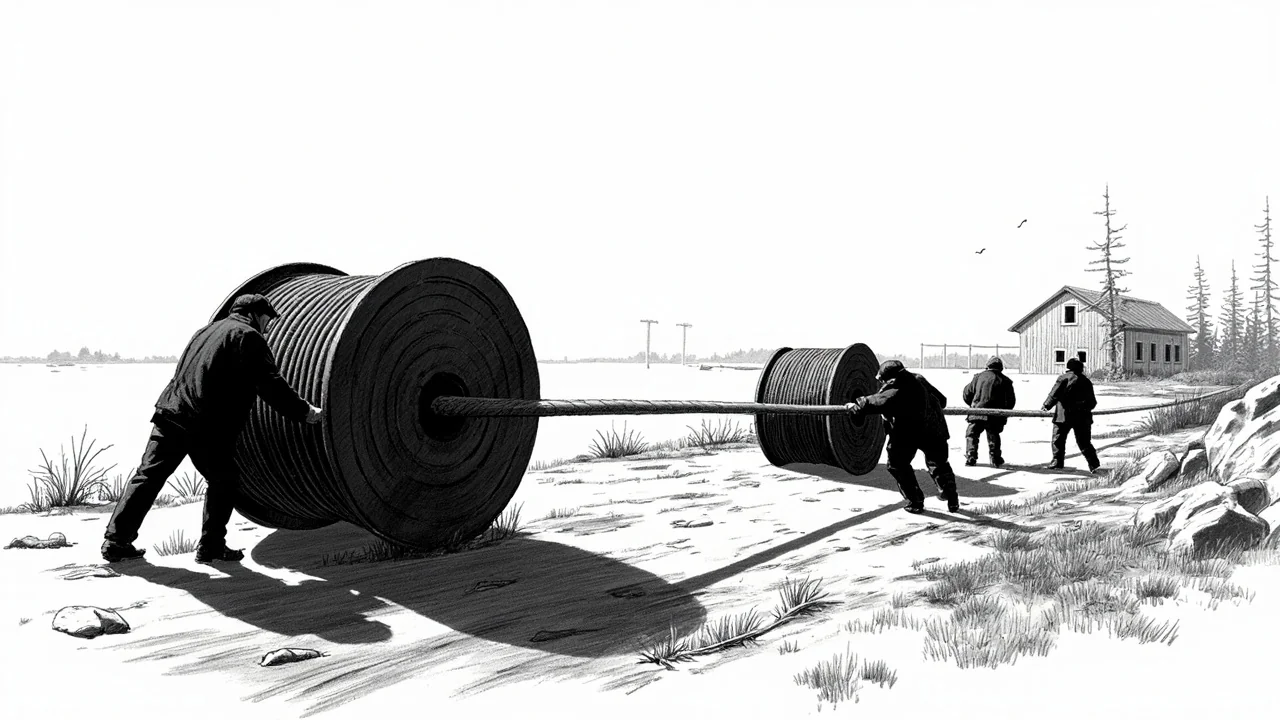
Finland's energy and telecom sectors face a brazen new threat: industrial-scale cable theft. A 51-year-old man has been convicted for stealing nine metric tons of high-value power cable from two separate work sites, selling the haul to a scrap dealer who then sold it to the state-owned energy giant Fortum. The total criminal proceeds exceeded €50,000, highlighting a sophisticated and costly racket targeting critical national infrastructure.
The case, adjudicated by the Pirkanmaa District Court, reveals a startlingly bold operation. In April 2024, the perpetrator broke into a power line construction site operated by network builder Eltel in Pieksämäki. He then used an excavator left on-site to load two massive cable reels, weighing a combined nine tons, onto a truck. Workers arrived to find the excavator still running and tire tracks on the ground.
Just four months later, in August, at least eight bundles of copper cable—totaling roughly 16,000 kilograms—were stolen from a Fingrid work site near Loimaa. The bundles, left by the roadside, were fitted with tracking devices, which ultimately led to the thief's capture. The reels were valued at approximately €35,000 and the cable bundles at €21,000.
A Lucrative Pipeline to a State Giant
The stolen goods entered the legitimate market through a 37-year-old scrap metal dealer acquainted with the thief. The dealer purchased the cables and sold them onward through his own company to Fortum. Fortum paid a total of €44,000 for the cable reels in spring and summer. A further €21,000 payment in August was intercepted by police.
The court found the scrap dealer guilty of aggravated money laundering. It ruled that an experienced dealer should have recognized the cables—steel-aluminum power conductors with no use in private construction projects—were likely obtained illegally. The dealer had no prior criminal record.
For the 51-year-old thief, while he could not be directly proven to have stolen the Loimaa cables, his act of selling them constituted money laundering. He was convicted of aggravated theft, unauthorized use, and damage to property. His previous convictions were dated, a factor in sentencing.
Ehdollinen Tuomio: Conditional Sentences in Finland's Justice System
Both men received conditional prison sentences. The scrap dealer was sentenced to 11 months for aggravated money laundering. The cable thief received a 20-month conditional sentence for his crimes. In Finland's judicial system, a conditional sentence means the convicted person does not go to prison unless they commit a new crime during a set probation period.
This outcome has sparked debate. While the court considered the age of the thief's prior record, the scale of the thefts—targeting national grid infrastructure—represents a significant economic and security risk. Fingrid stated that while cable theft from work sites occurs, amounts of this magnitude are exceptional.
The High Stakes of Copper and Disruption
This case is not simple metal theft. It targets the core of Finland's infrastructure. Eltel is a major Nordic network services contractor. Fingrid operates Finland's national high-voltage electricity grid. The thefts cause direct financial loss, project delays, and potential safety hazards. The use of on-site machinery also points to a perpetrator with specific technical knowledge.
"This isn't someone snipping a bit of cable from a remote shed," says a Helsinki-based security analyst familiar with industrial assets. "This is a planned logistical operation moving multi-ton industrial material. It requires knowledge of sites, transport, and the scrap market. The €50,000 figure is just the direct value; the indirect costs of delayed projects and security upgrades are far higher."
The involvement of Fortum, a major publicly-owned energy company, as the unwitting final buyer raises questions about due diligence in the scrap metal supply chain. While Fortum acted as the victim in the final transaction, the case underscores the challenge companies face in verifying the origin of bulk materials.
A Broader Challenge for Finnish Industry
Finland's technology and energy sectors are built on reliable infrastructure. From data centers in Espoo to manufacturing in Tampere, consistent power is non-negotiable. Theft on this scale is a direct attack on business continuity. For the Finnish tech sector, where uptime is critical, such vulnerabilities are a serious concern.
While not a cyberattack, this physical crime has a similar impact: it disrupts essential services. Companies like Nokia, with vast R&D campuses, and growing Helsinki startups reliant on cloud infrastructure, depend on the grid's integrity. Industrial security must now consider not just digital threats, but organized physical theft of critical components.
Law enforcement is adapting. The successful use of tracking devices on the Loimaa cable bundles was crucial. Expect increased use of such technology, along with enhanced surveillance and stricter controls at scrap metal processors. The legal framework may also come under review, with calls for tougher penalties for infrastructure theft given its national security implications.
An Old Crime with a New Scale
Metal theft is perennial, but its evolution into a highly organized, high-reward crime is new. The perpetrator in this case moved from stealing the cables to laundering them through a seemingly legitimate market channel in a matter of days. This creates a fast, hard-to-trace pipeline for converting public infrastructure into private cash.
The conditional sentences will be seen by some as a lenient outcome for a crime with such a high price tag. They reflect Finland's rehabilitative justice principles but may clash with the need for a strong deterrent against targeting national infrastructure. The case sets a precedent, and how authorities and industry respond will be closely watched.
Will this brazen conviction deter the next industrial-scale cable thief, or has the blueprint for a lucrative, high-risk racket just been published? For Finland's energy and tech companies, securing not just their data but their physical cables has become an urgent and expensive priority.