
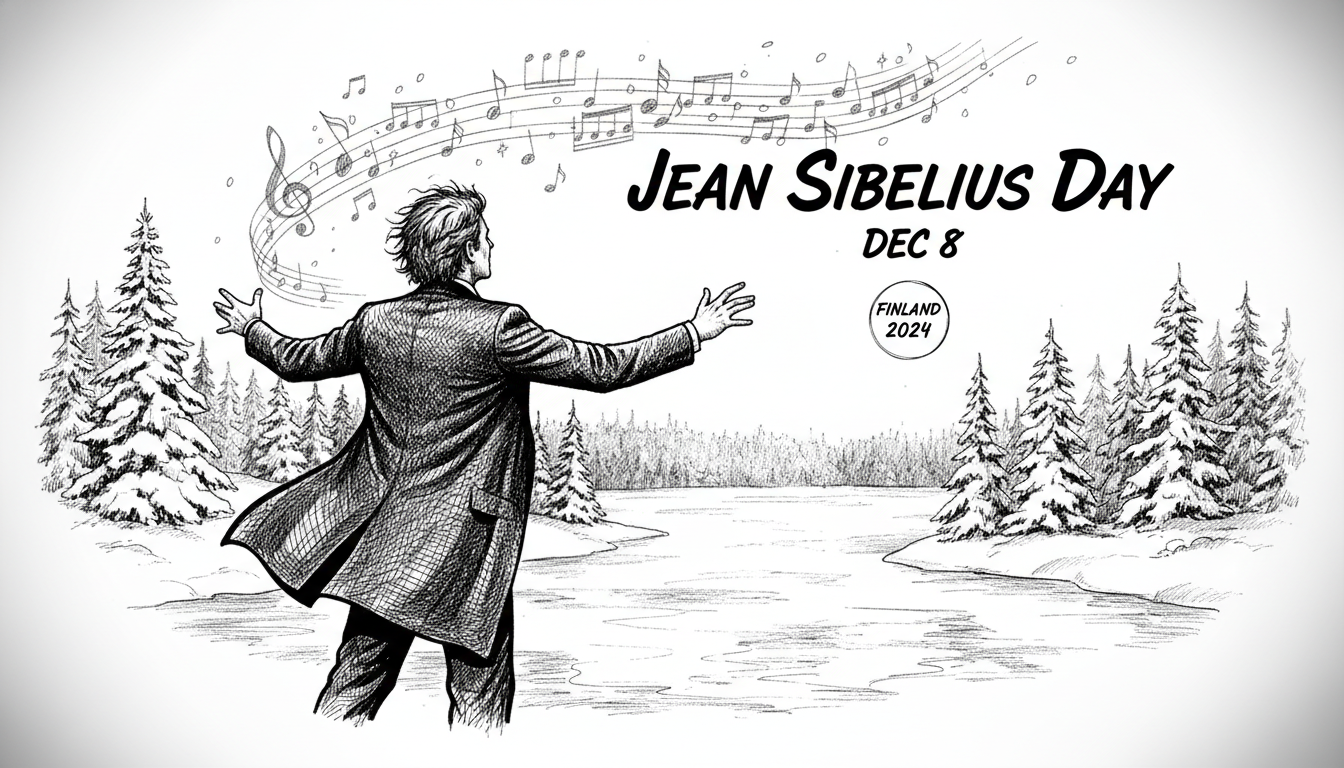
Finnish flags will fly across the nation today, December 8, to honor the legacy of composer Jean Sibelius. This official flag-flying day marks both Sibelius's birthday and Finnish Music Day, a celebration of national culture and identity that has been observed since 2011. The blue-and-white cross flags, visible from government buildings in Helsinki to private homes in Lapland, create a unified visual tribute to a man whose music helped forge a nation.
The Sound of a Nation Forged
Jean Sibelius, born in 1865 in Hämeenlinna, is not merely a composer in Finland; he is a cultural institution. His music, particularly the soaring and defiant tone poem Finlandia, became the soundtrack to Finland's struggle for national self-determination in the late 19th and early 20th centuries. At a time when Finland was an autonomous Grand Duchy under Russian rule, Sibelius's works provided a powerful, non-verbal language for Finnish patriotism.
Cultural historians point to the premiere of Finlandia in 1899 as a pivotal moment. Performed as part of a covert protest against increasing censorship by the Russian Empire, the piece’s stirring melodies evoked the Finnish landscape and spirit. Its final hymn section became so popular it later gained lyrics and is often considered an unofficial national anthem.
“Sibelius gave Finland a voice on the world stage when its political voice was constrained,” explains Dr. Liisa Tavia, a musicologist at the University of Helsinki. “He translated the essence of the forests, lakes, and national epic, the Kalevala, into a universal musical language. This wasn't just art; it was nation-building.”
From Cultural Symbol to Official Celebration
The journey from cultural icon to an official day on the state calendar took over a century. While Sibelius was revered in his lifetime, the formal establishment of Jean Sibelius Day in 2011 signified a modern recognition of his enduring role. The move was supported across the Finnish political spectrum in the Eduskunta, reflecting a rare consensus on cultural policy.
This day is one of several ‘flag days’ in Finland that celebrate cultural figures, unlike the more common national holidays focused on historical events. It sits alongside days dedicated to authors like Aleksis Kivi and Johan Ludvig Runeberg. The selection underscores how Finland’s national narrative is deeply intertwined with its artistic achievements.
Celebrations extend beyond flag flying. The Sibelius Society organizes concerts and events across the country. National broadcaster Yle dedicates programming to his work. Schools use the day to teach students about his impact. The commemoration is both a look back and a living tradition, ensuring new generations understand the roots of their cultural identity.
Sibelius in a Modern Finland
In contemporary Finland, a confident EU member state, Sibelius’s legacy carries different shades of meaning. The defiant nationalism of Finlandia now coexists with Finland’s active role in European and international cooperation. Yet, the day remains profoundly relevant.
Analysts see the celebration as a crucial tool for cultural cohesion in a globalized world. “In an era of rapid change and international integration, these anchors of national culture become even more important,” says cultural policy expert Markus Koskinen. “Sibelius Day isn’t about looking inward. It’s about affirming a unique cultural identity that Finland brings to the European table. It’s a reminder of the strength found in distinctiveness.”
For many Finns, the day is a point of quiet pride. It is less about overt ceremony and more about a shared, visible symbol—the flag—and a shared sonic heritage. Listening to the haunting Swan of Tuonela or the majestic Fifth Symphony becomes an act of personal and collective remembrance.
The Composer’s Enduring EU Resonance
Finland’s EU membership adds another layer to the Sibelius discourse. His music is frequently used as Finland’s calling card at official EU cultural events. When Finland holds the rotating Presidency of the Council of the EU, Sibelius is invariably featured prominently, serving as a sophisticated diplomatic tool.
This cultural diplomacy underscores how national symbols can function within a supranational framework. Sibelius represents a Finland that is both fiercely proud of its independent legacy and a committed team player in the European project. The celebration of his day is monitored by cultural attaches in Brussels as an indicator of Finland’s ongoing emphasis on its national narrative.
“Sibelius’s music transcends the political,” notes Dr. Tavia. “But the act of celebrating him is deeply political in the best sense. It’s a statement that a nation’s soul, as expressed through its art, is fundamental to its existence and its contributions to wider partnerships.”
Looking Beyond the Flags
As the sun sets on December 8th and the flags are taken down, the questions Sibelius’s music raised remain. How does a modern nation state maintain its unique cultural core while engaging globally? How is national identity curated and passed on? The annual rhythm of this day forces a momentary pause to consider these issues.
The legacy is not without its complexities. Sibelius lived through a transformative and often turbulent period in Finnish history. His work is viewed through different lenses, but its power is unquestioned. The continued celebration suggests that in the Finnish psyche, the journey from a Grand Duchy to an independent, innovative EU nation is still narrated, in part, through his chords and melodies.
Ultimately, Jean Sibelius Day is more than a birthday memorial. It is an annual audit of Finnish cultural confidence. The sight of the flag flying against a dark December sky is a simple yet potent answer to the question of why a composer from the 19th century still matters in the 21st. The flags wave, and the music plays on, a durable link between a nation’s past and its present.