
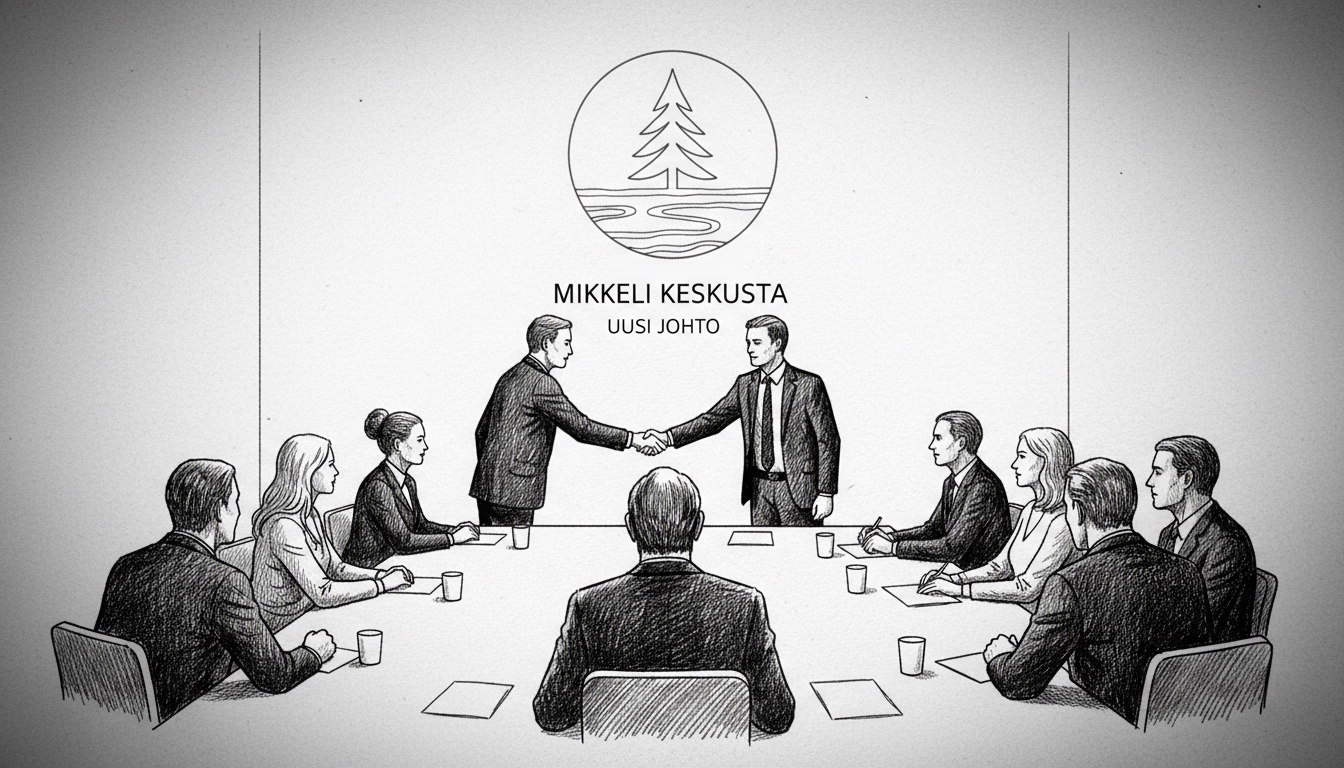
Finland's Centre Party has elected new leadership for its Mikkeli municipal organization, selecting teacher and city council deputy Sari Noponen as chairperson for a one-year term. The election occurred during the organization's autumn meeting on Wednesday, signaling a potential refresh for the party's grassroots operations in the South Savo region. Noponen, who also serves on Mikkeli's wellbeing board, will be supported by newly elected secretary Noora Ruuth, as the previous chair and secretary were unavailable to continue.
This local leadership change offers a window into the internal dynamics of one of Finland's historically dominant political forces. While national politics in Helsinki capture headlines, the real organizational muscle of parties like the Centre Party is built and maintained in hundreds of municipal chapters like the one in Mikkeli. These local branches are responsible for candidate selection, door-knocking campaigns, and articulating the party's platform on issues from elderly care to road maintenance.
A Teacher Takes the Helm in Mikkeli
Sari Noponen's election represents a classic profile for Centre Party local leadership: a professional with deep community ties. As a teacher, she embodies the party's traditional emphasis on education and rural development. Her existing roles as a deputy member of the Mikkeli City Council and a member of the city's wellbeing board provide her with direct insight into municipal governance. This experience will be crucial as she leads the local party organization through a period of significant challenges for the Centre Party nationally.
"Local organizations are the lifeblood of our party," said a senior Centre Party official familiar with the region, speaking on background. "When someone like Sari steps up, it shows continued engagement from citizens who are directly involved in their community's day-to-day affairs. Her background in education and wellbeing aligns perfectly with the core municipal responsibilities of schools and social services." The official noted that teachers often possess strong organizational and communication skills, assets for any political chairperson.
The Centre Party's Grassroots Challenge
The leadership transition in Mikkeli occurs against a complex national backdrop for the Centre Party (Keskusta). Once a perennial powerhouse in Finnish politics, frequently leading government coalitions, the party has faced declining electoral support in recent national elections. Its vote share has fallen, reducing its presence in the Eduskunta, the Finnish Parliament. This decline has forced a period of introspection and strategic recalibration.
Analysts observe that the party's strength has always been its dense network of local associations. In regions like South Savo, the party's agrarian roots and focus on regional development still resonate. The choice of Noponen, with her feet firmly planted in local institutions, may be seen as an effort to consolidate this traditional base. Her one-year term suggests this could be a trial period, allowing the organization to assess her leadership before making a longer commitment.
"Changes in local leadership are often microcosms of larger party dynamics," explains Dr. Laura Pekonen, a political scientist at the University of Eastern Finland. "While this is a routine annual election, the profile of the new chair is telling. The Centre Party is emphasizing candidates who are visibly embedded in the fabric of local service provision—education, welfare, council work. This is a back-to-basics approach, focusing on the party's historical competency in municipal affairs, especially outside major urban centers."
The Municipal Organization's Role and the New Team
A party's kunnallisjärjestö, or municipal organization, is its operational arm at the local level. It recruits members, develops policy positions on local issues, and most importantly, selects and supports candidates for the city council. In Finland's consensus-driven political system, municipal councils wield significant power over education, zoning, public transport, and health and social services. Control of these councils is a key battleground.
Alongside Noponen and Ruuth, the organization elected several other members to its board, including Janne Strengell, Anu Kokkonen, and Kari Manninen. Former chair Tapio Honkamaa will also remain on the board. This mix of new and experienced figures indicates a desire for continuity alongside fresh perspectives. The board's composition will be responsible for setting the organization's agenda, planning events, and preparing for the next municipal elections.
The work is largely voluntary and driven by civic engagement. For parties, maintaining active and motivated local chapters is an ongoing challenge, making peaceful leadership transitions like the one in Mikkeli vital for organizational health.
Wellbeing Policy in the Local Spotlight
Noponen's seat on Mikkeli's wellbeing board (hyvinvointilautakunta) is particularly significant. Municipal wellbeing boards are responsible for planning and overseeing health and social services, a policy area of immense cost and public importance. Finland is undergoing a major reform of its social and healthcare system, shifting more responsibility to newly established wellbeing services counties (hyvinvointialueet).
This transition creates uncertainty and administrative challenges for local authorities. Having a party chairperson directly involved in this work ensures the Centre Party's Mikkeli branch is closely connected to one of the most pressing and complex issues facing the municipality. It allows the party to ground its political messaging in practical, administrative experience. Noponen will hear constituent concerns about elder care queues or mental health services directly in her board role, which can then inform the party's local campaign priorities.
The National Picture from a Local Vantage Point
From the Helsinki government district, the Centre Party currently sits in opposition. Its national leadership is tasked with rebuilding voter trust and crafting a policy platform that appeals to both its traditional rural base and a broader electorate. However, national strategies cannot succeed without effective implementation at the local level.
Successful municipal chapters serve as proof of concept. They demonstrate the party's relevance in solving everyday problems, from maintaining rural bus routes to supporting local businesses. A vibrant organization in Mikkeli, a city in the heart of the party's historical support region, acts as a stabilizing force. If the party cannot hold its ground in regions like South Savo, its national recovery becomes far more difficult.
Conversely, strong local leaders can sometimes become national figures. Many Finnish ministers and members of parliament began their careers in municipal politics and local party work. While there is no indication that Noponen's role is a springboard for a national candidacy, her performance will be watched within party circles as an example of grassroots vitality.
Looking Ahead to Local Elections
The ultimate test for any municipal party organization is the election for the city council. These elections, held every four years, determine the political control of Finland's cities and municipalities. They are intensely local contests, fought on issues like property taxes, school closures, and swimming pool opening hours.
The new leadership in Mikkeli will soon begin the work of candidate recruitment and campaign planning. Their success will be measured by the Centre Party's ability to maintain or grow its representation on the Mikkeli City Council. A strong showing would validate the new team's approach and provide a morale boost for the party regionally. A decline would trigger further internal analysis.
For the average resident of Mikkeli, the change in the Centre Party's local chairperson may seem like distant political machinery. Yet, the decisions made by this volunteer board influence which candidates appear on the ballot and what issues are emphasized during campaigns. In a country with high voter turnout and a strong culture of local democracy, these internal party processes matter. They shape the choices available to voters and, by extension, the future of the city itself.
The election of Sari Noponen is a small but meaningful data point in the ongoing story of Finnish politics. It underscores the continued reliance of major parties on dedicated local volunteers. It highlights the Centre Party's attempt to reinforce its connection to core municipal services. And it reminds us that in Finland's decentralized political system, the path to national influence often begins in a meeting hall in a city like Mikkeli, where a teacher agrees to take on the responsibility of leading her local party into the next political season.