
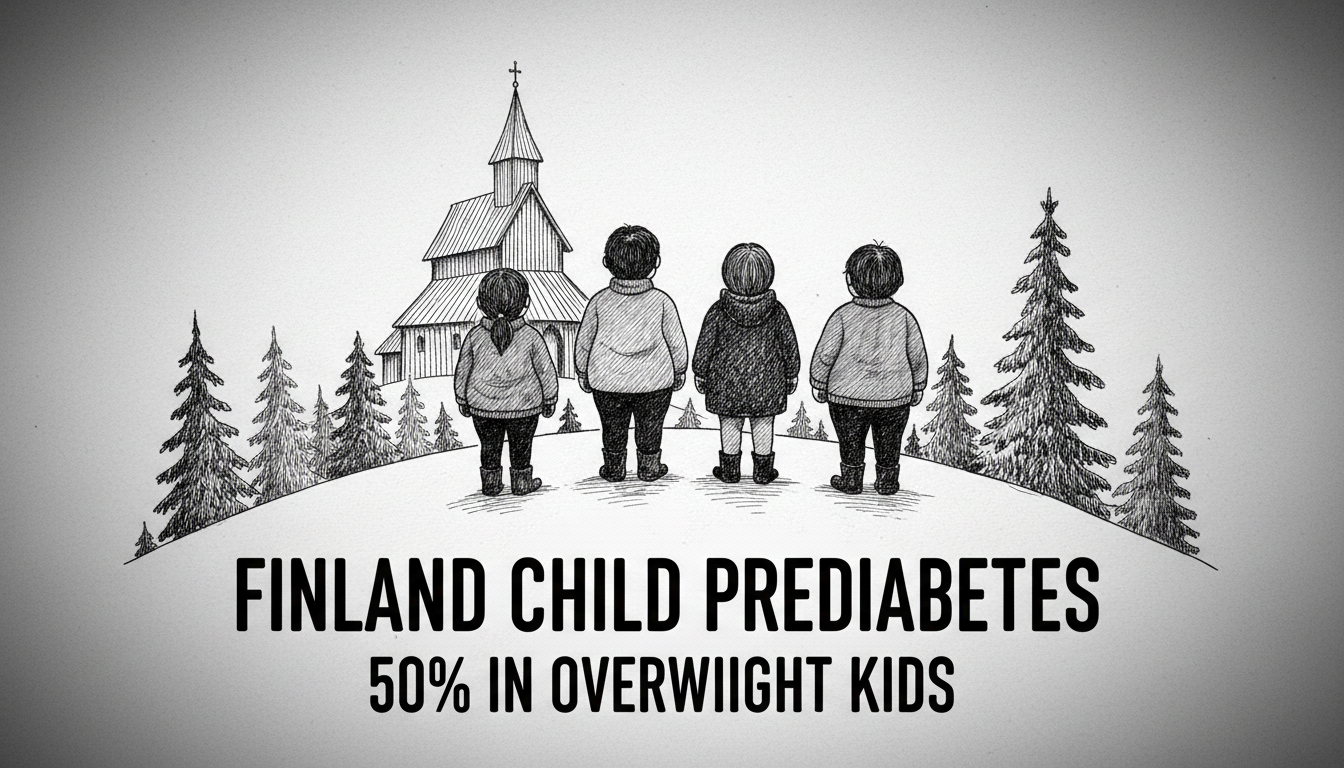
Finland's overweight children are experiencing a dramatic rise in prediabetes, with a recent study showing rates reaching 50% among those examined. Research from the Universities of Tampere and Eastern Finland reveals a severe public health shift occurring over less than two decades. This increase signals a growing crisis within a nation known for its robust healthcare system and could foreshadow a heavier burden of type 2 diabetes in the coming years.
A Staggering Statistical Shift
The longitudinal study, which tracked approximately 600 children aged 6 to 16 investigated for overweight or obesity between 2002 and 2020, documents a profound change. At the study's outset in 2002, prediabetes was present in about one in ten of these children. By 2019, that figure had soared to one in two. This represents a 400% increase in prevalence over the period. The data, which concludes with findings from 2019, highlights a trend that public health officials fear may have continued or intensified in recent years.
The study included a control group of nearly 500 children representative of the general population, aged 7 to 16. The stark contrast between the groups underscores how weight-related health issues are driving this specific metabolic crisis. Among children examined specifically due to obesity, the findings were even more acute: over a third had prediabetes, and just over one percent had already developed type 2 diabetes.
Unpacking the Public Health Implications
Prediabetes is a condition where blood sugar levels are higher than normal but not yet high enough for a type 2 diabetes diagnosis. It is a critical warning sign. Without intervention, a significant proportion of individuals with prediabetes will progress to full-blown diabetes, a chronic disease with serious complications including heart disease, kidney failure, and nerve damage. The appearance of this condition in children, who are historically more associated with type 1 diabetes, marks a troubling epidemiological shift.
Finland's public healthcare system, which includes regular child health check-ups, is theoretically well-positioned for early detection. The Finnish Institute for Health and Welfare (THL) monitors population health and guides national policy. However, this data suggests that detection alone is not enough to stem the tide. The rising numbers point to a failure in primary prevention—stopping excessive weight gain before it starts.
Roots of the Crisis: Lifestyle in a Modern World
Experts analyzing the trend point to a confluence of factors familiar to many developed nations. Dietary habits have shifted, with increased consumption of processed foods high in sugars and unhealthy fats. Concurrently, physical activity levels among children have declined, replaced by more sedentary leisure time often spent with screens. Genetic predispositions can play a role, but the environment is the dominant trigger for this rapid change in population health.
Professor of Public Health from the University of Helsinki, who was not directly involved in the study but reviewed its findings, noted the societal dimensions. 'This is not about individual failure. It is about an environment that makes unhealthy choices the easy, default choices for families,' they said in a statement. 'We see structural issues in food advertising, urban planning that may discourage active play, and socioeconomic factors that limit access to fresh, healthy foods for some groups.'
The Policy Challenge for Helsinki
This health crisis presents a direct challenge to the Finnish government and the Ministry of Social Affairs and Health. Policy responses require a multi-sectoral approach that goes beyond the healthcare system. Past initiatives, such as school meal programs designed to provide balanced nutrition, have been world-renowned. Yet, the new data indicates these measures are being overwhelmed by broader societal trends.
Potential solutions under discussion include stricter regulations on marketing unhealthy foods to children, enhanced nutritional education in schools, and increased funding for municipal sports facilities and family-oriented physical activity programs. The city of Helsinki's own health department has previously launched campaigns to promote outdoor play year-round, leveraging Finland's natural landscape. The urgency now is to scale and intensify these efforts.
Some parliamentarians in the Eduskunta are calling for the issue to be framed as a long-term economic threat. The lifetime cost of managing diabetes and its complications places a significant strain on the public healthcare budget. Investing in prevention now, they argue, is a fiscal imperative as much as a moral one.
A Look Ahead: Preventing a Generation of Disease
The most critical window for action is during childhood. Interventions at a young age can establish lifelong healthy habits and reverse prediabetes in many cases. The study's authors emphasize that the progression from prediabetes to diabetes is not inevitable. Effective family-based programs focusing on sustainable diet changes and increased physical activity have proven successful in Finnish pilot studies.
The European Union's broader strategies on combating childhood obesity, such as the EU Action Plan on Childhood Obesity 2014-2020, provide a framework. Finland, often a leader in public health within the EU, now faces the test of implementing these frameworks more aggressively at home. The next national nutrition and physical activity strategy is being closely watched by health advocates.
This research serves as a stark alarm. While the data captures a trend up to 2019, the conditions that fueled it—sedentary lifestyles and poor dietary patterns—have likely persisted through the 2020s. Without decisive policy action and societal commitment, Finland risks a future where type 2 diabetes becomes a common diagnosis in young adulthood, reversing decades of public health progress. The question for policymakers is whether they will treat this as a curious statistical anomaly or the defining health challenge of a generation.