
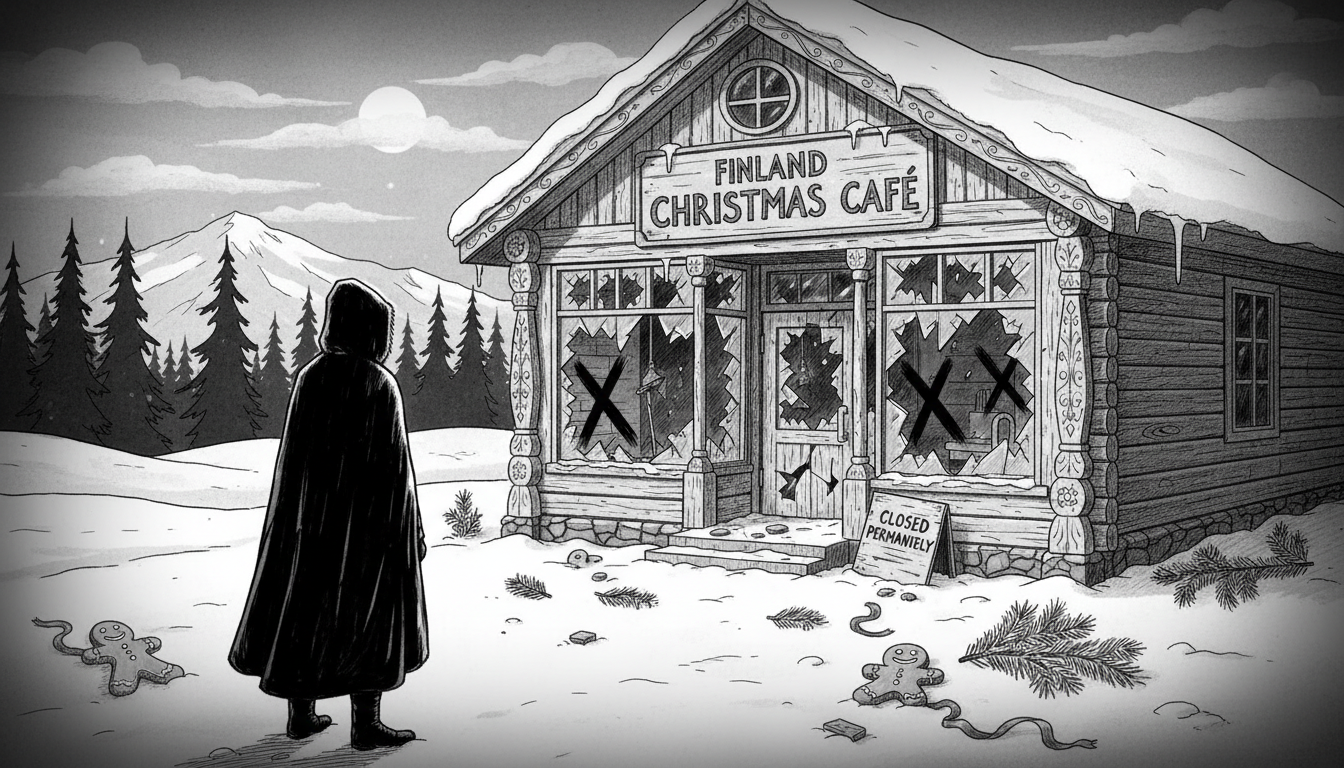
Finland's festive spirit suffered a harsh blow when the Christmas café Kerkkoon Pumppaamo in Porvoo was forced to close after a devastating act of vandalism. A powder fire extinguisher, discharged throughout the small business, became the final straw for owners who had invested heart and soul into creating a seasonal haven. The incident, which occurred in the early hours of a Saturday night, saw an intruder smash a window to gain entry, leaving behind a scene of destruction and effectively ending the café's nearly four-week holiday run. For the local community, the closure represents more than just lost revenue; it signifies the theft of a cherished social hub during the darkest time of the year.
From Festive Cheer to Powder and Debris
The Kerkkoon Pumppaamo Christmas cafe was a deliberate project of joy. For almost a month, it operated as a dedicated pop-up, offering warmth, light, and traditional treats to residents of the Porvoo region. Its purpose was explicitly to build goodwill and holiday mood for both customers and the entrepreneurs themselves. That deliberate creation of community atmosphere made the violation feel particularly acute. The vandal did not merely steal cash or equipment; they systematically degraded the environment with the powder extinguisher, contaminating surfaces, foodstuffs, and the very ambiance. Cleaning such a fine, pervasive residue from a commercial kitchen and dining area is a prohibitively expensive and demoralizing task for a small seasonal operation. The owners faced a clear calculus: invest significant, unplanned funds and labor into a massive cleanup or terminate the season immediately. They chose the latter.
The Broader Impact on Finnish Small Towns
While Finland consistently ranks high in global safety indexes, property crimes like vandalism and break-ins are a persistent challenge, especially for small businesses. According to data from Statistics Finland, thousands of cases of vandalism are reported annually, with a noticeable portion targeting commercial properties. The economic and psychological impact on business owners in smaller municipalities like Porvoo can be disproportionate. In a major city, a vandalized storefront might be a tragic statistic, but in a tight-knit community, it feels like a personal attack on the social fabric. Local economies in these areas rely heavily on the success of independent entrepreneurs who often operate on thin margins. A single destructive act can erase an entire season's profits and deter future community-focused initiatives. Experts in regional economics note that the loss extends beyond the owner's balance sheet. It affects suppliers, potential employees, and reduces the vitality of the town center, making it less attractive for residents and visitors alike.
Understanding the Motives Behind the Destruction
Criminologists point to a complex mix of factors behind seemingly senseless property crimes like the café vandalism. In many cases, such acts are linked to social frustration, boredom, or substance abuse, rather than a primary intent to steal. The use of a fire extinguisher as a tool for destruction suggests an element of impulsivity and a desire to cause maximum disorder with minimal planning. The timing—during the holiday season—may also be significant. For some, periods of collective celebration can exacerbate feelings of isolation or economic hardship, potentially manifesting in anti-social behavior. Finnish police typically investigate such break-ins, but solving crimes where the primary motive is damage rather than theft can be challenging without witnesses or clear forensic evidence. The incident in Kerkkoo has been reported to authorities, but as of now, the perpetrator remains at large, leaving the community with unanswered questions and a sense of vulnerability.
A National Conversation on Community Resilience
The closure of the Kerkkoon Pumppaamo cafe has sparked local outrage and sympathy, with many residents expressing support for the owners on social media and community forums. This reaction highlights a key Finnish characteristic: a strong sense of collective responsibility and mutual aid. In the face of such setbacks, communities often rally, proposing ideas from crowdfunding campaigns to volunteer clean-up efforts. However, this incident also prompts a harder discussion about preventative measures and support systems. Are municipal crime prevention grants adequate for small businesses wanting to install better security? Is there sufficient mental health and youth outreach in semi-urban and rural areas to address root causes? Business associations often advocate for better lighting, more active street presence, and cooperative security networks among shop owners as deterrents. The Finnish government's regional development policies sometimes include grants for improving commercial precinct safety, but accessing them can be bureaucratic for a single small entrepreneur.
Looking Beyond the Powdered Ruins
The story of the Kerkkoo Christmas cafe is a microcosm of a challenge faced by welcoming societies everywhere: how to maintain open, communal spaces in the face of random destructive acts. The owners' decision to close was undoubtedly a painful one, made after weighing the emotional and financial costs of recovery. Their experience serves as a stark reminder that safety and social harmony require constant, collective effort. It raises a poignant question for other small business owners across Finland and the Nordics: how much resilience can be expected of those who build the social infrastructure of our towns? As Porvoo moves past this incident, the response from its citizens will likely determine whether next Christmas sees another brave attempt to create a pocket of festive warmth, or a more cautious, guarded approach to public joy. The true measure of the community's strength will be seen not in the act of vandalism itself, but in what it chooses to rebuild in the aftermath.